Clear Sky Science · en
Regulation of lipid droplets accumulation by the Hippo–YAP/COX2 signaling pathway in neomycin-induced ototoxicity
When Infection Treatment Threatens Hearing
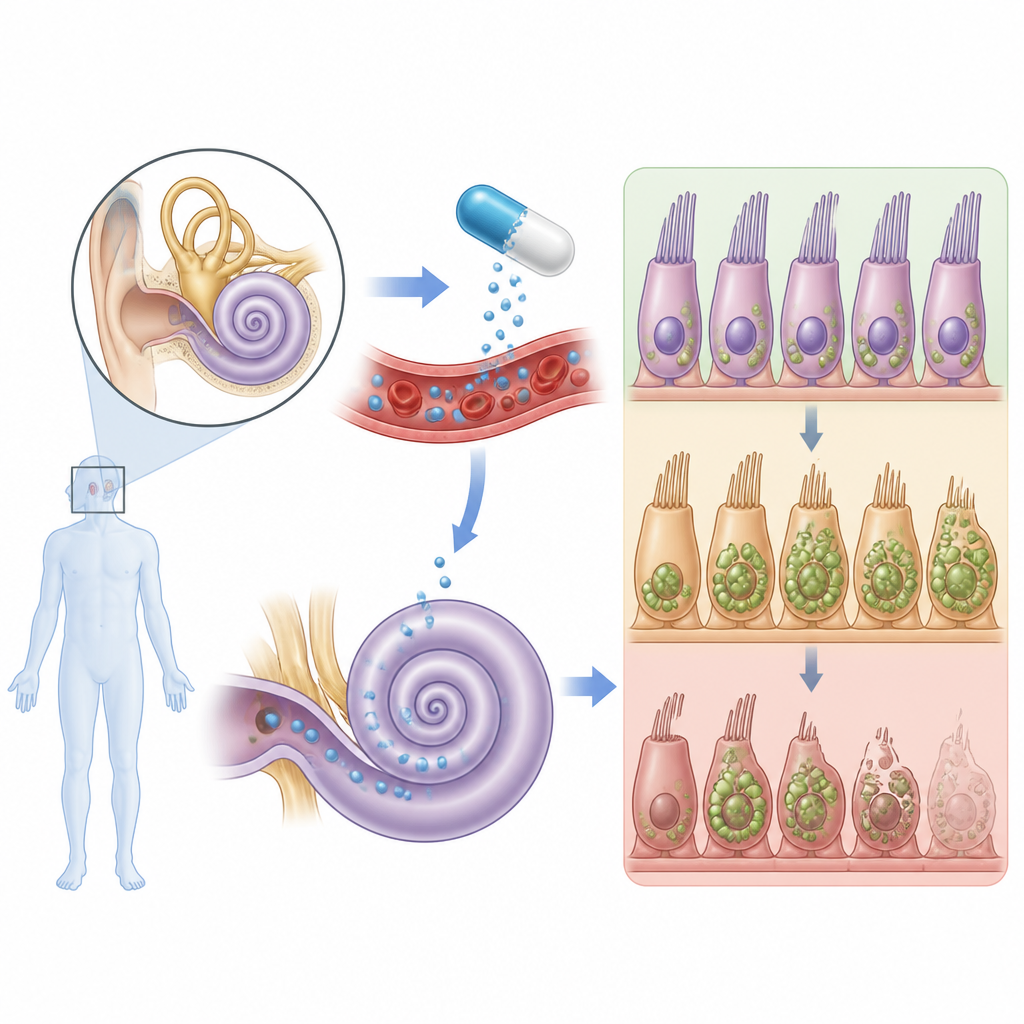
Aminoglycoside antibiotics such as neomycin can be life-saving for severe infections, but they carry an often hidden cost: they can permanently damage the delicate sensory cells that let us hear. This study asks a simple but important question for patients and clinicians alike: why do these drugs hurt hearing, and can we protect the ear without giving up their benefits?
Fat Storage in Cells and Why It Matters
Inside almost every cell are tiny fat-filled droplets that act as storage depots for energy and building blocks. These “lipid droplets” help keep potentially harmful fats from roaming freely and damaging fragile structures like membranes and mitochondria. The authors show that in cells from the inner ear and in the cochleae of young mice, exposure to neomycin throws this fat-handling system out of balance. At moderate doses, lipid droplets build up, suggesting that cells are trying to lock away toxic fats. As injury becomes more severe, the droplets themselves begin to break down, a sign that the cell’s last line of defense is failing and damage is spreading.
A Cell Safety Switch Goes Offline
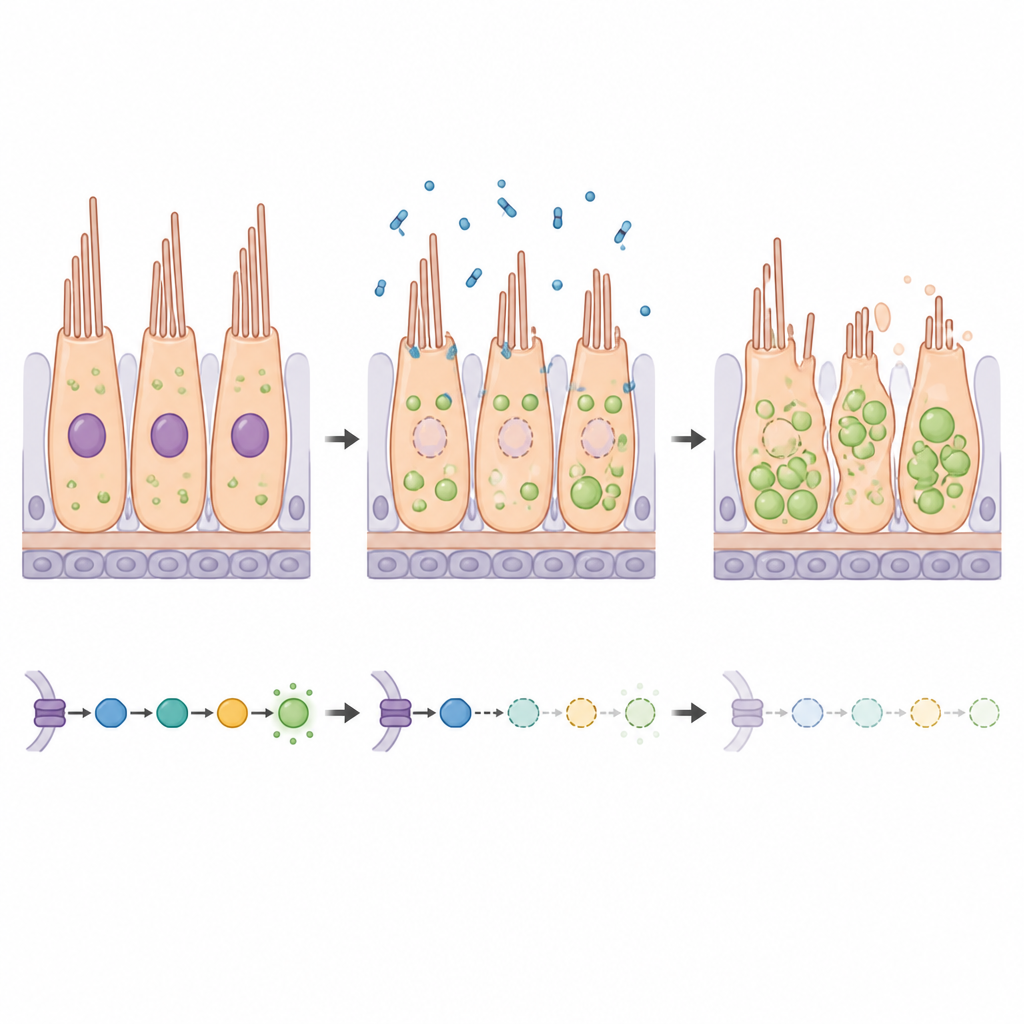
The team focused on a molecular system called Hippo–YAP that acts as a kind of safety switch for cell growth and survival. In healthy inner ear tissue, the YAP protein supports hair cell health and helps manage metabolism. After neomycin treatment, gene activity patterns from cultured auditory cells showed that the Hippo pathway became more active while YAP levels dropped. Microscopy and protein measurements confirmed that YAP was depleted in both cell cultures and the hair cells of treated mice, coinciding with increased signs of stress and injury. When the researchers blocked YAP with a drug or deleted it specifically in hair cells using engineered mice, neomycin caused more lipid droplet accumulation, more cell death, and worse hearing loss than neomycin alone.
Boosting a Protective Pathway
If losing YAP makes things worse, could increasing it help? To test this, the scientists artificially raised YAP levels in auditory cells and in mouse hair cells. In dishes, adding extra YAP reduced the abnormal build-up of lipid droplets after neomycin exposure and cut down on cell death. In living mice, the group used a gene therapy virus designed to target hair cells and drive YAP production. Animals that received the YAP-boosting virus before neomycin treatment retained more hair cells and had better hearing sensitivity than control animals given saline. These experiments suggest that, at least in this model, stronger YAP signaling helps hair cells cope with the metabolic stress caused by the antibiotic.
A Key Middleman in Fat Handling
To understand how YAP links to fat balance, the authors compared gene sets tied to YAP and to lipid control and highlighted an enzyme called COX2. This protein helps convert certain fatty molecules into signaling substances. Neomycin lowered COX2 levels in auditory cells, but raising YAP restored them. When the researchers blocked COX2 with a selective inhibitor, the protective effect of extra YAP largely disappeared: lipid droplets again piled up after neomycin, and more cells underwent programmed death. This points to a chain of events in which YAP maintains COX2 levels, COX2 helps keep lipid droplets in check, and disrupting this chain makes hair cells more vulnerable.
What This Means for Protecting Hearing
Put simply, this study proposes that some antibiotic-related hearing loss comes from a breakdown in how inner ear cells store and manage fats. Neomycin lowers YAP, which then lowers COX2, upsetting lipid droplet balance and pushing hair cells toward death. By boosting YAP in hair cells, the researchers were able to steady this system, limit abnormal fat droplet build-up, and preserve hearing in mice. While this work is still at the experimental stage, it suggests that future treatments aimed at stabilizing cellular fat management or fine-tuning the YAP–COX2 pathway could help shield patients’ hearing while they receive powerful, ear-toxic drugs.
Citation: Hao, W., Gao, S., Guo, S. et al. Regulation of lipid droplets accumulation by the Hippo–YAP/COX2 signaling pathway in neomycin-induced ototoxicity. Cell Death Discov. 12, 248 (2026). https://doi.org/10.1038/s41420-026-03115-w
Keywords: neomycin, hearing loss, hair cells, lipid droplets, YAP COX2 pathway