Clear Sky Science · en
NAT10 promotes cisplatin resistance and immune escape by increasing the expression of DUSP1 and PD-L1 in gastric cancer
Why this research matters for patients
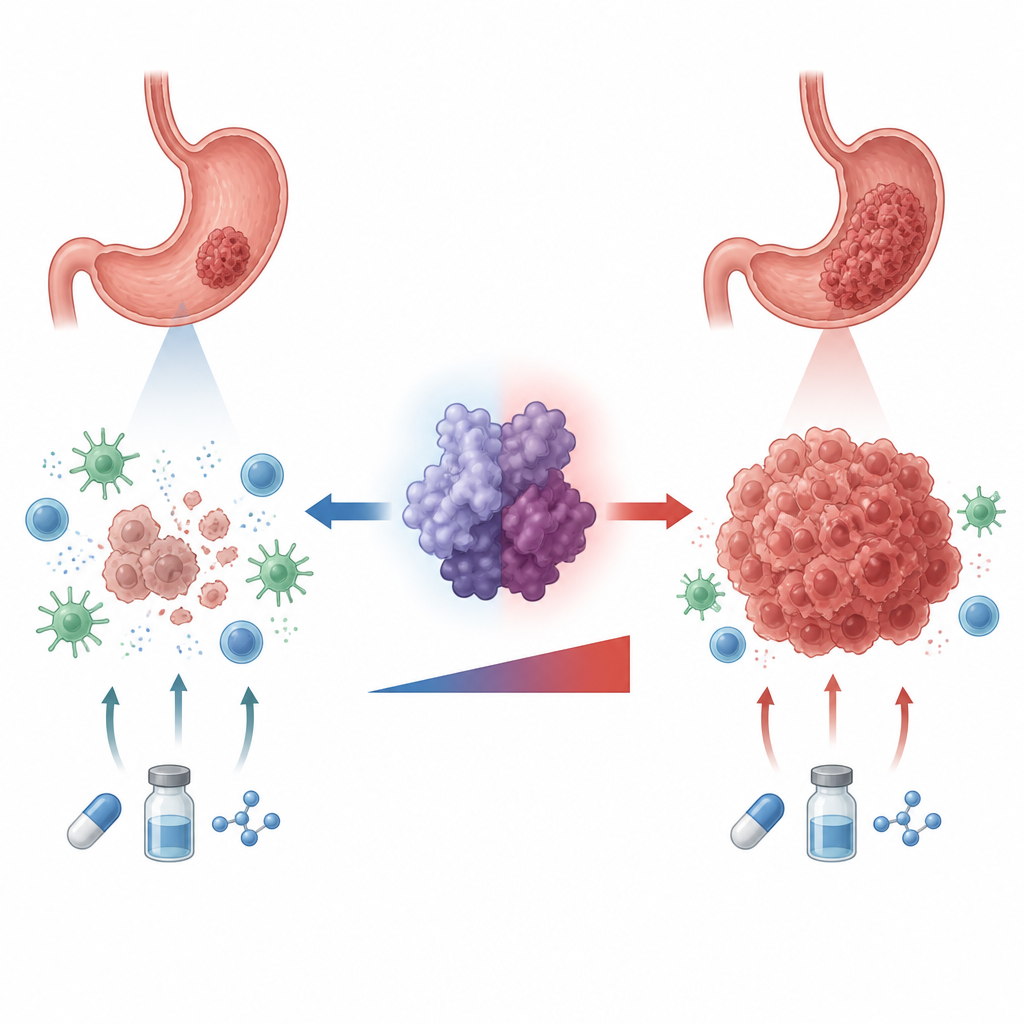
For many people with advanced stomach cancer, chemotherapy and new immune drugs offer hope, but tumors often learn to survive and hide from the body’s defenses. This study uncovers how a single cellular enzyme, called NAT10, helps stomach cancer cells resist the widely used drug cisplatin and escape immune attack, and suggests a way to target this weakness with a combination treatment.
A hidden helper for stubborn tumors
The researchers focused on stomach cancer cells that had become resistant to cisplatin compared with their original, drug-sensitive counterparts. They found that resistant cells carried much higher levels of NAT10 and a chemical change on RNA called ac4C. When they artificially increased NAT10 in sensitive cells, those cells survived cisplatin better and formed more colonies. When they blocked NAT10, either by genetic tricks or with a small molecule called remodelin, resistant cells became easier to kill with cisplatin in dishes and in mice. Patient data also showed that tumors with more NAT10 tended to have poorer outcomes, linking this enzyme to real-world treatment failure.
How NAT10 shields cancer cells from death
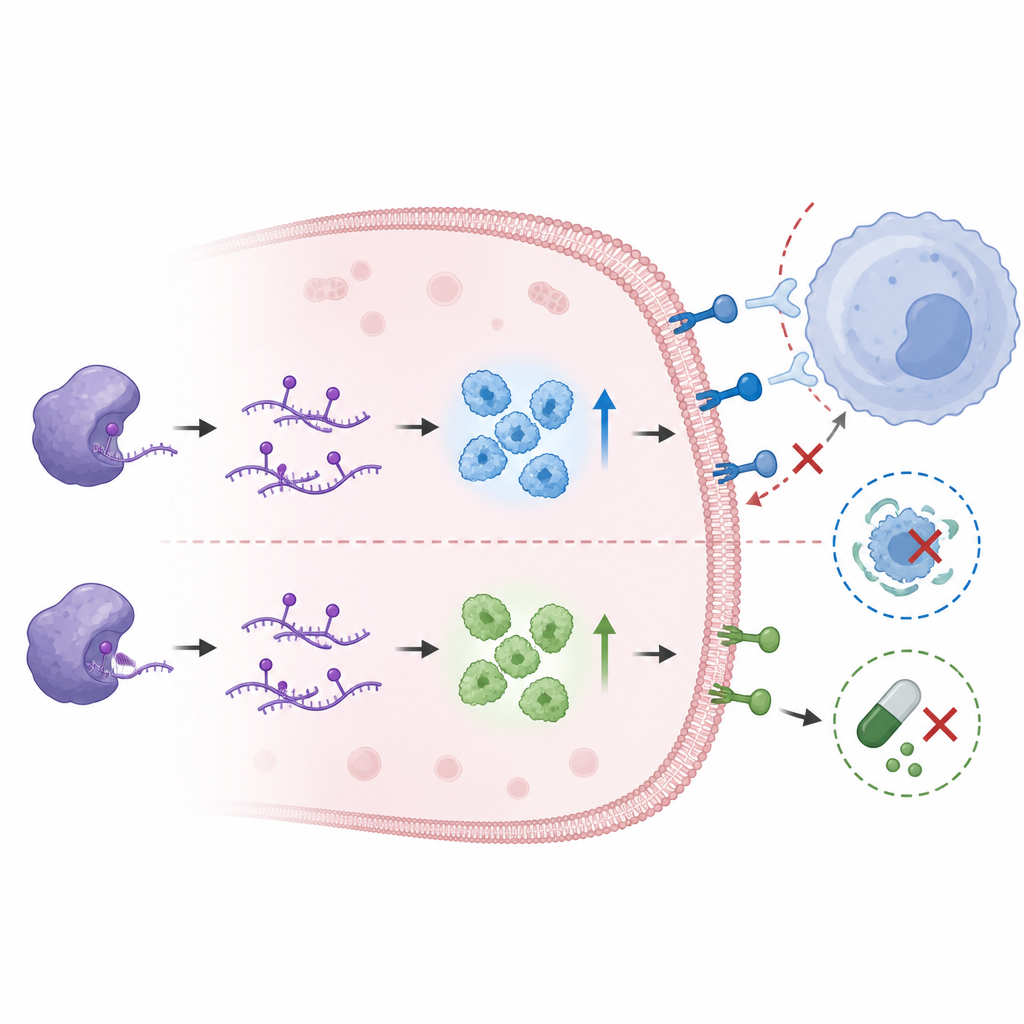
To understand how NAT10 works, the team looked at global gene activity and homed in on a gene called DUSP1, already known to blunt the effects of chemotherapy in several cancers. In resistant stomach cancer cells, DUSP1 levels were high, but they dropped when NAT10 was blocked. The scientists showed that NAT10 physically binds DUSP1’s RNA and adds the ac4C mark at specific sites, making this RNA more stable so that more DUSP1 protein is produced. Extra DUSP1 in turn dampens cell stress and death pathways called JNK and ERK, reducing the activation of key suicide proteins. In cell and mouse experiments, restoring DUSP1 could undo much of the benefit gained by shutting down NAT10, showing that DUSP1 is a major player in NAT10-driven drug resistance.
Helping tumors hide from the immune system
The study also uncovered a second, immune-related trick supported by NAT10. Drug-resistant cells showed higher amounts of PD-L1, a surface protein that turns off attacking T cells. NAT10 boosted PD-L1 levels, while its loss or inhibition reduced them. However, this control did not come from a direct chemical mark on PD-L1 RNA. Instead, NAT10 stabilized the RNA of another gene, FOSB, which acts as a switch in the nucleus. FOSB binds to the PD-L1 gene’s control region and drives its production. When FOSB was lowered, PD-L1 dropped and the effect of NAT10 on PD-L1 largely disappeared, revealing a NAT10–FOSB–PD-L1 chain that helps tumors avoid immune attack.
Boosting the power of immunotherapy
Because PD-L1 is the target of widely used PD-1 blocking antibodies, the researchers tested whether interfering with NAT10 could make these immunotherapies work better. In mouse models bearing cisplatin-resistant stomach tumors, blocking NAT10, either by genetic knockdown or remodelin, increased the number and activity of killer CD8 T cells inside tumors and made PD-1 antibody treatment more effective at shrinking growths. In contrast, forcing cells to make more NAT10 weakened the impact of PD-1 therapy and reduced the presence and vigor of these immune cells. Human tumor samples supported these findings, showing that cancers rich in NAT10 tended to have fewer active CD8 T cells.
What this means for future cancer care
Together, these results paint NAT10 as a central hub that both hardens stomach cancer cells against cisplatin and helps them hide from the immune system. By stabilizing key RNAs that support survival and immune evasion, NAT10 tilts the balance in favor of the tumor. Targeting NAT10 with drugs, especially in combination with cisplatin and PD-1 immune therapies, may one day offer patients with resistant stomach cancer a more effective and lasting treatment option.
Citation: Qian, L., Gao, W., Wang, X. et al. NAT10 promotes cisplatin resistance and immune escape by increasing the expression of DUSP1 and PD-L1 in gastric cancer. Cell Death Discov. 12, 237 (2026). https://doi.org/10.1038/s41420-026-03107-w
Keywords: gastric cancer, cisplatin resistance, NAT10, PD-L1, immunotherapy