Clear Sky Science · en
Proteasome dysfunction underlies HERC2-linked neurodevelopmental disorder with Angelman-like clinical features
When the Cell’s Cleanup Crew Misfires
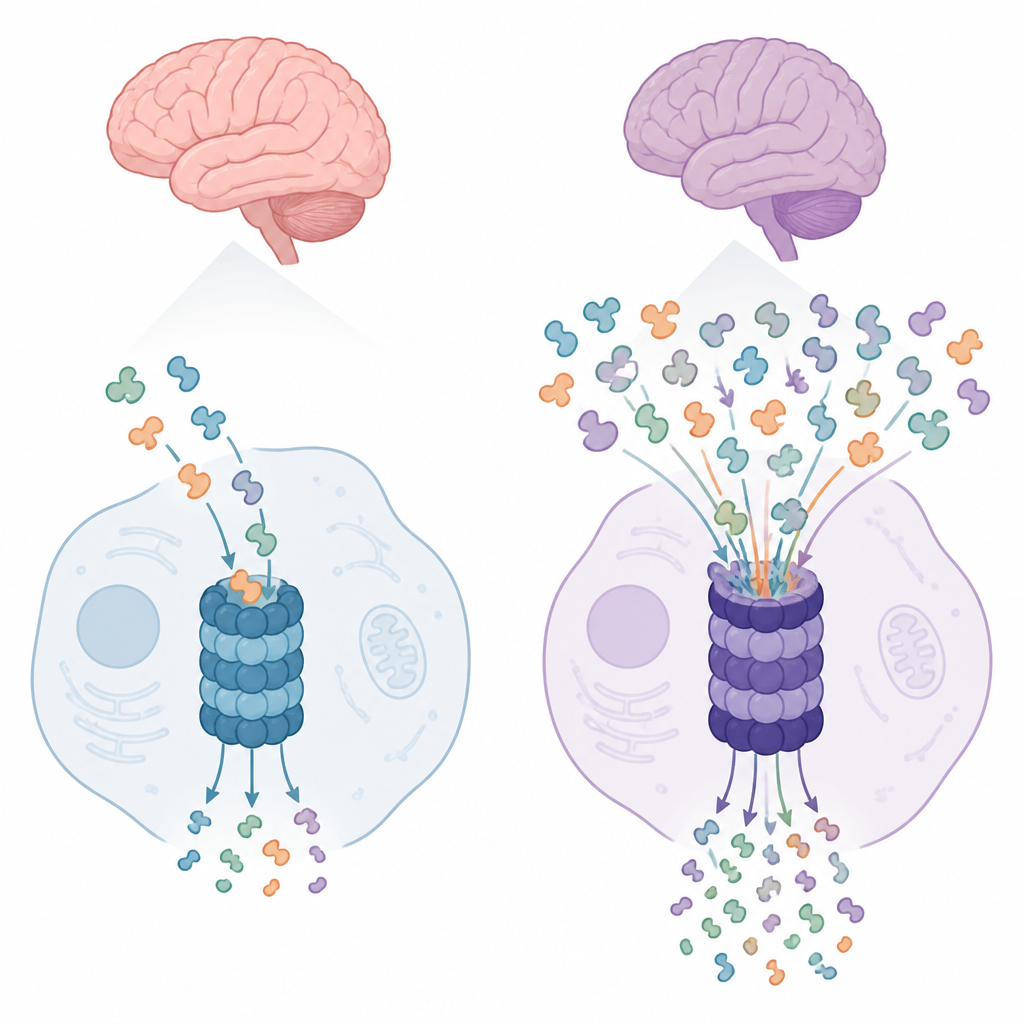
Our brain cells depend on a finely tuned system that constantly builds and dismantles proteins. This study explores what happens when part of that cellular cleanup crew goes wrong because of changes in a gene called HERC2. These changes are found in children with a rare condition that looks very similar to Angelman syndrome, with delayed development, movement problems, and features of autism. By watching how cells handle thousands of different proteins, the researchers uncovered how faults in HERC2 disrupt the cell’s main protein recycling machine, the proteasome, and how this may contribute to the disorder.
How Cells Normally Tag and Recycle Proteins
Inside our cells, worn out or misfolded proteins are marked for removal with tiny molecular tags and then fed into the proteasome, a barrel shaped complex that chops them into pieces. HERC2 is one of the enzymes that attach these tags. To find out which proteins rely on HERC2, the team used a clever trick: they supplied cells with a special biotin labeled version of the tag so that all tagged proteins could be fished out and identified by mass spectrometry. They compared cells producing normal HERC2 with cells making a disabled version that lacks tagging activity. This side by side comparison revealed which proteins gained or lost tags specifically because of HERC2.
A Hidden Role in Building the Protein Shredder
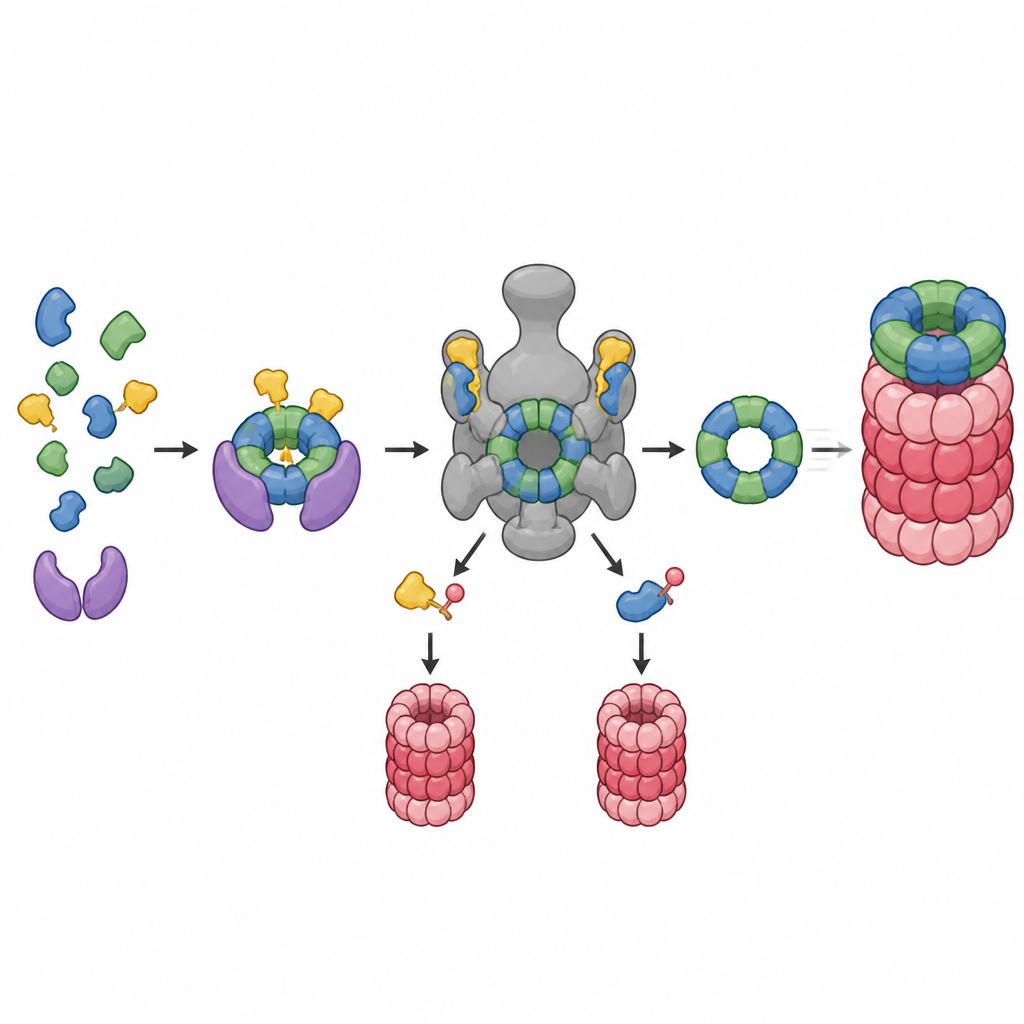
The catalog of tagged proteins was large, but one group stood out: many components of the proteasome itself, particularly parts of the 19S regulatory particle that recognizes, unfolds, and feeds proteins into the core. The researchers found that HERC2 helps to tag at least eleven proteins involved in building this regulatory unit, including several base and lid subunits and their helper chaperones. Follow up experiments focused on one subunit, PSMC5, and its assembly partner PAAF1. HERC2 binds to PSMC5 through PAAF1 and marks only the unassembled, spare copies for destruction. In this way, HERC2 acts as a builder’s inspector, ensuring that loose pieces that fail to fit into the final machine are removed rather than left to accumulate.
Balancing Activity of the Cellular Shredder
When HERC2 levels were reduced in laboratory cell lines, the overall activity of the proteasome dropped, even though its basic structure could still be detected. This suggests that fewer fully assembled machines were available. Using fluorescent reporters, the team showed that removing HERC2 makes the unassembled PSMC5 subunit more stable, consistent with a failure to clear out unused parts. Yet in skin cells taken from patients carrying a common HERC2 variant linked to the neurodevelopmental disorder, the situation looked different: these cells showed higher proteasome activity and elevated PSMC5 levels. The mutant HERC2 protein was less stable and interacted poorly with the PSMC5–PAAF1 complex, indicating that both loss of the inspector and its faulty engagement with subunits can disturb the balance of protein breakdown.
From Cellular Imbalance to Brain Symptoms
The findings fit into a broader picture in which HERC family proteins control the assembly of large protein machines across the cell, not only the proteasome but also complexes involved in protein synthesis and cell structure. Neurons, which must last a lifetime, are particularly sensitive to any long term imbalance in protein quality control. Animal studies have already linked defects in related HERC proteins to degeneration of specific brain cells and movement problems. Here, the authors connect a human HERC2 variant to altered proteasome behavior in patient cells, offering a plausible chain from gene change to disrupted protein recycling and, ultimately, to neurodevelopmental symptoms.
What This Means for Future Care
For non specialists, the key message is that this work pinpoints a quality control step in the cell’s cleanup system that goes awry in a rare Angelman like condition. Instead of simply turning protein breakdown up or down, HERC2 helps decide which unfinished parts should be discarded to keep the recycling machine working smoothly. When that decision process fails, proteasome activity becomes unbalanced, which may stress vulnerable brain cells. These insights suggest that carefully adjusting proteasome function, or screening early for HERC2 changes, could one day help manage or prevent some effects of this disorder, although such strategies will require much more research before reaching the clinic.
Citation: Sala‑Gaston, J., Costa‑Sastre, L., Garcia‑Diez, M. et al. Proteasome dysfunction underlies HERC2-linked neurodevelopmental disorder with Angelman-like clinical features. Cell Death Discov. 12, 243 (2026). https://doi.org/10.1038/s41420-026-03095-x
Keywords: HERC2, proteasome, neurodevelopmental disorder, protein quality control, Angelman-like syndrome