Clear Sky Science · en
FGFR1 suppresses ovarian cancer progression by modulating SIRT3-dependent lactylation and metabolic reprogramming
Why this research matters
Ovarian cancer is one of the most deadly cancers in women, in part because it is often found late and tends to spread quickly. This study explores a lesser-known protective switch inside ovarian cells, a protein called FGFR1, and shows how it helps keep tumor growth and energy use in check. By understanding how this switch works, the research points to new ways doctors might slow the disease and improve outcomes for patients.
A surprising protector in ovarian cancer
Many cancers ramp up certain growth switches to drive tumor expansion, and FGFR1 is often one of them. In lung and breast tumors, high FGFR1 levels are usually linked with worse outcomes. Here, however, the story is different. By analyzing large public datasets and tumor samples from hundreds of women, the authors found that ovarian tumors actually carry less FGFR1 than normal ovarian tissue. Patients whose tumors had especially low FGFR1 tended to have more advanced disease and shorter survival, suggesting that this protein acts more like a brake than a gas pedal in this setting. 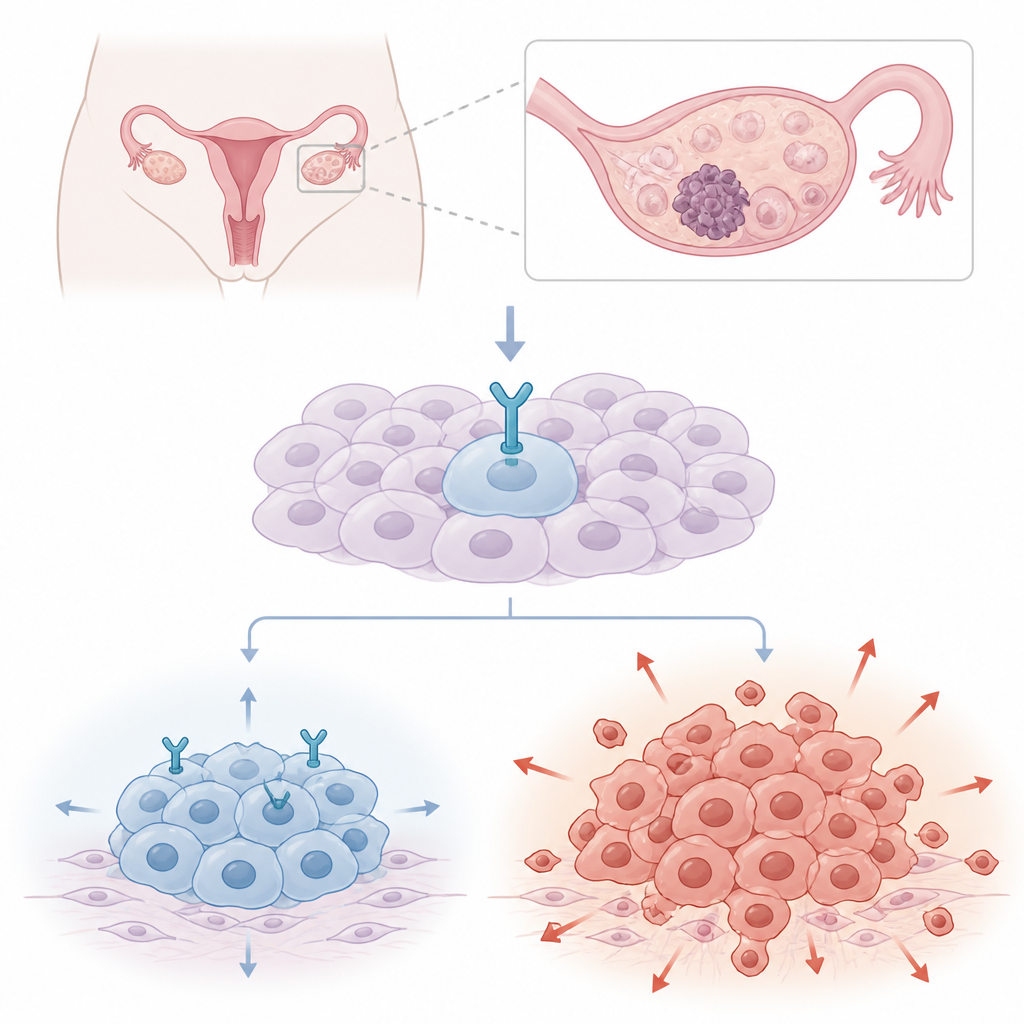
How low FGFR1 shapes tumors and the immune scene
To dig deeper, the team compared gene activity in tumors with high versus low FGFR1. They saw broad shifts in networks that control cell growth, tissue structure, and signaling pathways often tied to cancer. Tumors with less FGFR1 also showed signs of a remodeled tumor microenvironment, including differences in the presence of immune cells such as macrophages, B cells, and T cells, as well as molecules that help tumors evade immune attack. These patterns hint that FGFR1 not only affects how cancer cells behave, but may also influence how the body’s defenses respond to the tumor.
Energy use, acid buildup, and a new type of protein mark
Cancer cells commonly change the way they make and use energy, favoring a sugar-hungry style of metabolism that produces large amounts of lactic acid. This study confirms that added lactate boosts ovarian cancer cell growth and increases a recently discovered chemical mark on proteins called lactylation. The researchers showed that when they lowered FGFR1 in ovarian cancer cell lines, the cells grew, migrated, and invaded more aggressively. When they increased FGFR1, the opposite happened: cells slowed their growth, made less lactate, generated less cellular fuel, and showed fewer lactylation marks on key proteins and DNA-packaging histones. These changes suggest that FGFR1 helps steer cells away from a high-lactate, high-growth state. 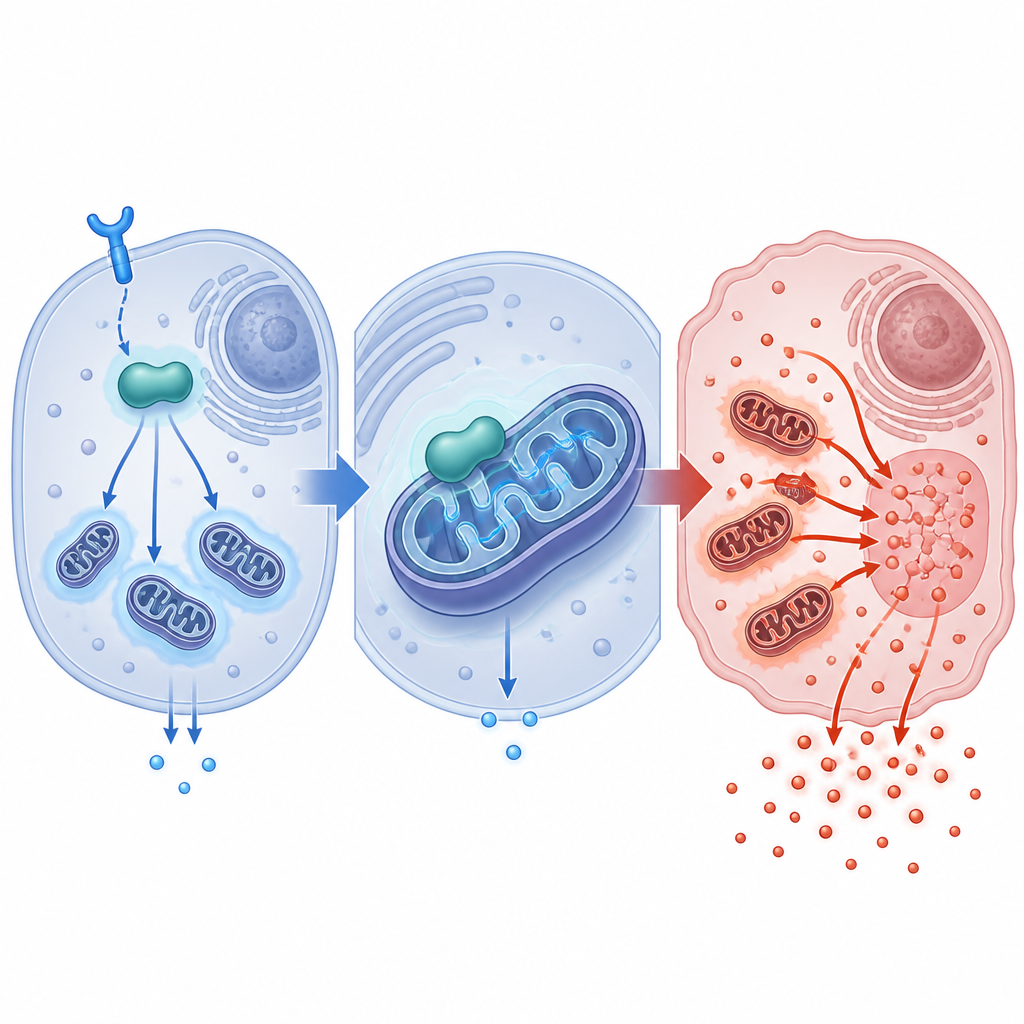
A key partner protein keeps metabolism in balance
The team then identified a critical partner in this process, a protein called SIRT3 that resides in the cell’s energy factories, the mitochondria, and helps fine-tune metabolism. They found that FGFR1 binds to SIRT3 and supports both its production and stability, preventing it from being broken down too quickly. When FGFR1 levels were raised, SIRT3 increased, energy production shifted away from heavy sugar burning, and lactate and lactylation levels dropped. When SIRT3 was removed, these calming effects of FGFR1 largely disappeared: cells again produced more lactate, regained strong growth signals, and showed higher lactylation. This indicates that much of FGFR1’s protective role is carried out through SIRT3.
Testing the switch in living animals
To see whether these findings held up in a more realistic setting, the researchers implanted human ovarian cancer cells with different FGFR1 levels into mice. Tumors lacking FGFR1 grew larger and showed more invasive features and higher cell division, while tumors with extra FGFR1 remained smaller and less aggressive. Tumor samples from these animals also mirrored the cell culture results: FGFR1 levels tracked with changes in lactate production and lactylation marks inside the tumors, reinforcing the idea that this switch shapes both growth and metabolism in living tissue.
What this means for patients
Taken together, the work paints FGFR1 as a context-dependent tumor suppressor in ovarian cancer. Instead of driving malignancy, FGFR1 teams up with SIRT3 to dampen the cancer cell’s altered energy use, reduce lactic acid buildup, and limit chemical changes on proteins that push growth and spread. For patients, this suggests that the FGFR1–SIRT3 axis could be a valuable marker of prognosis and a potential target for future therapies designed to rebalance tumor metabolism and the surrounding immune environment.
Citation: Jiang, F., Huang, H., Dong, Z. et al. FGFR1 suppresses ovarian cancer progression by modulating SIRT3-dependent lactylation and metabolic reprogramming. Cell Death Discov. 12, 244 (2026). https://doi.org/10.1038/s41420-026-03054-6
Keywords: ovarian cancer, tumor metabolism, lactate, FGFR1, SIRT3