Clear Sky Science · en
Programmed cell death in cancer: targeting necroptosis to kill tumor cell
Why killing cancer cells in a new way matters
Cancer drugs often try to coax tumor cells into a tidy kind of self-destruction called apoptosis. Many stubborn cancers learn to dodge this signal, making treatments less effective. This article explores another, rougher form of cell death called necroptosis that might help doctors tackle treatment-resistant tumors and awaken the body’s own immune system against cancer.
A different path to tumor cell death
Necroptosis is a programmed way for cells to die that looks messy under the microscope, with bursting membranes and leaking contents, yet is controlled by a defined set of proteins. At its core are three key molecules that act like switches and executioners: RIPK1, RIPK3, and MLKL. When certain stress signals or inflammatory molecules bind to receptors on the cell surface, these proteins can assemble into a molecular death machine that pokes holes in the cell’s outer shell, causing it to rupture. Unlike accidental injury, this pathway is tightly regulated and can be steered on or off by the cell and, in principle, by drugs.
How signals decide between quiet and noisy death
Inside a stressed cell, several checkpoints determine whether it will die quietly or unleash an inflammatory exit. A common trigger is the molecule TNF binding its receptor, which first forms a complex that usually promotes survival and inflammation. Chemical tags added to RIPK1 in this complex help keep its lethal potential in check. If these tags are removed, or if another key enzyme called caspase-8 is blocked, RIPK1 can leave this safe zone and join RIPK3 to form a “necrosome,” which then activates MLKL to damage the cell membrane. Other sensors, such as the protein ZBP1 that detects unusual forms of DNA during viral infection or metabolic stress, can also feed into this machinery, sometimes bypassing RIPK1 altogether. In this way, the cell uses the same core tools to respond differently depending on the kind of danger it senses.
When necroptosis helps or hurts cancer control
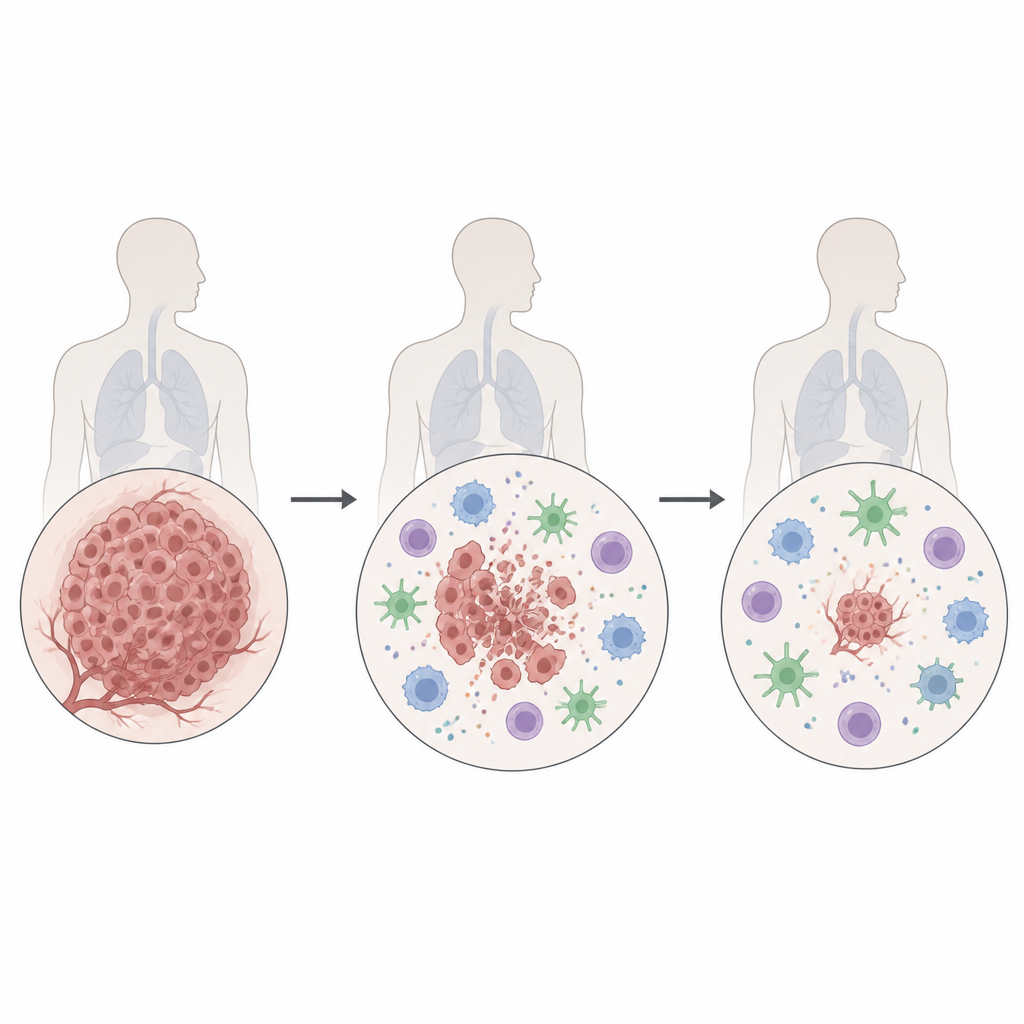
Because necroptosis ends with the cell bursting, it spills alarm signals and bits of cellular material into the tumor environment. These leaked molecules can rally the immune system by maturing dendritic cells and priming killer T cells, helping the body recognize and attack cancer. In some cancers, low levels of RIPK3 or MLKL are linked to worse outcomes, suggesting tumors may deliberately silence this pathway to avoid detection. Yet the same inflammatory mix can also backfire. Certain cytokines and chemical attractants released during necroptosis can draw in cells that suppress immunity, spur blood vessel growth, and support tumor spread. Clinical studies reflect this split personality: in some tumor types, strong necroptosis markers relate to better survival, while in others they correlate with more aggressive disease.
Drugs, natural compounds, and smart particles that flip the switch
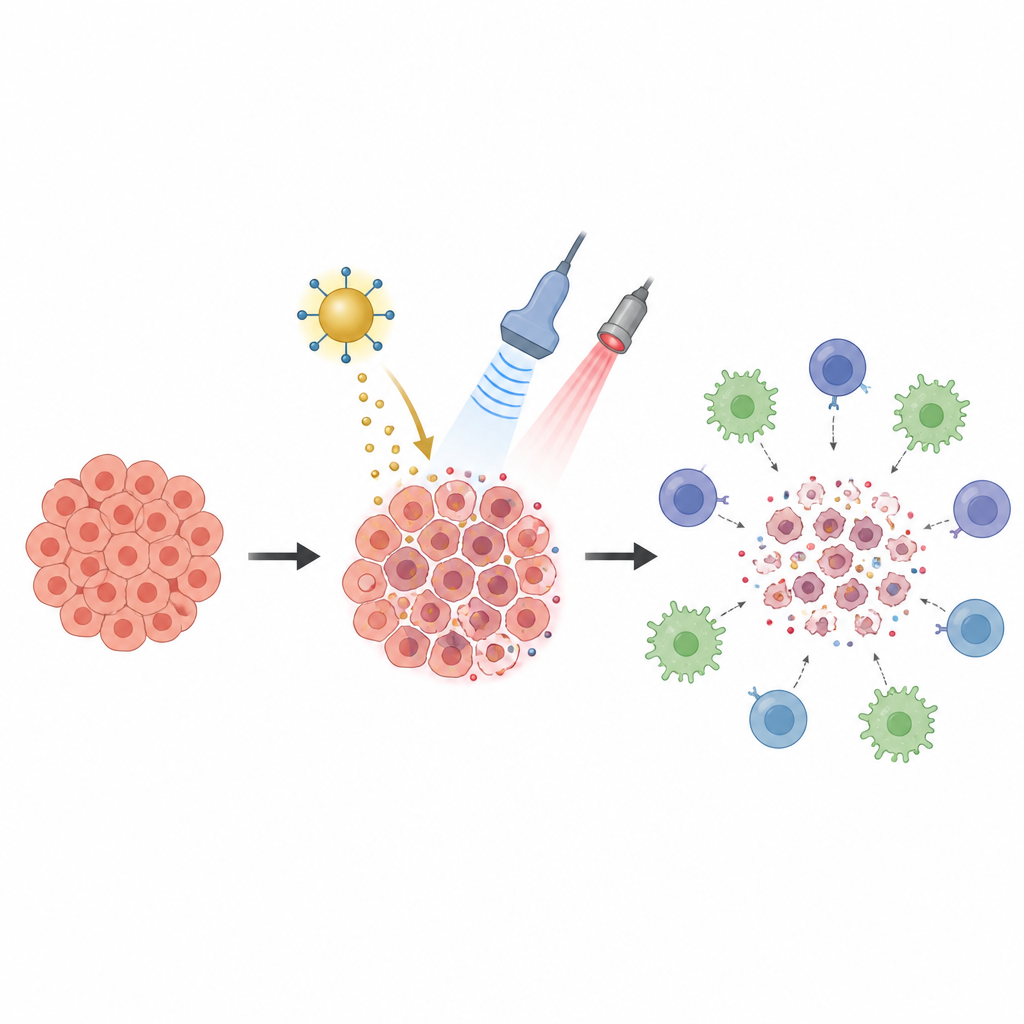
Researchers are testing many ways to push tumor cells into necroptosis, especially when they no longer respond to standard chemotherapy. Some existing drugs, when combined with caspase blockers, can shift cells from quiet apoptosis to inflammatory necroptosis. Natural substances such as shikonin, celastrol, and related plant-derived molecules can boost reactive oxygen species and stress the cell enough to activate the RIPK1–RIPK3–MLKL axis, even in resistant cancers. Beyond simple drugs, nanomedicine offers more precise control. Tiny engineered particles can home to tumors and be activated by light, heat, or ultrasound to generate local damage that favors necroptosis. These approaches can both kill tumor cells and stimulate an immune response, potentially working hand in hand with modern immunotherapies.
Promise and caution for future cancer care
The authors conclude that forcing cancer cells into necroptosis could become a valuable addition to the treatment toolbox, especially for tumors that have disabled the more traditional self-destruct routes. However, they stress that turning on this fiery form of cell death is risky if not carefully targeted, because the same inflammation that alerts the immune system might also fuel tumor growth and spread. Many tumors already have low levels of the key necroptosis proteins, and reliable markers to track this process in patients are still limited. Future work will need to restore or fine-tune these molecular switches, choose the cancers and treatment combinations most likely to benefit, and design drug and nanomedicine strategies that harness immune activation while keeping harmful inflammation in check.
Citation: Liang, J., Tan, C., Li, X. et al. Programmed cell death in cancer: targeting necroptosis to kill tumor cell. Cell Death Discov. 12, 239 (2026). https://doi.org/10.1038/s41420-026-03002-4
Keywords: necroptosis, cancer immunotherapy, nanomedicine, programmed cell death, tumor microenvironment