Clear Sky Science · en
Cetuximab co-treatment with KRAS G12C inhibitors fulzerasib and sotorasib in human KRAS G12C non-small cell lung cancer cells
Why this cancer study matters
Lung cancer remains one of the leading causes of cancer death, and a sizeable fraction of patients carry a specific DNA change called KRAS G12C. New drugs that target this mutation have raised hopes, but their benefits are often modest and short‑lived. This study explores whether pairing these KRAS drugs with another targeted medicine, cetuximab, can make treatment more powerful and longer lasting, and looks for warning signs that tumors are slipping into resistance.
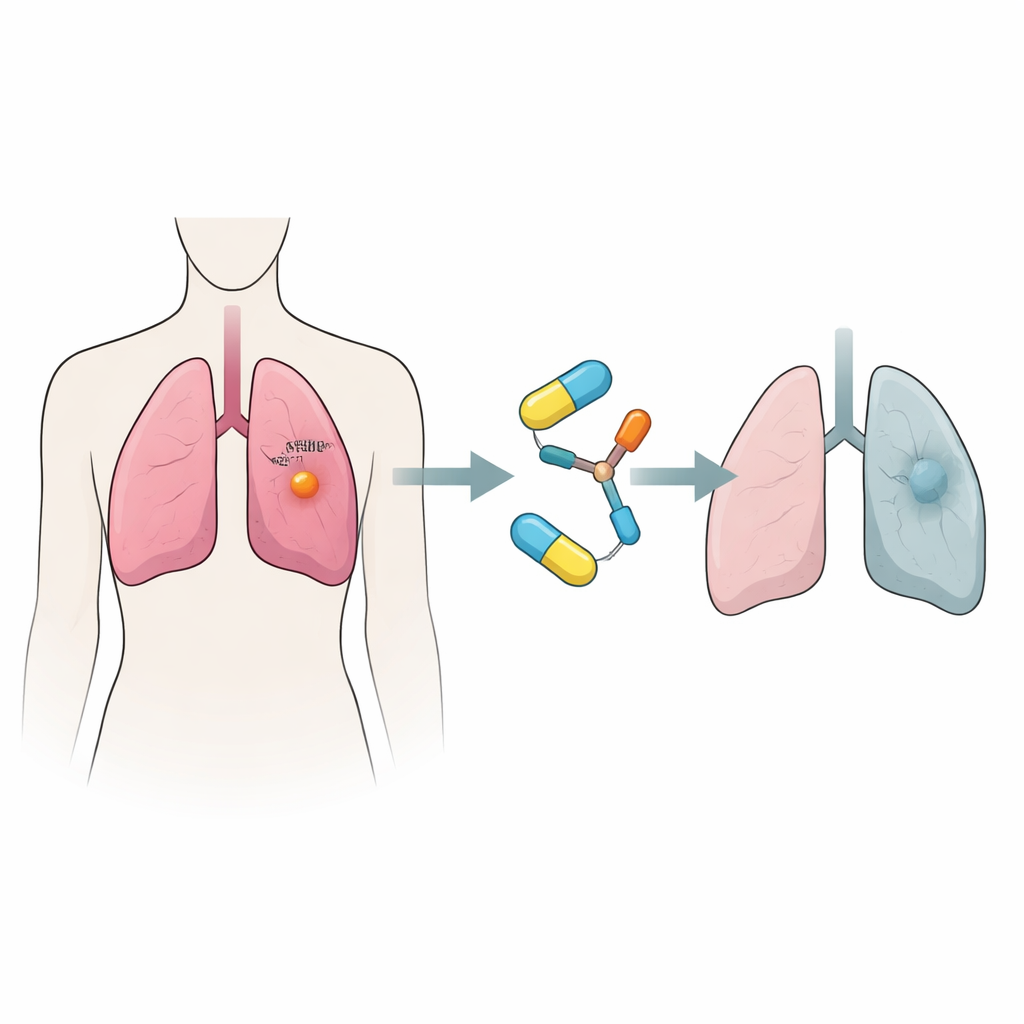
A stubborn mutation in lung tumors
The researchers focus on non‑small cell lung cancer (NSCLC) driven by the KRAS G12C mutation. Two drugs, sotorasib and fulzerasib, are designed to lock the KRAS protein into an "off" state, and they already show meaningful but limited responses in patients whose disease has progressed after standard therapies. Clinical trials have reported that fewer than half of such patients respond, and most tumors start growing again within several months. Earlier work suggested that a growth signal coming from the cell surface, through a protein called EGFR, can reawaken KRAS‑driven pathways and help cancer cells escape these drugs.
Testing a double hit in cancer cells
To probe this escape route, the team treated a panel of KRAS G12C‑mutant cancer cell lines with sotorasib or fulzerasib, alone or together with cetuximab, an antibody that blocks EGFR. They examined how many cells survived, under conditions that either quieted or stimulated EGFR. Almost all KRAS G12C cell lines were vulnerable to the KRAS drugs when EGFR activity was low, but many became less sensitive when EGFR was artificially switched on. Fulzerasib tended to retain more potency than sotorasib under these EGFR‑activating conditions. When cetuximab was added, most cell lines showed at least an additive benefit, and one lung line, H358, displayed clear synergy: the combination killed far more cells than either drug alone.
Peering inside the signaling machinery
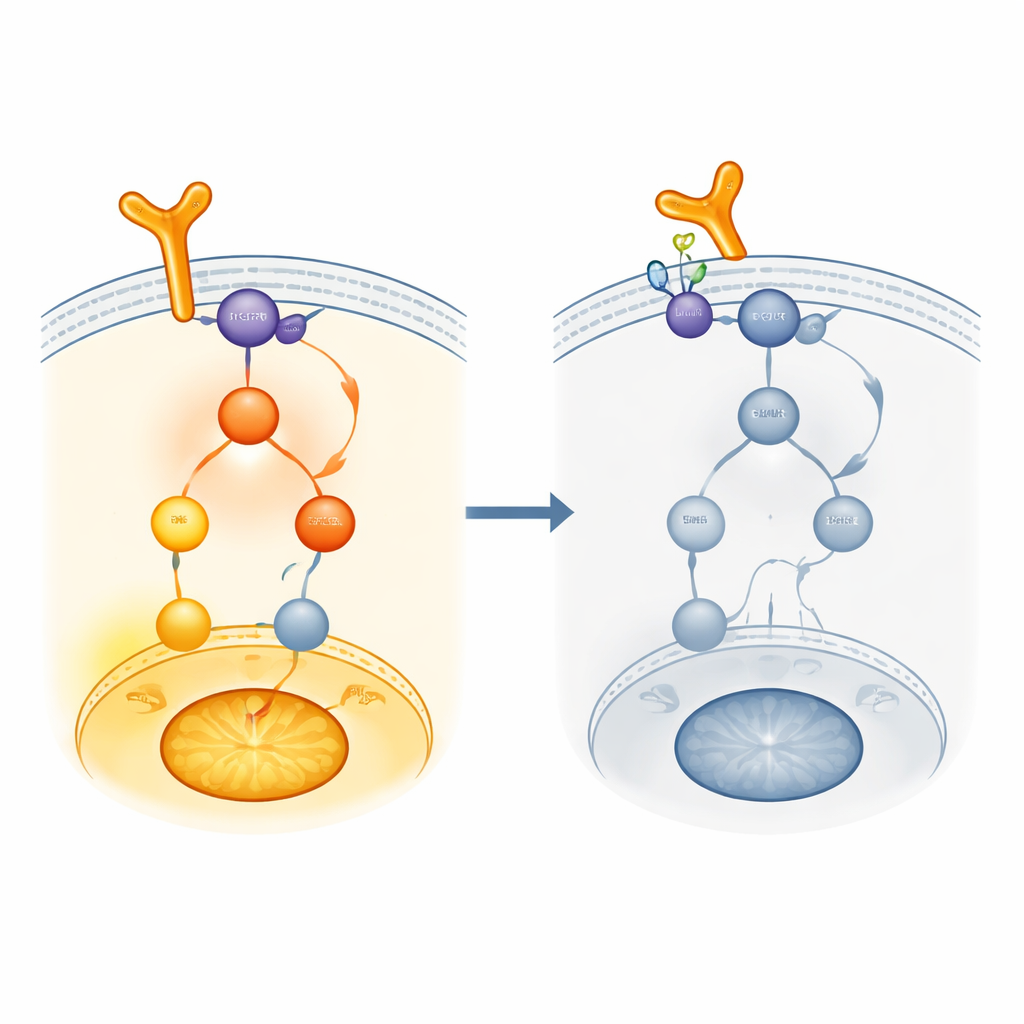
The investigators then tracked key signaling proteins over time in three lung cancer lines that differed in their drug sensitivity: H358 (highly sensitive), H23 (intermediate), and H2030 (resistant). KRAS normally drives two main growth routes inside the cell, often summarized as the ERK and AKT pathways. Treatment with a KRAS drug alone initially slowed these signals but, after one to three days, a rebound in ERK activity emerged in all three lines, a hallmark of resistance. Adding cetuximab delayed this rebound and, in H358 cells, strongly dampened ERK, AKT, and two resistance‑linked proteins, MRAS and YAP1, while also reducing a surface receptor called EphA2 that is associated with poor outcomes. In contrast, H23 and especially H2030 cells continued to show strong YAP1 and MRAS activity despite combination treatment, hinting that some tumors may rely less on KRAS and more on alternative survival programs.
Clues from feedback brakes and tumor metabolism
The team also examined MIG6, a natural brake on EGFR. In all three cell lines, KRAS drugs sharply lowered MIG6 levels within 24 hours, and this suppression persisted even when cetuximab was present. This suggests that KRAS‑targeted therapy itself disarms one of the cell’s own safeguards against EGFR, reinforcing the case for pairing KRAS and EGFR blockade. In parallel, they studied argininosuccinate synthase 1 (ASS1), an enzyme linked to the cell’s handling of amino acids and the energy‑producing cycle that generates fumarate. KRAS‑mutant lung cancers often show low ASS1, which is tied to poor prognosis. Here, KRAS drugs increased ASS1 over time in all three lines, particularly in the more resistant H23 and H2030, and fumarate levels rose across the board. These shifts suggest that metabolic changes, including ASS1 and fumarate, might one day serve as markers to follow how tumors respond or adapt to KRAS‑directed therapy, though their exact role remains unresolved.
Proof of benefit in mice
To test whether the promising cell‑culture results translate in living organisms, the researchers implanted H358 lung cancer cells under the skin of mice. Animals received fulzerasib, cetuximab, both, or control treatments at different doses. Neither drug caused major weight loss or deaths, indicating that the regimens were tolerable. As single agents, each slowed tumor growth, especially at higher doses. However, the combination stood out: at the richest dosing schedule, tumors were almost completely suppressed, with about 97% growth inhibition compared with controls.
What this means for patients
Overall, the study supports the idea that blocking both KRAS G12C and EGFR can work better than targeting KRAS alone in at least a subset of lung cancers, exemplified by the H358 model that mirrors encouraging early clinical trial results. At the same time, not all KRAS G12C tumors behave alike; some lines resisted the combination and relied on backup routes such as YAP1 and MRAS. The work highlights candidate biomarkers, including YAP1, MRAS, MIG6, ASS1, and fumarate, that may help doctors in the future identify which patients are most likely to benefit from such combinations and who might need additional or different targeted drugs. While more research and clinical validation are needed, this study points toward smarter, layered treatment strategies for a hard‑to‑treat form of lung cancer.
Citation: Olmo-González, D., Zhou, M., Oliveira, N.G. et al. Cetuximab co-treatment with KRAS G12C inhibitors fulzerasib and sotorasib in human KRAS G12C non-small cell lung cancer cells. Cell Death Discov. 12, 134 (2026). https://doi.org/10.1038/s41420-026-02998-z
Keywords: KRAS G12C lung cancer, targeted therapy resistance, EGFR inhibition, drug combination therapy, tumor biomarkers