Clear Sky Science · en
Non-enzymatic function of QSOX2 directly regulates the JUNB-ITGB4 axis and enhanced resistance to osimertinib in EGFR-mutation lung adenocarcinoma
Why some lung cancers stop responding to a key drug
Osimertinib is a pill that has extended the lives of many people with a common type of lung cancer, yet nearly all tumors eventually outsmart it. This study explores how certain lung cancer cells rewire their internal signaling so they can keep growing even in the presence of the drug, and points to a new weak spot that future treatments might exploit.
A hidden helper inside lung tumors
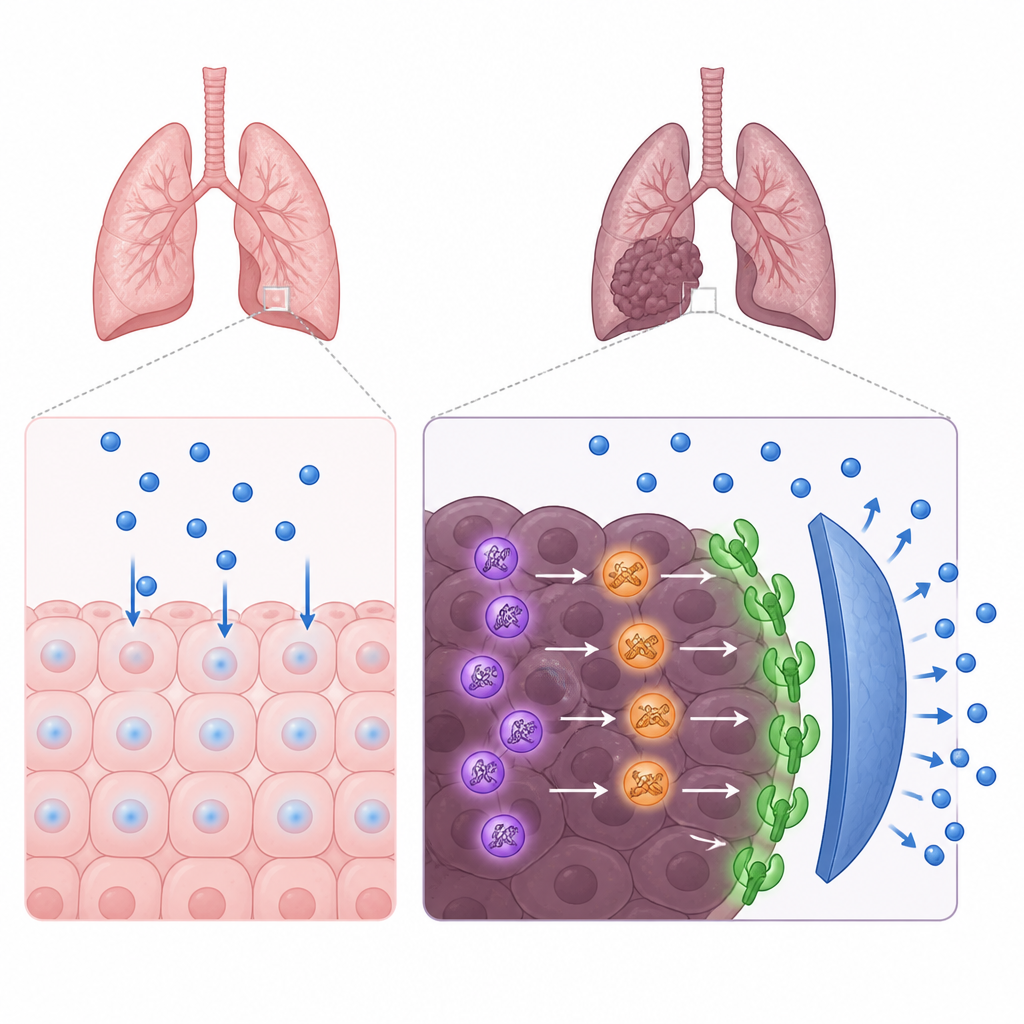
The researchers focused on lung adenocarcinoma, the most frequent form of lung cancer, especially in people whose tumors carry changes in a gene called EGFR. Osimertinib targets these altered EGFR molecules, but tumors often become resistant through backup pathways. By analyzing patient samples and single cells from tumors, the team found that a little-studied protein called QSOX2 is abnormally abundant in cancer cells, but not in nearby normal lung tissue. Higher levels of QSOX2 were linked to more aggressive disease and shorter benefit from third-generation EGFR drugs such as osimertinib.
QSOX2 helps cancer cells shrug off the drug
To see whether QSOX2 actively makes tumors more drug-resistant, the scientists altered its levels in lung cancer cell lines with EGFR mutations. When they reduced QSOX2, cells became more sensitive to osimertinib. When they boosted QSOX2, cells needed over twenty times more drug to be controlled. Blood tests from patients showed that those whose disease progressed sooner had higher QSOX2 levels in their serum. Together, these findings suggest that QSOX2 is not just a bystander marker of aggressive cancer but a functional driver of resistance.
A protein chain that strengthens survival signals
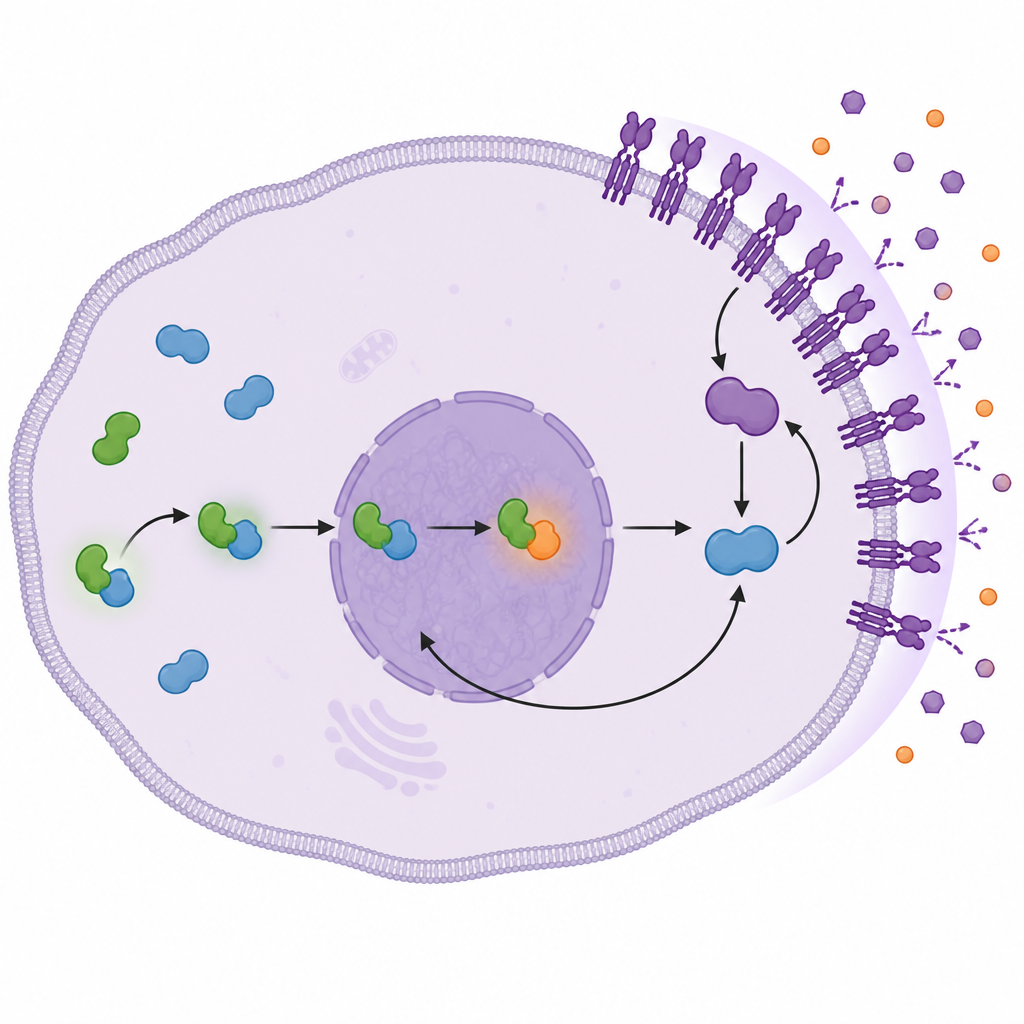
Diving deeper, the team uncovered a chain of events that begins with QSOX2 and ends with stronger survival signals at the cell surface. QSOX2 physically binds to another protein, JUNB, which controls gene activity. This binding stabilizes JUNB and encourages it to move into the cell nucleus, where it turns on the gene for ITGB4, a receptor that sits on the cell membrane. Extra ITGB4 on the surface then switches on a pair of signaling molecules known as FAK and AKT, which are well-known promoters of cell growth and survival. AKT, in turn, helps keep JUNB active in the nucleus, forming a self-reinforcing loop that keeps the bypass pathway switched on even when EGFR is blocked by osimertinib.
Resistance confirmed in patient-derived mini-tumors
Laboratory results can sometimes fail to reflect real tumors, so the researchers tested their ideas in more realistic models. They grew three-dimensional mini-tumors, or organoids, from patient samples, and also implanted human tumors into mice to create patient-derived xenografts. In both systems, tumors that no longer responded to osimertinib showed high levels of QSOX2, JUNB and ITGB4, while sensitive tumors had lower levels. Blocking FAK or AKT, or reducing QSOX2 or ITGB4, made resistant organoids and tumors more responsive to the drug, supporting the central role of this signaling axis in real-world resistance.
A new target to help keep treatment working
For people with EGFR-mutant lung adenocarcinoma, the main message is that resistance to osimertinib can be driven by a drug-bypass loop built around QSOX2, JUNB and ITGB4, which activates powerful growth signals independent of EGFR. Although specific QSOX2-blocking drugs do not yet exist, this work suggests that testing for QSOX2 and related proteins might help predict how long patients will benefit from EGFR-targeted pills, and that future treatments aimed at this axis or its partners FAK and AKT could help restore sensitivity and prolong the usefulness of current therapies.
Citation: Liu, C., Wang, S., Qi, R. et al. Non-enzymatic function of QSOX2 directly regulates the JUNB-ITGB4 axis and enhanced resistance to osimertinib in EGFR-mutation lung adenocarcinoma. Cell Death Discov. 12, 215 (2026). https://doi.org/10.1038/s41420-026-02969-4
Keywords: osimertinib resistance, EGFR mutant lung cancer, QSOX2, ITGB4 FAK AKT pathway, drug tolerance