Clear Sky Science · en
OTUB2 induces M2 tumor-associated macrophage polarization and increases CD274 expression in gastric cancer cells to aggravate the progression of gastric cancer
Why this research matters
Stomach cancer remains one of the deadliest cancers because it is usually found late and often resists modern immune therapies. This study uncovers how a single protein inside tumor cells, called OTUB2, helps stomach cancer grow by reshaping nearby immune cells and hiding the tumor from the body’s defenses. Understanding this hidden control switch may open new ways to make existing immunotherapy drugs work better for more patients.
Turning friendly immune cells into tumor helpers
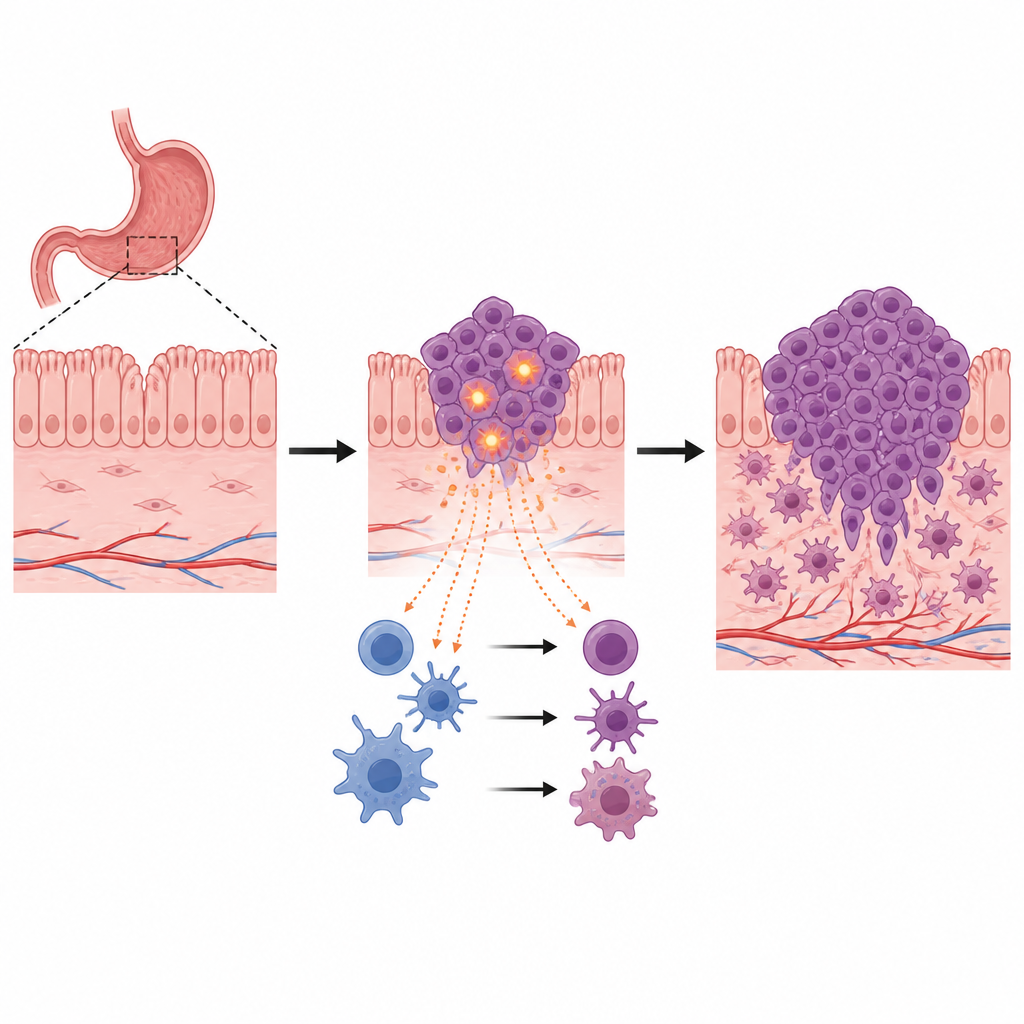
The tumor area is not just a lump of cancer cells; it is a complex neighborhood of blood vessels, support cells, and many kinds of immune cells. Among these are macrophages, which can either attack cancer or help it grow. The helpful, attack-ready form is often called M1, while the tumor-supporting form is called M2. The researchers found that stomach tumors with high levels of OTUB2 were packed with M2 macrophages. In lab dishes, when macrophages were grown near cancer cells rich in OTUB2, they shifted toward the M2 type, suggesting that tumor cells were sending signals that reprogrammed these immune cells into allies of the cancer.
A protein that stabilizes growth signals and a key shield
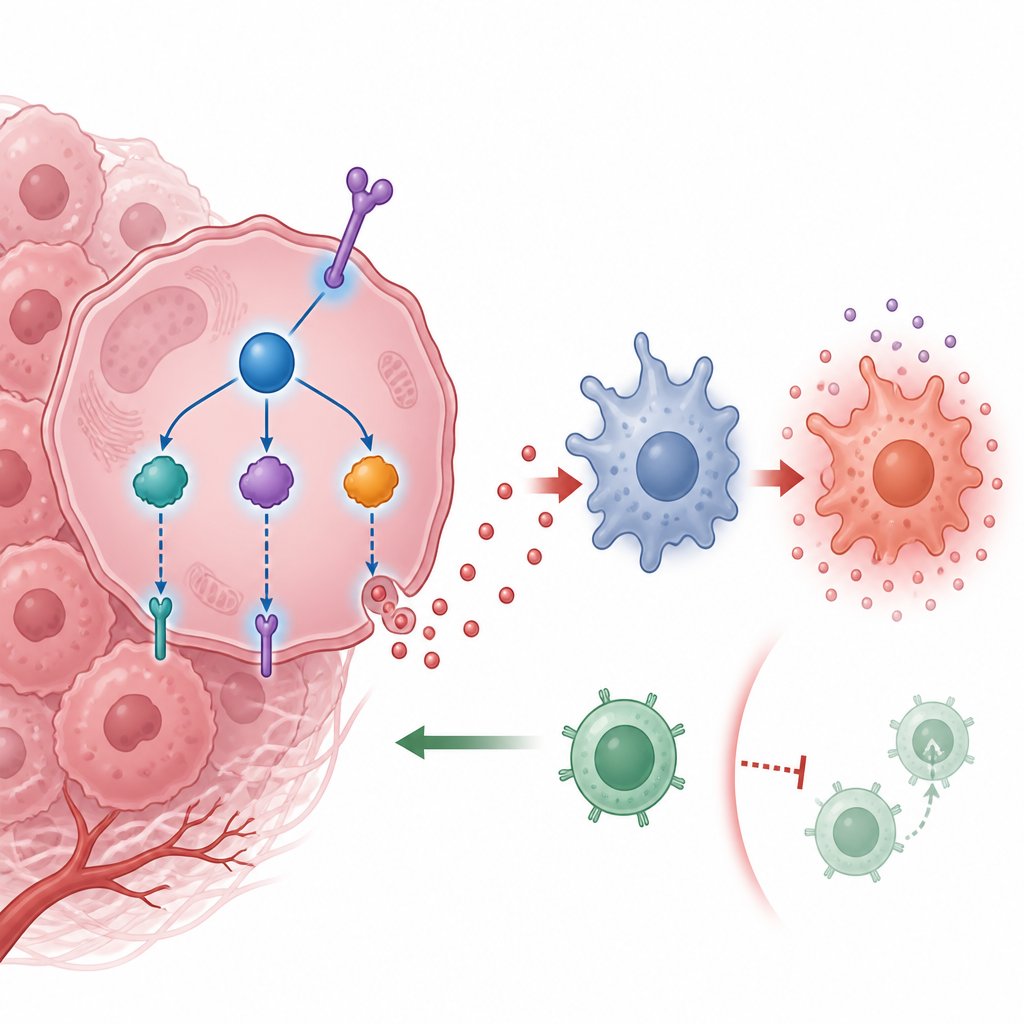
Diving deeper, the team discovered that OTUB2 acts like a molecular bodyguard for several other proteins that drive tumor growth and immune escape. Normally, cells use a system similar to a recycling tag to mark proteins for destruction. OTUB2 removes these tags from three important targets inside stomach cancer cells: two growth regulators known as YAP and TAZ, and CD274, better known as PD-L1, a surface molecule that can silence attacking T cells. By stripping off the tags, OTUB2 prevents these proteins from being broken down, so they build up inside the cancer cells and on their surface.
How cancer cells push macrophages to the dark side
YAP and TAZ do not act alone. When protected by OTUB2, they switch on pathways inside tumor cells that boost the release of TGF-beta1, a potent signaling molecule that can push macrophages toward the M2 state. The researchers showed that blocking the YAP/TAZ pathway reduced TGF-beta1 production and weakened the shift toward M2 macrophages. In tissue samples from patients and in mouse tumors, high OTUB2 went hand in hand with higher YAP/TAZ, more TGF-beta1, and dense infiltration of M2 macrophages. These M2 cells, in turn, made stomach cancer cells grow faster, cycle more quickly, and better survive stress.
Helping tumors hide from killer T cells
At the same time, OTUB2 makes it easier for the tumor to hide from the immune system’s main executioners: CD8 T cells. By stabilizing PD-L1 on the cancer cell surface, OTUB2 strengthens a molecular “do not attack” signal sent to T cells. In patient samples, high OTUB2 matched higher PD-L1 levels and fewer CD8 T cells in the tumor. In cell-based killing tests, cancer cells with extra OTUB2 survived T cell attack more easily, while cells with reduced OTUB2 were cleared more effectively. Importantly, blocking the YAP/TAZ pathway did not lessen the increase in PD-L1 driven by OTUB2, showing that OTUB2 directly protects PD-L1 independently of its effects on other pathways.
What this means for future treatment
Taken together, the study paints OTUB2 as a central switch that both turns macrophages into tumor helpers and raises a shield against T cells. In mice, tumors engineered to express more OTUB2 grew faster, had more M2 macrophages, higher TGF-beta1 and PD-L1, and fewer CD8 T cells. For a lay reader, the message is that some stomach cancers use OTUB2 to bend the immune system to their advantage, both recruiting helpers and blocking attackers. Targeting OTUB2 in the future could weaken this double advantage, making tumors more visible and vulnerable to existing checkpoint drugs that target PD-L1 and related pathways.
Citation: Li, J., Sun, J., Zhang, C. et al. OTUB2 induces M2 tumor-associated macrophage polarization and increases CD274 expression in gastric cancer cells to aggravate the progression of gastric cancer. Cell Death Dis 17, 509 (2026). https://doi.org/10.1038/s41419-026-08743-9
Keywords: gastric cancer, tumor microenvironment, tumor-associated macrophages, PD-L1, immunotherapy