Clear Sky Science · en
VHL-recruiting PROTAC attenuates AKI-CKD transition via simultaneous degradation of Smad3 and stabilization of HIF-2α
Why protecting injured kidneys matters
Many people who suffer a sudden bout of kidney damage after illness, drugs, or surgery appear to recover at first, only to develop ongoing kidney problems months or years later. This shift from short term injury to long term disease silently raises the risk of dialysis, heart trouble, and early death. The study behind this article explores a new type of designer drug that helps injured kidneys heal more cleanly, aiming to prevent this dangerous slide into lasting kidney scarring.
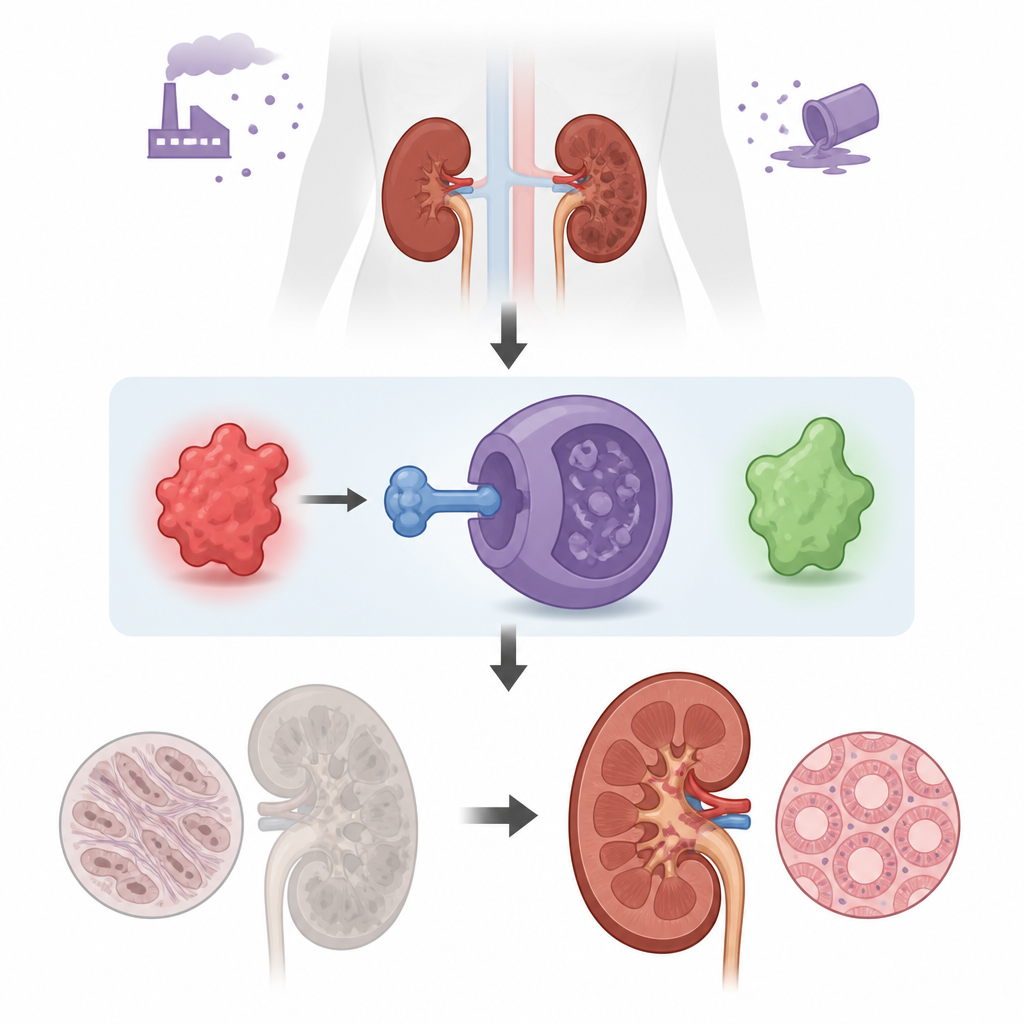
A closer look at sudden and lasting kidney damage
Acute kidney injury happens when toxins, medicines like cisplatin, or severe infections suddenly strain the kidneys. In many cases, lab tests gradually return to normal, but the tissue inside the kidney can be left with hidden scars. Scientists know that poor repair of the tiny tubules that filter and process blood, ongoing inflammation, and new scar tissue in the surrounding tissue are central to this acute to chronic shift. Two key signaling systems sit at this crossroads: one driven by a protein called Smad3 that favors scarring, and another controlled by oxygen sensing factors that can either worsen or ease damage depending on how they are balanced.
A smart molecule that redirects cell cleanup
The research team built a custom molecule called P1705434 using a drug platform known as PROTAC. Instead of simply blocking a protein, PROTAC drugs tag it for removal by the cell’s own garbage disposal machinery. P1705434 brings together Smad3 and a natural tagger protein called VHL so that Smad3 is broken down. Under normal conditions VHL also breaks down a protective oxygen sensor called HIF-2α. By giving VHL a new preferred partner, P1705434 not only clears excess Smad3 but also spares and stabilizes HIF-2α. In cell tests, this dual action lowered Smad3 levels while allowing HIF-2α to build up, setting up a more healing friendly environment in stressed kidney cells.
Testing the drug in mouse models of kidney injury
To see whether this approach works in living animals, the scientists used two well known mouse models. One model relied on a high dose of the chemotherapy drug cisplatin, which strongly damages kidney tubules. The other used an injection of folic acid that first causes acute injury and later leads to chronic scarring, mimicking the real world transition from sudden to ongoing disease. Mice treated with P1705434 around the time of injury had lower blood markers of kidney damage, fewer signs of tubular cell death and inflammation, and better early kidney function. In the folic acid model, the drug reduced markers of fibrotic tissue, preserved healthy cell junctions, and lessened invasion by scar promoting immune cells, especially a macrophage subtype linked to long term fibrosis.
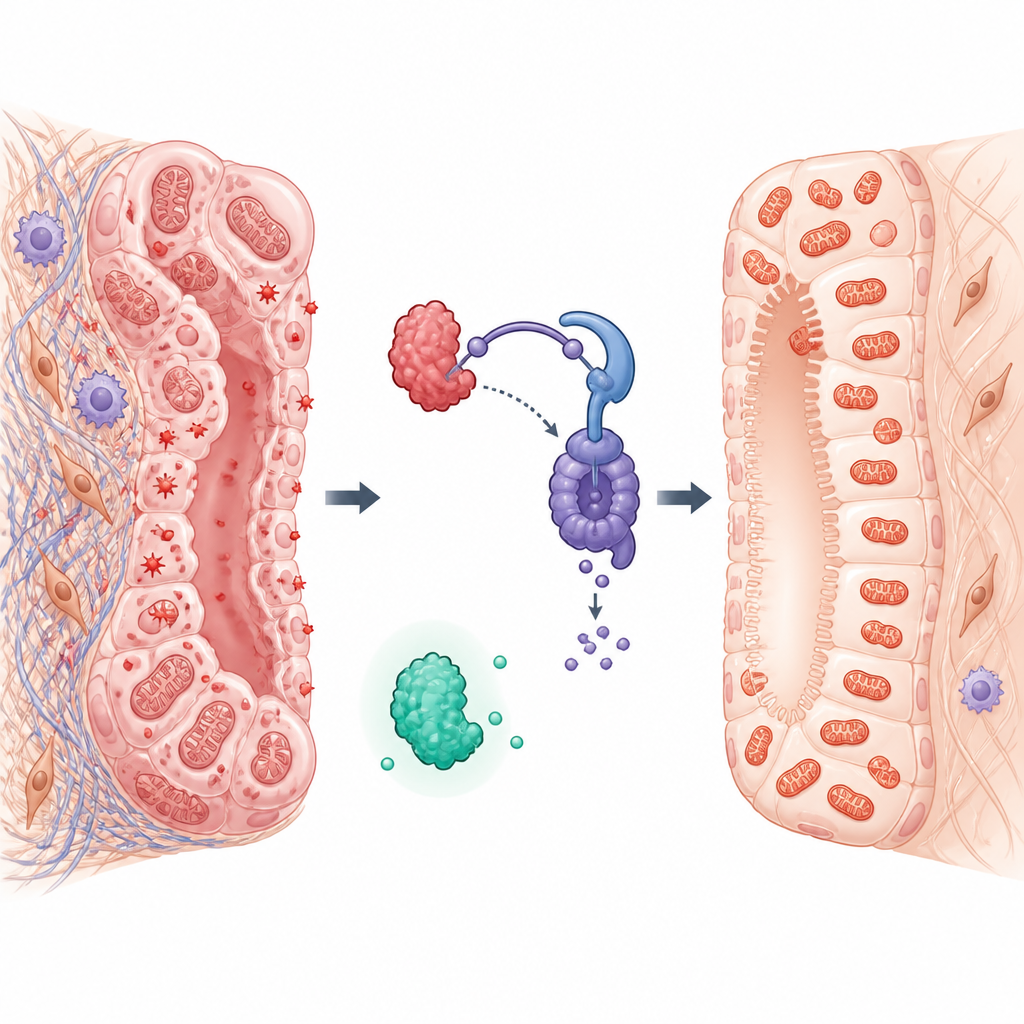
Zooming in on kidney cell types and mitochondria
To understand which kidney cells benefit most, the team used single cell RNA sequencing to profile tens of thousands of cells after cisplatin injury, with and without treatment. They found that P1705434 cut down the number of maladaptive proximal tubule cells and dampened a powerful inflammatory pathway driven by TNF signals. The drug also affected collecting duct cells, a different tubular segment that helps control salt, water, and acid levels. In untreated injured kidneys, a previously unrecognized transitional cell type in this region tended to move toward a fibroblast like state that fuels scarring. With P1705434, this shift was reduced, and genes tied to efficient energy production in mitochondria, known as oxidative phosphorylation, were boosted. Direct tests showed better mitochondrial membrane potential, lower reactive oxygen species, more normal ultrastructure, and stronger respiratory capacity in treated animals.
What this could mean for future kidney care
Together, these findings suggest that a single PROTAC drug, by knocking down a pro scarring signal and preserving a protective oxygen sensor, can steer multiple kidney cell types toward healthier repair after acute injury. This approach not only limits early damage and inflammation but also slows the buildup of fibrous tissue that drives chronic kidney disease. While the work is still in animals and much remains to be done before it can be tested in people, it offers a clear illustration of how precisely tailored molecules might one day help kidneys bounce back more fully after serious stress.
Citation: Ruan, Y., Wang, D., Xu, Y. et al. VHL-recruiting PROTAC attenuates AKI-CKD transition via simultaneous degradation of Smad3 and stabilization of HIF-2α. Cell Death Dis 17, 460 (2026). https://doi.org/10.1038/s41419-026-08726-w
Keywords: acute kidney injury, chronic kidney disease, PROTAC, renal fibrosis, mitochondria