Clear Sky Science · en
Targeting the epigenome and the integrated stress response to normalize colorectal cancer subclonal plasticity and progression
Why this research matters to patients and families
Colorectal cancer is one of the most common cancers worldwide, and many patients with advanced disease eventually stop responding to treatment. This study explores why some cancer cells survive therapy and become even more aggressive, focusing not on new DNA mutations but on how cells change the way their genes are switched on and off. By uncovering these hidden escape routes, the work points toward drug combinations that may better control or even eliminate resistant tumors in experimental models.
How colon tumors outsmart treatment
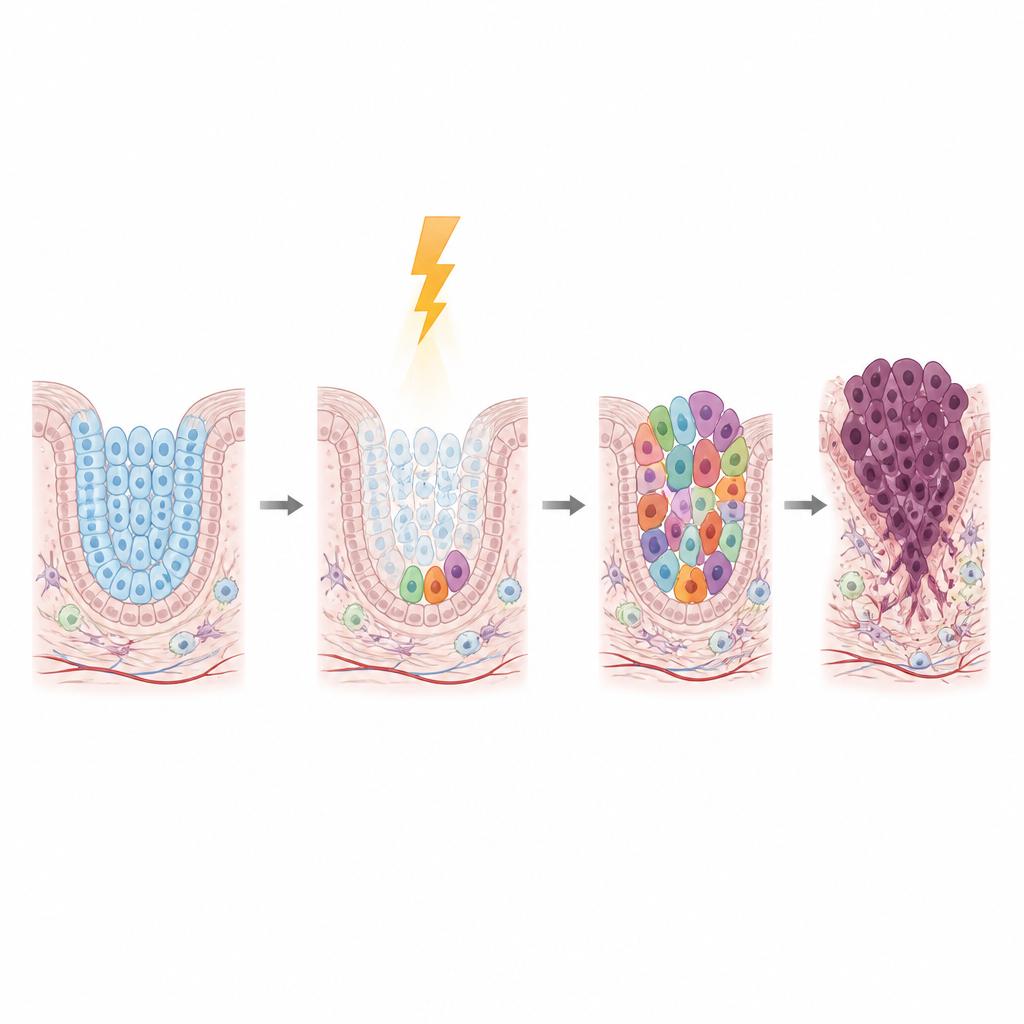
Doctors have long observed that metastatic colorectal cancer can progress even when its DNA looks much the same as that of the original tumor. The authors used a human colon cancer cell line in which turning on a specific genetic switch normally kills most cells. When they added the trigger drug, almost all cancer cells died, but a small group survived and slowly grew back, both in dishes and in mice. These survivor cells, called the R1 subclone, did not gain new cancer-driving mutations. Instead, they behaved differently because they had reorganized how their DNA is packaged and read, a hallmark of what scientists call epigenetic change.
Stress, cell flexibility, and a quiet alarm signal
The team focused on a protective program inside cells known as the integrated stress response. When the original cancer cells were hit with strong stress, this system switched on powerfully and most cells died. The R1 survivor cells, however, showed a weaker, persistent version of this stress program and a low-level internal alarm based on interferons, molecules usually linked to antiviral defense. Gene activity measurements revealed that R1 cells had rewired many stress and immune response genes. Detailed assays showed that key stretches of their DNA were harder to access, like books pushed to the back of a tightly packed shelf, while other regions became easier to read. This shifting pattern helped R1 cells dampen the lethal stress response yet keep enough signaling to hold their new state.
Reopening the cell’s instruction manual
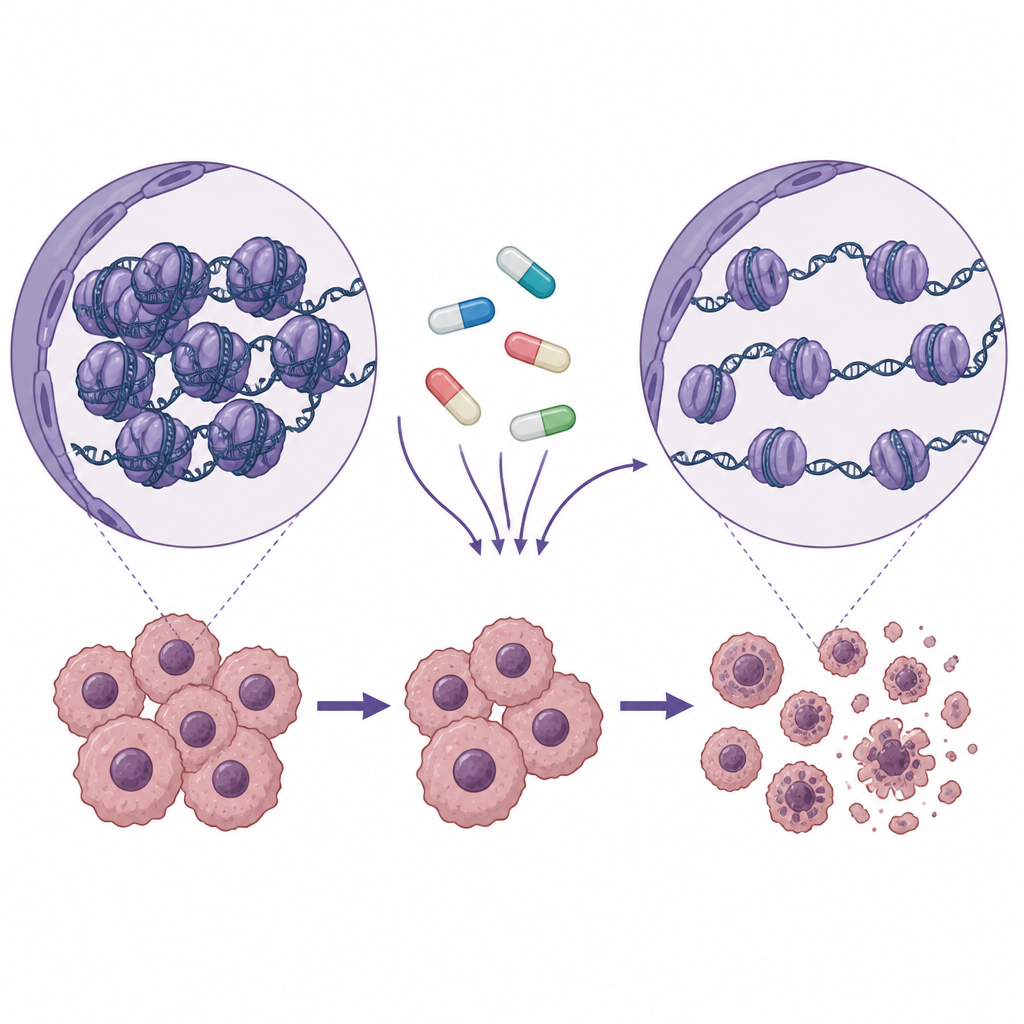
Because the resistant cells relied on these epigenetic changes, the researchers tested two drugs that loosen chemical marks on DNA and its associated proteins. In R1 cells, these drugs made certain gene regions more accessible again and boosted the activity of genes tied to cell death and interferon signaling. As a result, more cells died, and growth slowed sharply in lab cultures and in mouse tumors. Still, over time some tumors managed to regrow, suggesting that partial reprogramming of the cells was not enough for lasting control.
A three-drug strategy to push cells over the edge
To strengthen the effect, the team added a third compound, CC-90009, which promotes the breakdown of a protein involved in protein production and further activates the integrated stress response. Combined with the two epigenetic drugs, this triple therapy pushed stress signaling higher, opened up additional DNA regions, and markedly increased the death of resistant cells. The drug mix severely impaired growth in several different colorectal cancer cell lines while having only modest effects on more normal-like colon cells. In mice bearing resistant tumors, the triple treatment kept tumors from growing for long periods, and in some animals tumors disappeared and did not return during many months of observation.
What this could mean for future care
This work suggests that some colorectal cancers resist treatment not by changing their DNA code, but by reshaping how that code is read. A combination of drugs that reverse this reshaping and intensify cellular stress can drive previously resistant cells toward death in experimental systems. While these findings are early and based on cell lines and mouse models, they highlight a potential path toward therapies that target cancer cell flexibility itself, aiming to prevent or delay relapse after standard treatments.
Citation: Li, L., Ha, T., Feng, JX. et al. Targeting the epigenome and the integrated stress response to normalize colorectal cancer subclonal plasticity and progression. Cell Death Dis 17, 459 (2026). https://doi.org/10.1038/s41419-026-08720-2
Keywords: colorectal cancer, cancer resistance, epigenetic therapy, integrated stress response, tumor cell plasticity