Clear Sky Science · en
Mechanism and therapeutic significance of ARV-110 combined with a PDGFR inhibitor for the induction of apoptosis in castration-resistant prostate cancer cells through the ROS/JNK pathway
Why this new cancer strategy matters
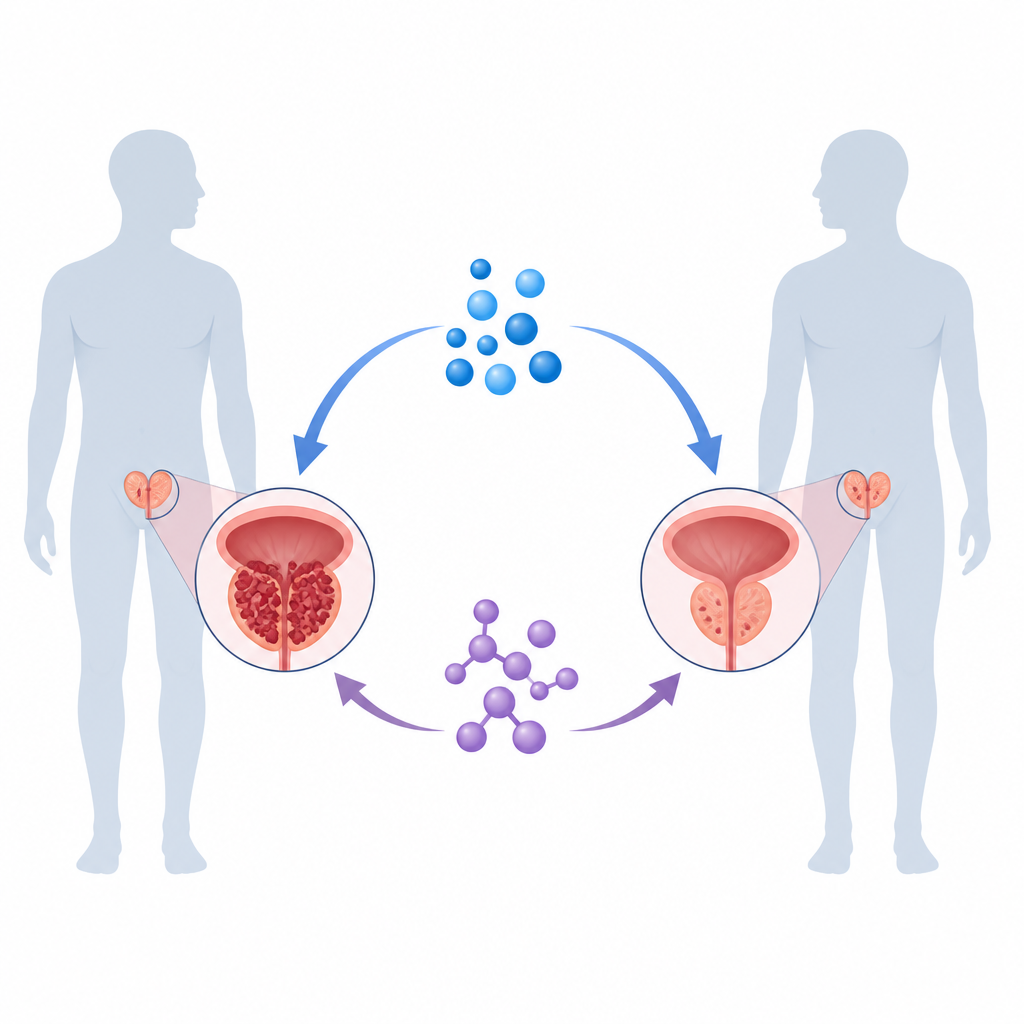
Castration-resistant prostate cancer is a form of the disease that keeps growing even after standard hormone treatments have removed or blocked male hormones. For many men, it means that today’s best drugs eventually stop working, leaving few good options. This study tests a new two-drug strategy that attacks tumor cells from two sides at once and explains in detail how this approach pushes stubborn cancer cells toward self-destruction while sparing the heart and other organs.
A tough stage of prostate cancer
Most prostate tumors depend on signals from the androgen receptor, a protein inside cells that responds to male hormones. Standard drugs shut down these signals and can hold the disease in check for a time. But in many patients, the cancer learns to live without normal hormone cues. It does this by mutating the receptor, making shortened versions of it, or switching over to other growth pathways. At this stage, called castration-resistant prostate cancer, the disease tends to spread, becomes harder to treat, and is linked to a poor outlook.
Taking away the receptor instead of just blocking it
The first part of the new strategy uses ARV-110, a drug that does not merely block the androgen receptor but marks it for destruction inside the cell. The researchers confirmed that ARV-110 efficiently broke down the full-length receptor and several of its variants in resistant prostate cancer cells grown in the lab, reducing cell survival more strongly than the widely used drug enzalutamide. However, some receptor fragments that lack a key binding region were not affected, helping explain why targeting this pathway alone cannot fully control the disease in all patients.
Adding a partner drug that cuts off a backup route
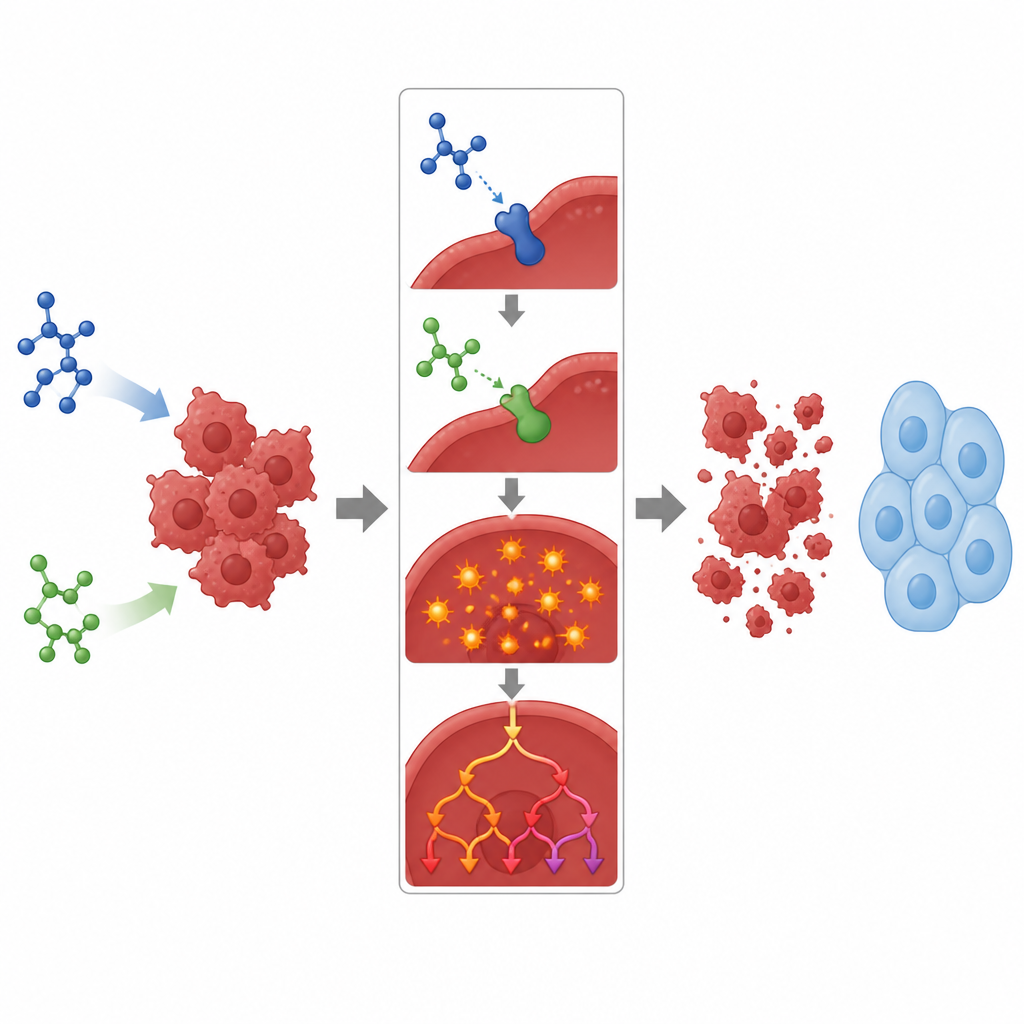
Knowing that cancer cells often switch to other growth switches when one is removed, the team screened more than three thousand approved or early-stage medicines to find a partner for ARV-110. They discovered that drugs blocking platelet-derived growth factor receptor, a surface molecule that drives growth and blood vessel support, made ARV-110 much more effective. A broad-acting drug called ponatinib worked especially well but can harm the heart. By narrowing in on its key target, they found that a more selective platelet-derived growth factor receptor blocker, JNJ10198409, combined with ARV-110 strongly reduced cancer cell viability and triggered far more cell death than either drug alone, while leaving heart-like cells largely unharmed.
Forcing cancer cells into fatal stress
To understand how the drug pair kills tumor cells, the researchers looked at gene activity, protein signals, and cell structures. ARV-110 unexpectedly increased production of a growth factor that feeds platelet-derived growth factor receptor, while the second drug cut the receptor’s activity. Together, they drove a surge of reactive oxygen species, unstable molecules that damage cell components. At the same time, both drugs reduced the level of catalase, a key enzyme that normally breaks down these molecules, but did so through different routes. The buildup of reactive oxygen species damaged mitochondria, the cell’s power stations, and switched on a stress pathway known as JNK, pushing the cancer cells into programmed death in dishes, in zebrafish models, and in mice with human tumors.
What this could mean for patients
This work outlines a clear and testable way to treat resistant prostate cancer by combining a receptor-destroying drug with a targeted blocker of a backup growth pathway. By both removing the main hormone signal and disabling a key escape route, the strategy overloads cancer cells with toxic stress and triggers their self-destruction while showing acceptable safety in early animal tests. Although human trials are still needed to confirm the right doses and long-term effects, the study offers a detailed blueprint for a future combination therapy that could help men whose prostate cancer no longer responds to current hormone treatments.
Citation: Fu, Y., Sun, S., Liu, G. et al. Mechanism and therapeutic significance of ARV-110 combined with a PDGFR inhibitor for the induction of apoptosis in castration-resistant prostate cancer cells through the ROS/JNK pathway. Cell Death Dis 17, 463 (2026). https://doi.org/10.1038/s41419-026-08718-w
Keywords: castration-resistant prostate cancer, androgen receptor, PROTAC therapy, PDGFR inhibitor, oxidative stress