Clear Sky Science · en
Targeting the tumor microenvironment: reprogramming macrophages as a novel therapeutic strategy in FUOM-deficient glioblastoma
Why brain tumors and immune cells matter
Glioblastoma is one of the deadliest brain cancers, and current treatments often fail because the tumor lives in a protective neighborhood that weakens the body’s defenses. This study looks at how a little-known protein made by tumor cells, called FUOM, shapes that neighborhood by talking to nearby immune cells. Understanding this hidden conversation could point to new ways to help the immune system hold brain tumors in check.
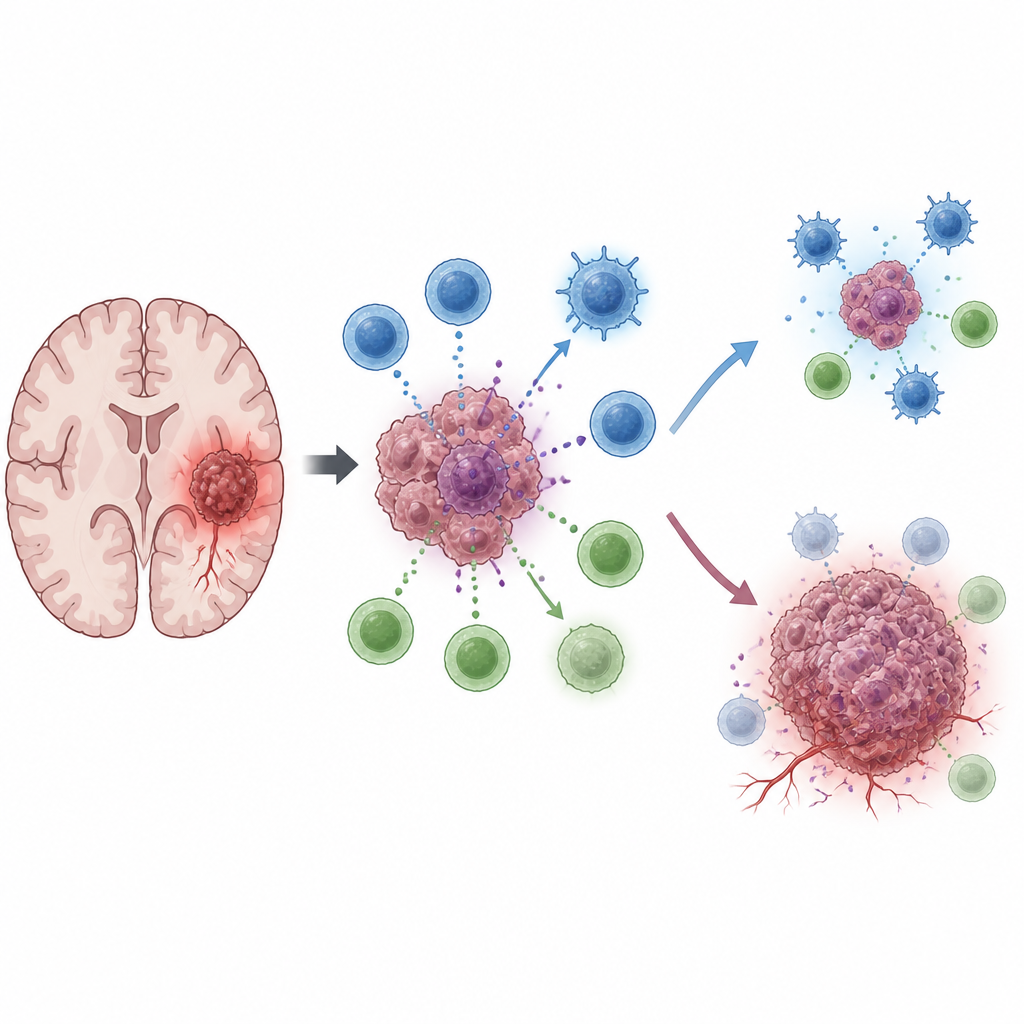
A busy neighborhood inside brain tumors
Gliomas, especially the most aggressive form known as glioblastoma, grow within a crowded community of cells, blood vessels, and immune cells. Instead of being swarmed by attacking immune cells, these tumors are filled mainly with a type of white blood cell called macrophages that often behave more like helpers than fighters. The researchers examined hundreds of patient samples and large public datasets and found that FUOM levels were much higher in tumor tissue than in normal brain, and highest of all in glioblastoma. Patients whose tumors had more FUOM tended to have shorter survival, suggesting that this protein is linked to more aggressive disease.
How tumor cells change their immune partners
Macrophages can act in different modes. In a more defensive mode, they release inflammatory molecules and directly attack cancer cells. In a more nurturing mode, sometimes called M2-like, they calm inflammation, aid tissue repair, and can unintentionally support tumor growth. Using advanced staining techniques, the team showed that high FUOM areas in tumors sat close to clusters of M2-like macrophages and their soothing signals, while more hostile macrophages were less changed. This pattern was far less common in healthy brain tissue. The findings suggest that tumor cells rich in FUOM attract and maintain the more tumor-friendly flavor of macrophages within the brain tumor microenvironment.
A chemokine signal that pulls in helpers
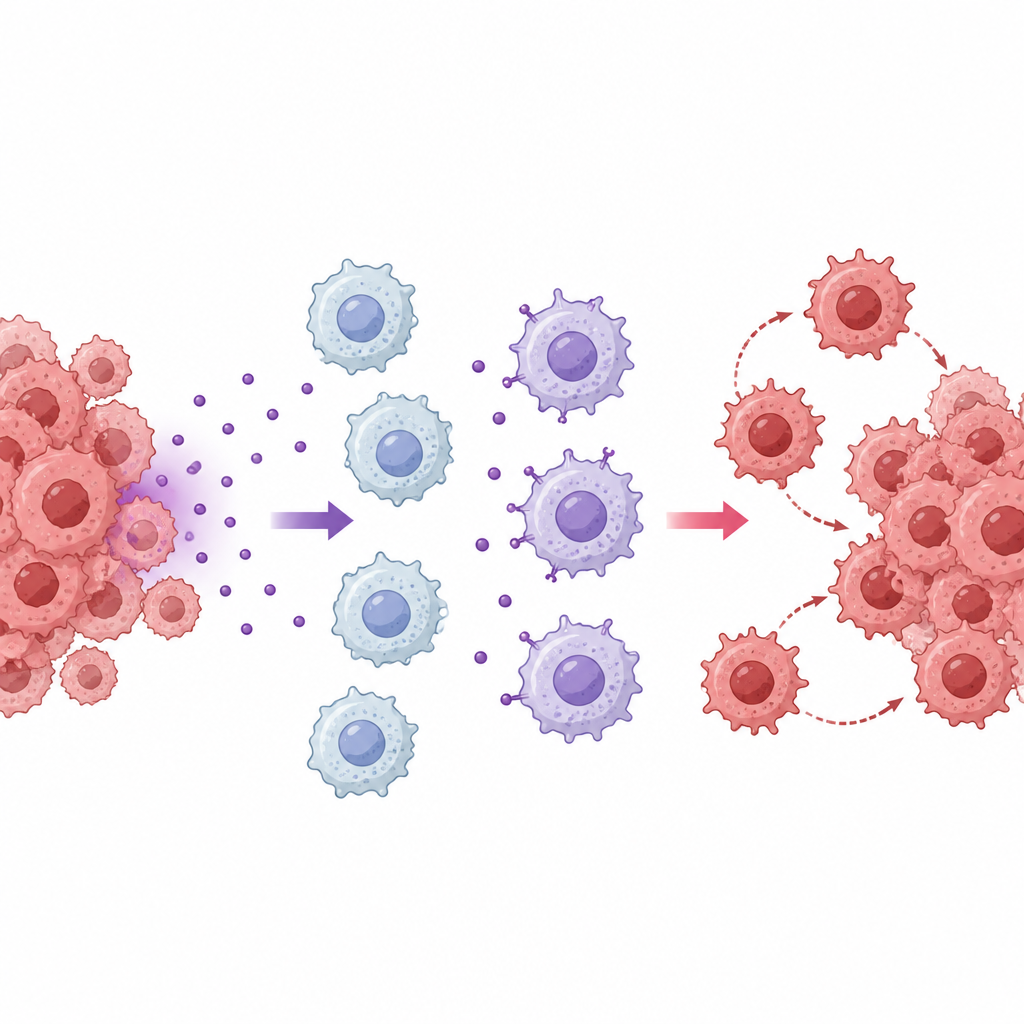
To uncover the messenger molecules involved in this crosstalk, the scientists grew human glioma cells in dishes and lowered or raised FUOM levels. When FUOM was reduced, the tumor cells released more of a signaling molecule called CXCL13 into the surrounding fluid. Further tests revealed a physical interaction between FUOM and CXCL13, and a see-saw relationship between them: less FUOM meant more CXCL13, and extra FUOM cut CXCL13 release. When this CXCL13-rich fluid was placed near macrophages, the cells were drawn toward it and shifted into the M2-like, wound-healing state. The work also linked this effect to known growth-control pathways inside cells, hinting at the wiring that connects FUOM, CXCL13, and macrophage behavior.
Testing the effect in animal models
The team then moved from dishes to living animals, implanting rat and mouse glioma cells that were engineered to produce more or less FUOM, with or without extra CXCL13. Tumors grown from FUOM-lowered cells were smaller and the animals survived longer than controls. Adding CXCL13 in this setting often further boosted the presence and activity of infiltrating macrophages and improved survival. Detailed microscope images showed that these macrophages traveled deep into the tumor region and gathered near areas where FUOM and CXCL13 were present, supporting the idea that these signals guide immune cells’ movement and state inside the brain.
What this could mean for future treatment
Taken together, the study paints FUOM as a key switch that helps glioma cells shape their local immune surroundings by controlling CXCL13 and the behavior of macrophages. Rather than simply trying to kill tumor cells directly, the authors propose targeting this FUOM–CXCL13 axis to reprogram macrophages so they become more effective allies against the cancer. While more work is needed, including tests in different glioma types and in people, this approach could one day complement existing therapies by turning a hostile tumor neighborhood into ground more favorable for the body’s own defenses.
Citation: Lu, B., Xu, M., Zhang, H. et al. Targeting the tumor microenvironment: reprogramming macrophages as a novel therapeutic strategy in FUOM-deficient glioblastoma. Cell Death Dis 17, 500 (2026). https://doi.org/10.1038/s41419-026-08701-5
Keywords: glioblastoma, tumor microenvironment, macrophages, chemokines, brain cancer immunology