Clear Sky Science · en
Neutrophil reprogramming underlie vasculopathy and lung disease in systemic sclerosis
Why tiny blood cells matter in a rare autoimmune disease
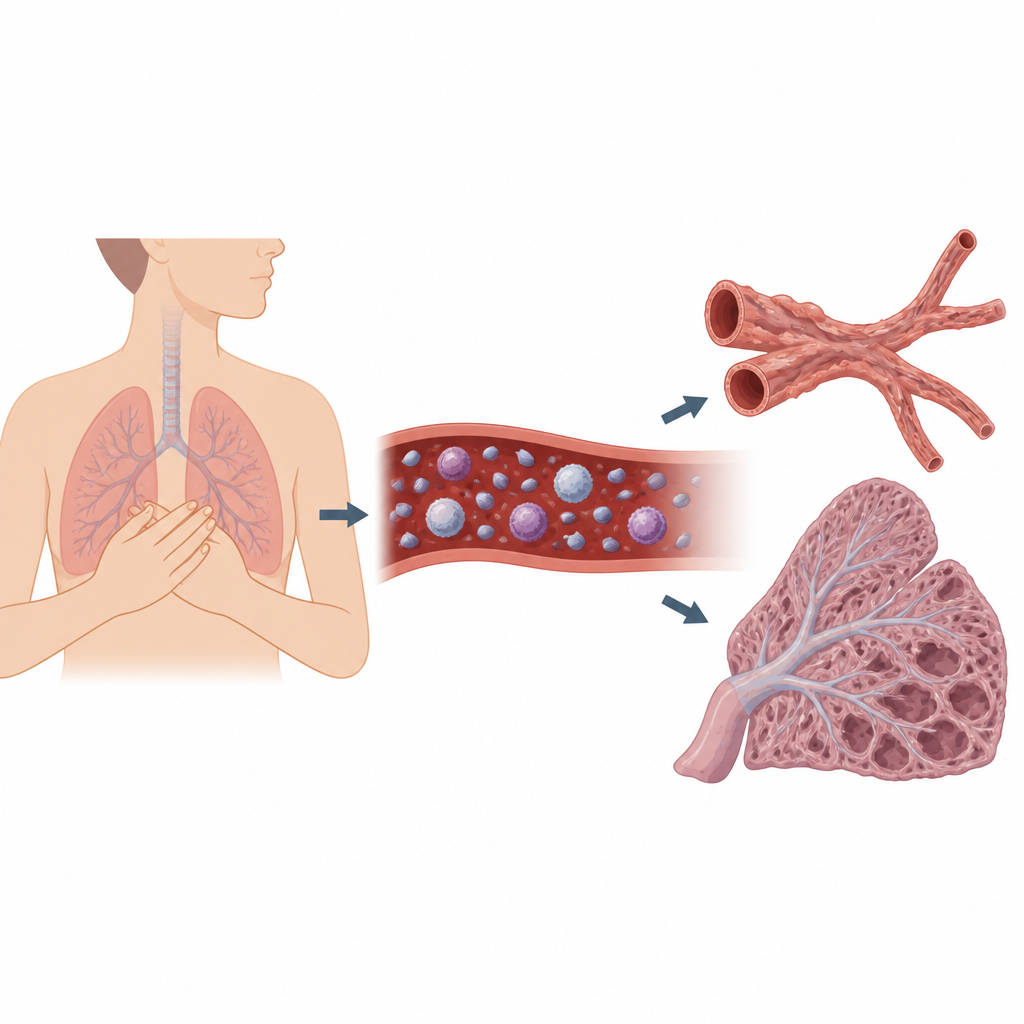
Systemic sclerosis is a rare autoimmune disease known for hardening of the skin and scarring of internal organs, especially the lungs. People living with this condition often face problems with blood flow and breathing, yet the early triggers of blood vessel damage and lung scarring have remained unclear. This study looks closely at a common white blood cell called the neutrophil and asks how signals carried in the bloodstream might quietly push these cells to harm blood vessels and lungs over time.
Clues from the body’s first responder cells
Neutrophils are front-line defenders that usually rush in, fight germs, and then die off quickly. In patients with systemic sclerosis, the researchers found that these cells look and behave very differently from those in healthy people. The neutrophils in affected patients showed signs of strong activation, releasing the contents of their internal granules and forming web-like structures known as traps, which can damage nearby tissue. At the same time, these cells turned on an internal recycling program that helps them survive longer and stay active, suggesting they are reprogrammed for a prolonged and potentially harmful role.
Comparing two autoimmune diseases
To understand whether this behavior is unique to systemic sclerosis, the team compared these findings with neutrophils from people with another autoimmune disease, lupus. In both diseases, neutrophils showed some activation and released damaging traps into the blood. However, only in systemic sclerosis did the cells strongly switch on their survival program and display high levels of a surface receptor called TIE2, which is linked to blood vessel growth and stability. In lupus, a special subset of light neutrophils was common but did not show the same survival features. This contrast suggests that not all autoimmune inflammation reshapes neutrophils in the same way and that the pattern seen in systemic sclerosis is distinctive.
Signal-carrying bubbles in the blood
The researchers then searched for what might be driving this unusual neutrophil state. They focused on tiny membrane bubbles called extracellular vesicles, which are shed into the blood when cells are stressed or activated. In systemic sclerosis patients, the blood contained many vesicles released from platelets, the cells best known for blood clotting. These vesicles often carried a danger signal protein called HMGB1 on their surface. The higher the level of these HMGB1-positive vesicles, the more neutrophils showed survival features and TIE2 on their surface, pointing to a tight link between these bubbles and neutrophil reprogramming.
Recreating the process in the lab and in mice
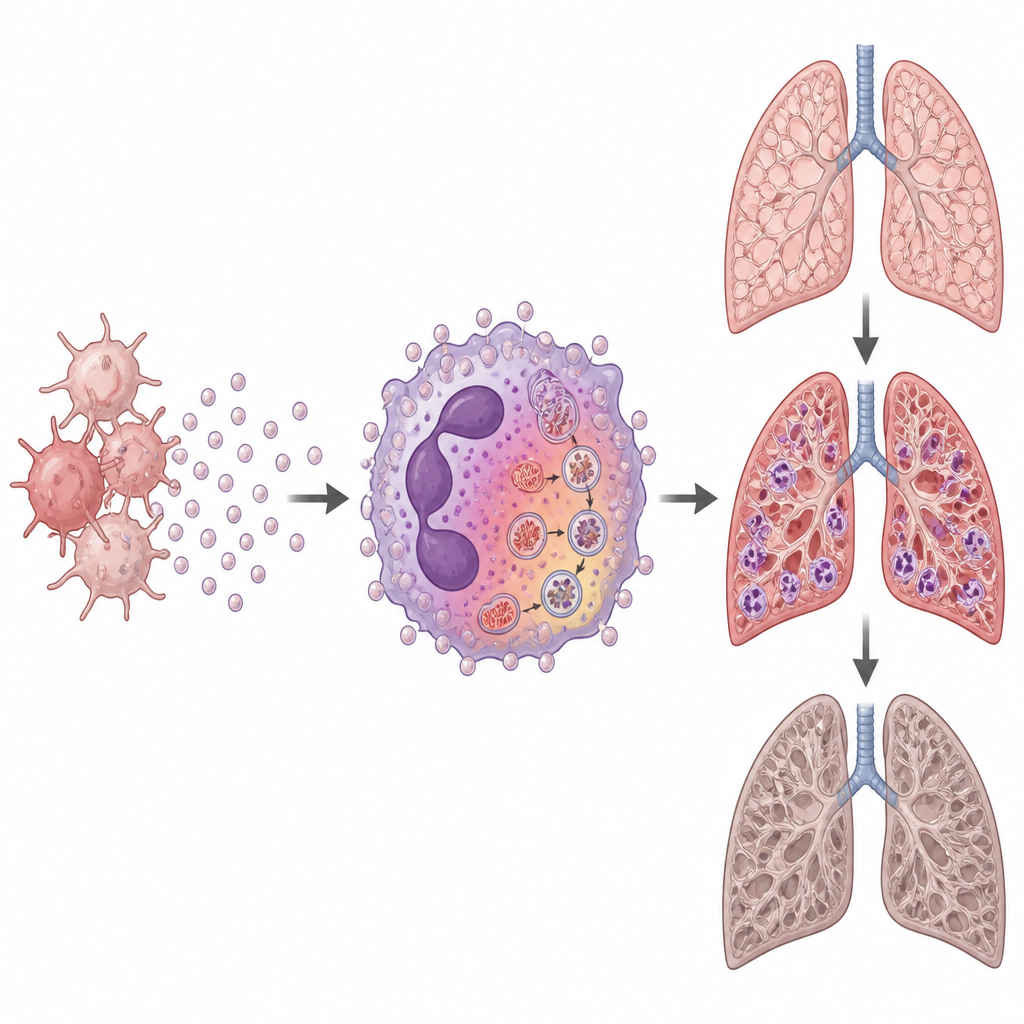
When the team exposed healthy neutrophils in the lab to vesicles from systemic sclerosis patients, the cells quickly adopted the same activated, long-lived profile seen in patients’ blood. They released toxic traps, boosted TIE2, and ramped up their internal recycling machinery. These effects could be mimicked by purified HMGB1 and by another molecule that activates its main receptor, called RAGE. Blocking this receptor prevented vesicles from sticking to neutrophils and stopped the changes, showing that the HMGB1–RAGE pair is central to the process. In mice, injecting vesicles from systemic sclerosis patients caused circulating neutrophils to bind these bubbles, turn on TIE2, and then flood into the lungs, where they were linked with tissue injury and fibrous scarring. When neutrophils were temporarily disabled, the lungs were protected, confirming that these cells are key middlemen between blood signals and organ damage.
What this means for patients and future treatments
Taken together, this work paints a picture in which platelet-derived vesicles carrying HMGB1 latch onto neutrophils, change their metabolism, and send them into blood vessels and lungs in a more damaging state. Rather than acting as short-lived defenders, these altered neutrophils may continuously injure small vessels and promote lung scarring in systemic sclerosis. For people with the disease, this suggests that therapies aimed at the HMGB1 signal, its RAGE receptor, or the TIE2 pathway on neutrophils might help break the cycle of vessel injury and fibrosis. While more studies are needed, the findings point to new, concrete targets that could eventually help protect the lungs and blood vessels in this challenging condition.
Citation: Maugeri, N., Ramirez, G.A., Capobianco, A. et al. Neutrophil reprogramming underlie vasculopathy and lung disease in systemic sclerosis. Cell Death Dis 17, 453 (2026). https://doi.org/10.1038/s41419-026-08690-5
Keywords: systemic sclerosis, neutrophils, extracellular vesicles, lung fibrosis, vasculopathy