Clear Sky Science · en
USP5 regulates purine metabolism and represents a therapeutic target in esophageal cancer
Why this study matters for patients
Esophageal cancer is a deadly disease that often goes undetected until it is advanced, and current treatments help only a fraction of patients. This study uncovers how tumor cells in the esophagus rewire a basic fuel system that makes the building blocks of DNA, and shows that an old antiparasitic drug may help shut this system down and make chemotherapy work better.
How cancer cells change their fuel use
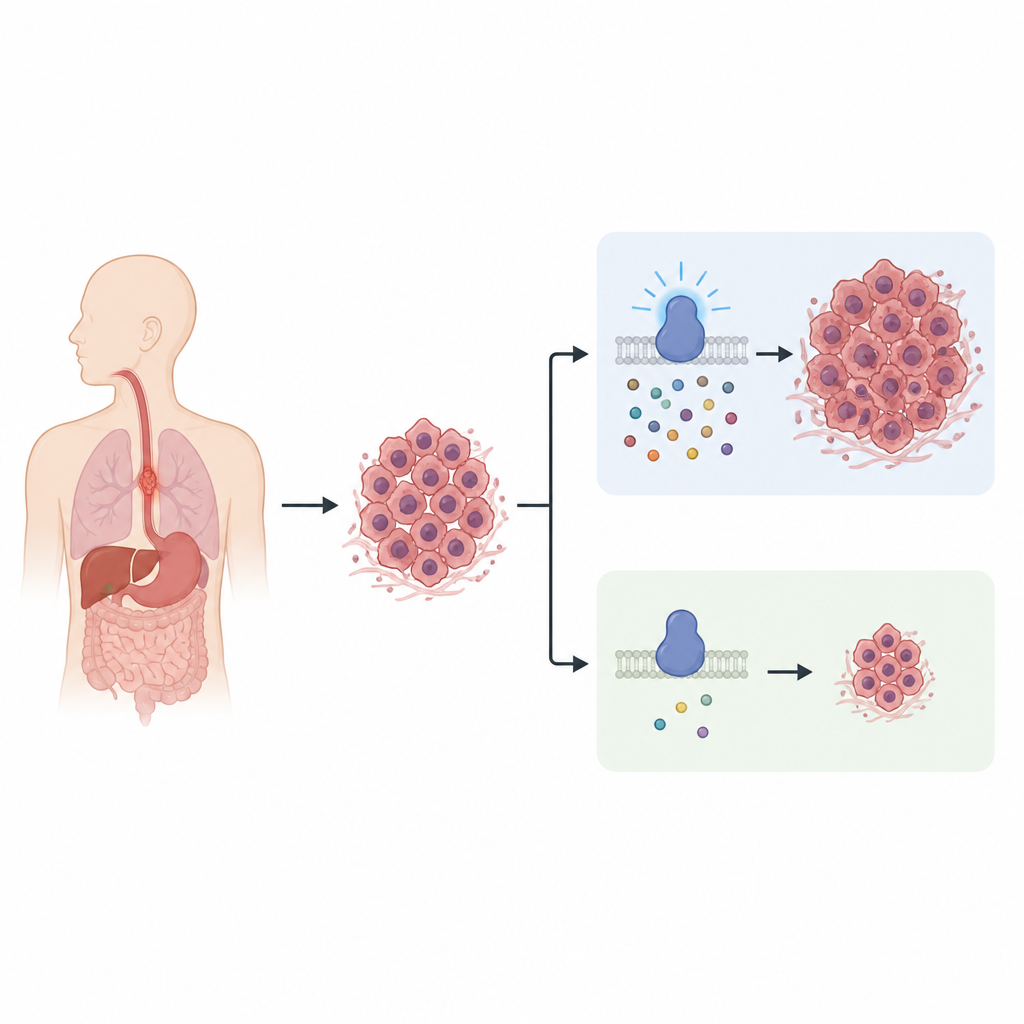
Our bodies constantly build and break down purines, small molecules that are essential for DNA, energy transfer, and cell signaling. The researchers examined tissue samples from people with esophageal squamous cell carcinoma and found broad changes in many metabolites, with purine metabolism standing out as especially altered. Levels of guanine, a key purine, were much higher in tumor tissue than in nearby normal tissue, suggesting that cancer cells boost guanine production to support rapid growth.
A protein that protects a key enzyme
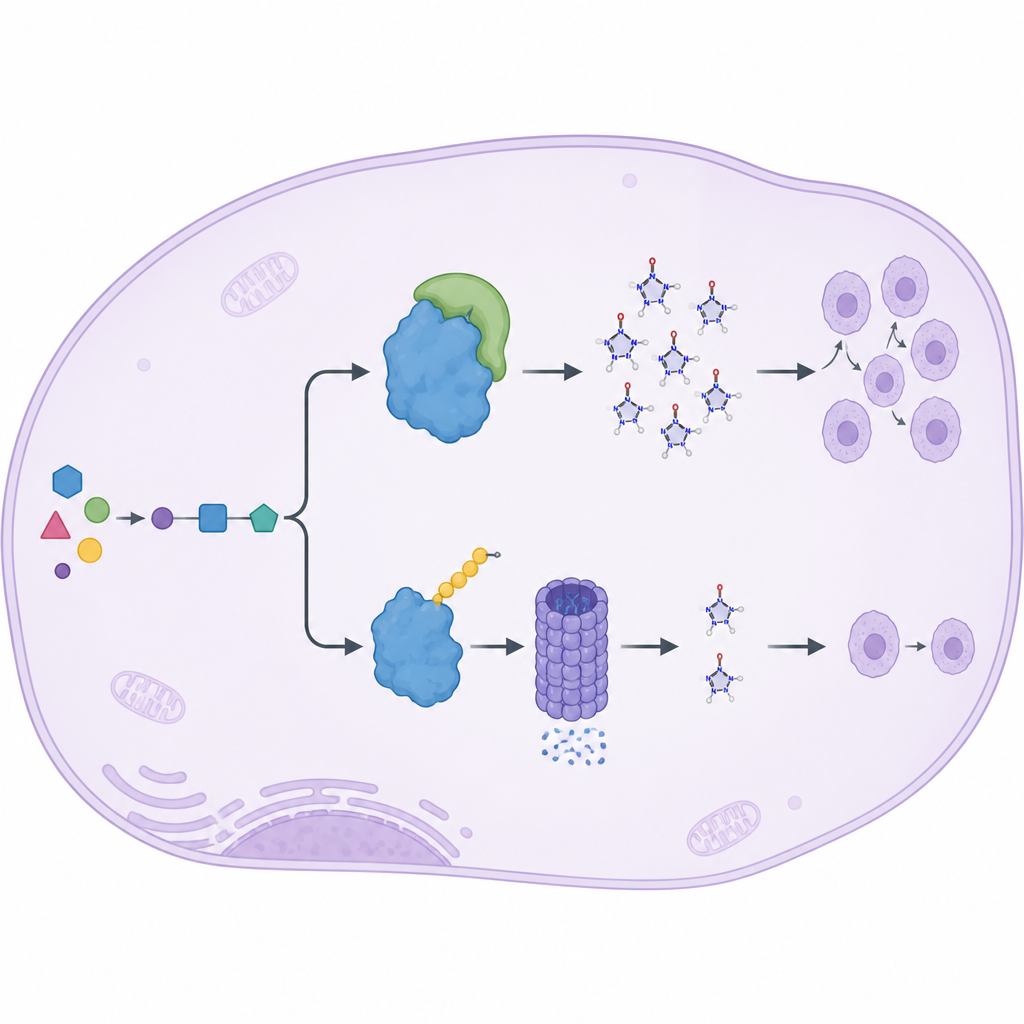
The team looked for proteins that might control this overactive purine pathway and focused on USP5, part of the cell’s protein recycling system. USP5 was much more abundant in esophageal cancer cells than in normal esophageal cells and was linked to worse patient survival. When the scientists reduced USP5 in cancer cell lines, the cells grew more slowly, formed fewer colonies, and tumors in mice shrank and weighed less. Detailed experiments showed that USP5 physically binds to another protein called IMPDH2, an enzyme that carries out the rate-limiting step in making guanine from simpler precursors.
How tumors boost guanine production
Inside cells, damaged or unneeded proteins are often tagged with small ubiquitin chains and sent to the cellular “shredder,” the proteasome. USP5 acts as a deubiquitinase, trimming off specific ubiquitin chains and sparing its targets from destruction. In this study, USP5 removed K48-linked ubiquitin chains from IMPDH2 at a particular amino acid site, stabilizing IMPDH2 and allowing it to accumulate. With more IMPDH2 available, cancer cells produced more guanine and other purine nucleotides. Metabolic tracing with labeled glucose confirmed that esophageal cancer cells routed more carbon into purine synthesis than normal cells, and that knocking down USP5 disrupted this flow, lowering guanine, GMP, AMP, ADP, and ATP.
Diet, transport, and drug responses
The researchers showed that guanine itself actively fuels tumor growth. Adding guanine to cancer cell cultures increased proliferation, while feeding mice a purine-free diet slowed the growth of patient-derived tumors. A transport protein called SLC29A1 helped bring guanine into cells and was also elevated in cancer tissues, though it worked in a pathway separate from USP5. Blocking IMPDH2 with a drug or reducing its levels cut guanine and stunted tumor growth, but adding guanine could partially rescue this effect, underscoring that guanine supply is central to the cancer cells’ advantage.
Repurposing an old drug to hit a new target
Because targeting USP5 genetically slowed tumor growth, the team tested mebendazole, an oral antiparasitic medicine recently reported to inhibit USP5. In esophageal cancer cells, mebendazole reduced USP5 protein levels, increased tagging and breakdown of IMPDH2, and lowered guanine production. This led to weaker cell growth in dishes and smaller tumors in mice. Importantly, when mebendazole was combined with the chemotherapy drug oxaliplatin, cancer cells and patient-derived tumors became more sensitive to treatment than with oxaliplatin alone.
What this means for future treatment
To a layperson, the message of this study is that certain esophageal cancers thrive by overproducing one of the DNA building blocks, guanine, and that they do so by protecting a crucial enzyme from the cell’s garbage disposal system. By blocking the protector protein USP5, either through genetic tools or with mebendazole, researchers were able to lower guanine levels, slow tumor growth, and make chemotherapy more effective in experimental models. While more work is needed before these findings can guide patient care, they point to a new weak spot in esophageal cancer that could be targeted using a drug that is already approved for other uses.
Citation: Zhao, K., Zhang, L., Yan, M. et al. USP5 regulates purine metabolism and represents a therapeutic target in esophageal cancer. Cell Death Dis 17, 439 (2026). https://doi.org/10.1038/s41419-026-08683-4
Keywords: esophageal cancer, purine metabolism, USP5, IMPDH2, mebendazole