Clear Sky Science · en
Oxidative DNA damage drives apoptotic photoreceptor loss in NMNAT1-associated inherited retinal degeneration: a therapeutic opportunity
Why protecting children’s sight matters
Some rare genetic diseases cause children to lose their sight very early in life, often before they can read or recognize faces. One such condition, linked to changes in a gene called NMNAT1, mainly harms the eye’s light-sensing cells, even though this gene is active throughout the body. This study in mice asks a simple but urgent question: what exactly is killing these cells, and can we slow or soften that process with a drug that already exists?
Light-sensing cells under stress
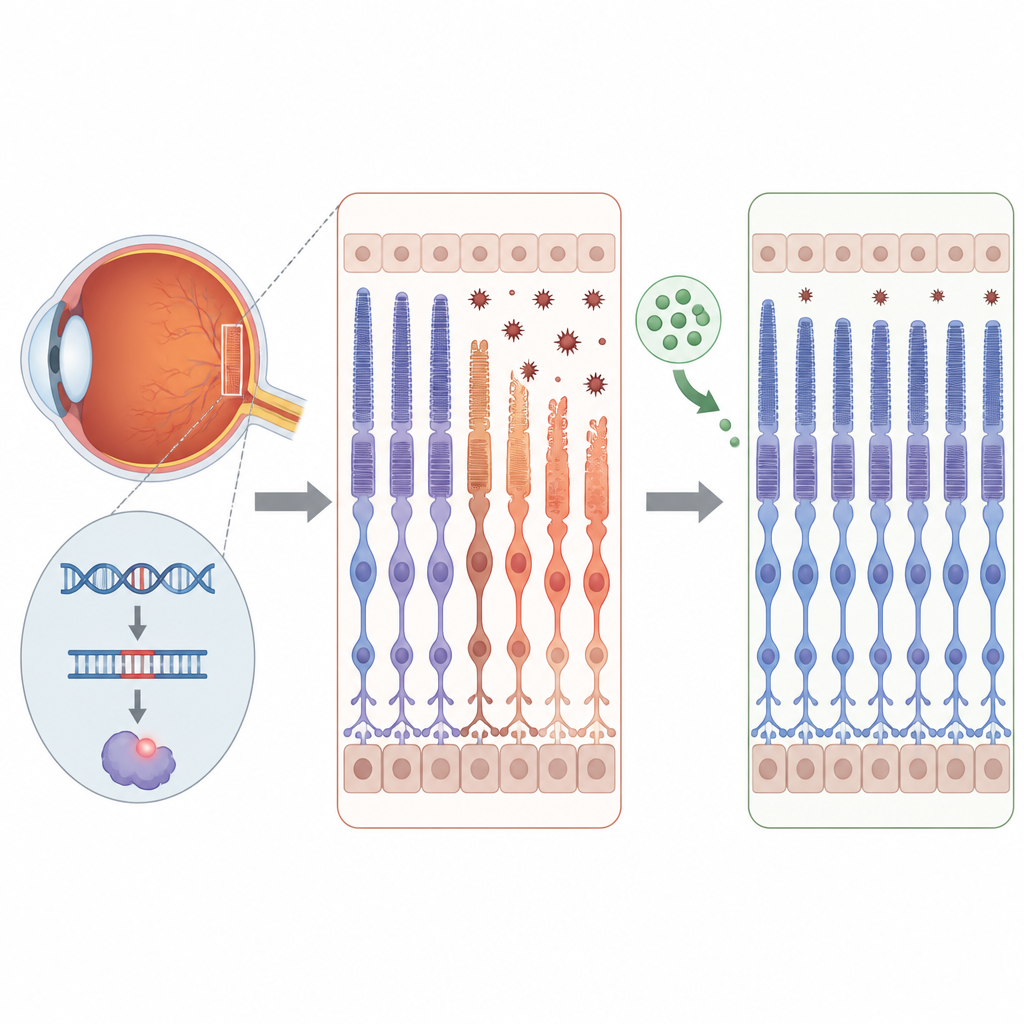
The retina, a thin layer at the back of the eye, is packed with photoreceptor cells that convert light into electrical signals for the brain. These cells work hard and constantly burn energy, which makes them especially vulnerable to by-products of normal metabolism that can damage DNA. In children with NMNAT1-related disease, and in the mouse model used here, a common mutation lowers the level of a key cell fuel, NAD+, inside the nucleus. Earlier work showed that this energy shortfall goes hand in hand with signs of DNA stress in photoreceptors, but the exact type of damage and how it leads to cell death had not been clearly mapped out.
When damaged DNA becomes a death signal
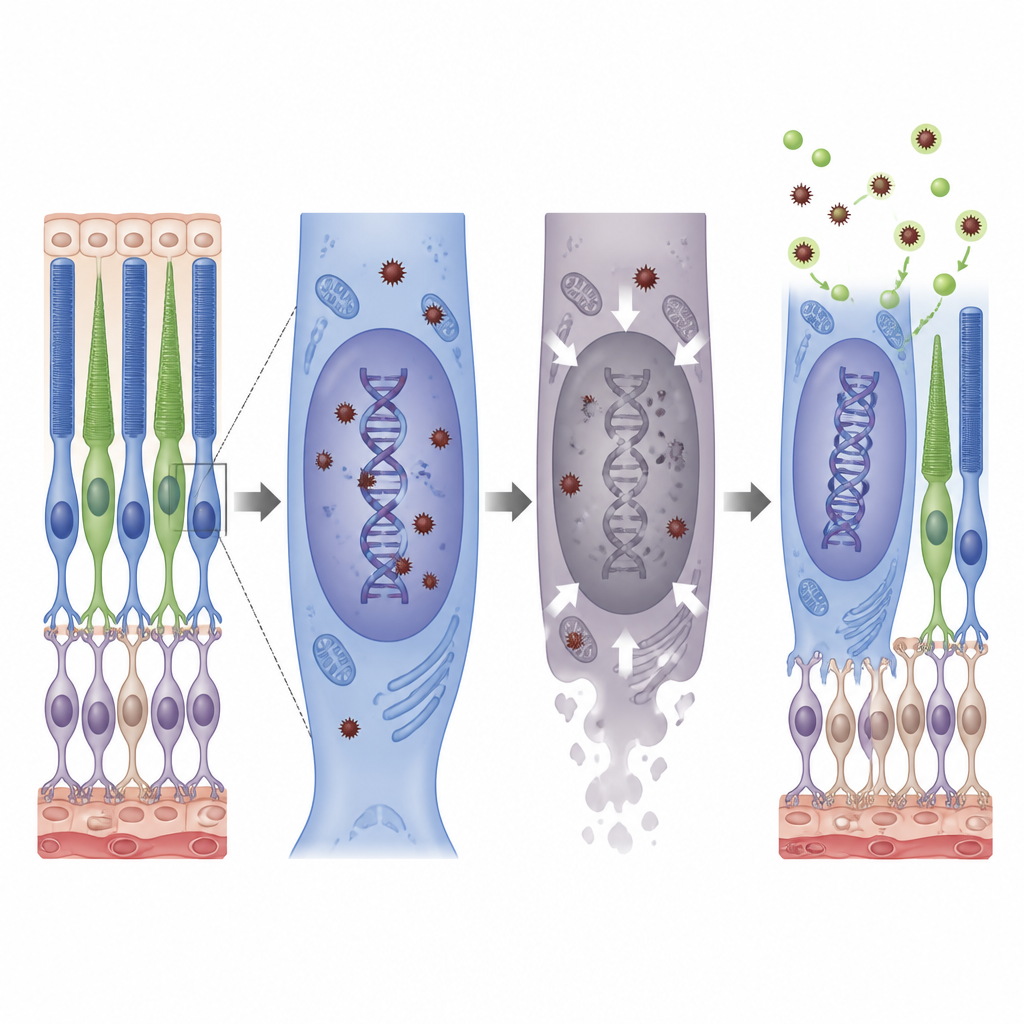
The researchers followed mouse retinas over time and focused on a specific chemical scar on DNA called 8-oxo-dG, a hallmark of harm caused by reactive oxygen molecules. They saw this scar build up steadily in the layer where photoreceptors sit, starting just before these cells begin to disappear. Many of the cells with this oxidative mark also showed broken DNA strands and strong signs of a built-in suicide program known as apoptosis. Markers of alternative ways cells can die, such as more explosive or inflammatory routes, stayed largely quiet. Together, these observations point to a chain of events where oxidative DNA lesions in photoreceptors tip the balance toward an orderly form of self-destruction.
A common antioxidant as a shield
To test whether this damage could be reduced, the team treated young mutant mice with N-acetylcysteine, or NAC, an antioxidant already used for other medical purposes. They began dosing just before DNA scars started to rise and continued for several weeks. Compared with untreated littermates, NAC-treated mice had far fewer cells marked by oxidative DNA damage and far fewer photoreceptors showing apoptotic signals. In particular, cone cells, which are responsible for color and daylight vision and are hit early in this disease, were better preserved. Imaging of the living eye showed that the outer retina, where photoreceptors reside, stayed thicker with NAC treatment, and electrical tests of vision revealed stronger responses, especially from cones.
Inflammation: bystander, not main culprit
The study also explored how the retina’s immune system reacts to ongoing damage. In the mutant mice, support cells and resident immune cells became activated and moved toward the injured photoreceptor layer over time. NAC treatment dialed down this immune activity, hinting that lowering oxidative damage can also calm local inflammation. However, when the scientists either blocked a key DNA-sensing immune pathway or greatly reduced microglial cells with a special diet, the course of photoreceptor loss did not change much. This suggests that in this model, immune responses arise after the initial injury and are not the main force driving the death of light-sensing cells.
What this could mean for future treatments
In plain terms, this work shows that in a mouse version of NMNAT1-related childhood blindness, the slow build-up of oxidatively damaged DNA inside hard-working light-sensing cells pushes them into a suicide program, and that repeated doses of an antioxidant can soften this blow. While NAC did not completely stop retinal thinning or fully restore normal vision, it kept more cells alive and functioning for longer without obvious side effects in mice. Because oxidative DNA damage appears in many inherited retinal diseases, these findings support the idea that carefully timed antioxidant therapy could become part of combination treatments aimed at preserving sight, especially in conditions that begin in childhood.
Citation: Zhang, H., Valestil, K., Butcher, R.M. et al. Oxidative DNA damage drives apoptotic photoreceptor loss in NMNAT1-associated inherited retinal degeneration: a therapeutic opportunity. Cell Death Dis 17, 442 (2026). https://doi.org/10.1038/s41419-026-08680-7
Keywords: retinal degeneration, oxidative DNA damage, photoreceptor cells, N-acetylcysteine, inherited eye disease