Clear Sky Science · en
Plasmodium yoelii infection induces lung injury by modulating type 2 conventional dendritic cells autophagy via the STAT3-IRF4 signaling
How malaria can hurt the lungs
Malaria is usually known for causing fevers and anemia, but it can also injure the lungs and lead to dangerous breathing problems. This study in mice explores how the body’s own immune defenses in the lungs, particularly a group of sentry cells that talk to T cells, can shift from helpful to harmful during malaria. Understanding this switch may suggest new ways to protect the lungs in severe infection beyond simply killing the parasite itself. 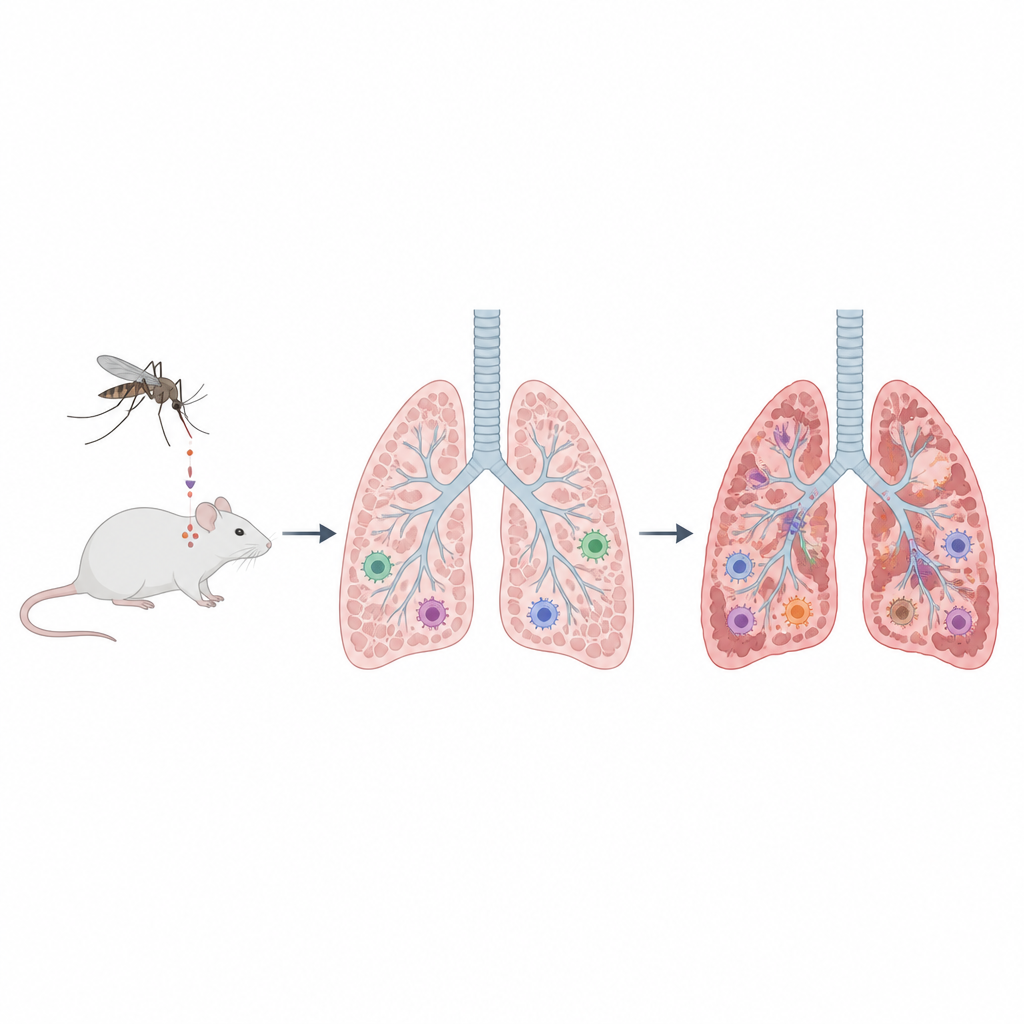
Immune sentries gather in the lungs
The researchers infected mice with a rodent malaria parasite and followed what happened in their lungs over time. As the parasites multiplied in the blood, the animals developed pale, swollen lungs filled with fluid and inflammatory cells. Within this tissue, one type of immune cell, called a conventional dendritic cell type 2 (or cDC2), built up in large numbers. These cells normally sit along the air sacs, sampling incoming material and deciding how strongly the immune system should respond. In infected mice, not only did cDC2 become more numerous, they also switched on surface markers that signal a highly active state.
From defenders to drivers of inflammation
Once activated, lung cDC2 released a cocktail of signaling molecules that favor a “fighter” style response. They produced high levels of factors such as IL-12, IL-6, and IL-1α, which push T cells toward an aggressive, inflammatory profile, while making less of the calming signal IL-10. In cell culture tests, cDC2 from infected lungs strongly boosted the growth and activation of both helper and killer T cells, steering helper cells toward a Th1 state that makes a lot of interferon gamma and tumor necrosis factor. These substances help control the parasite but can also damage the delicate walls of the air sacs, contributing to thickening, fluid leakage, and poor gas exchange. 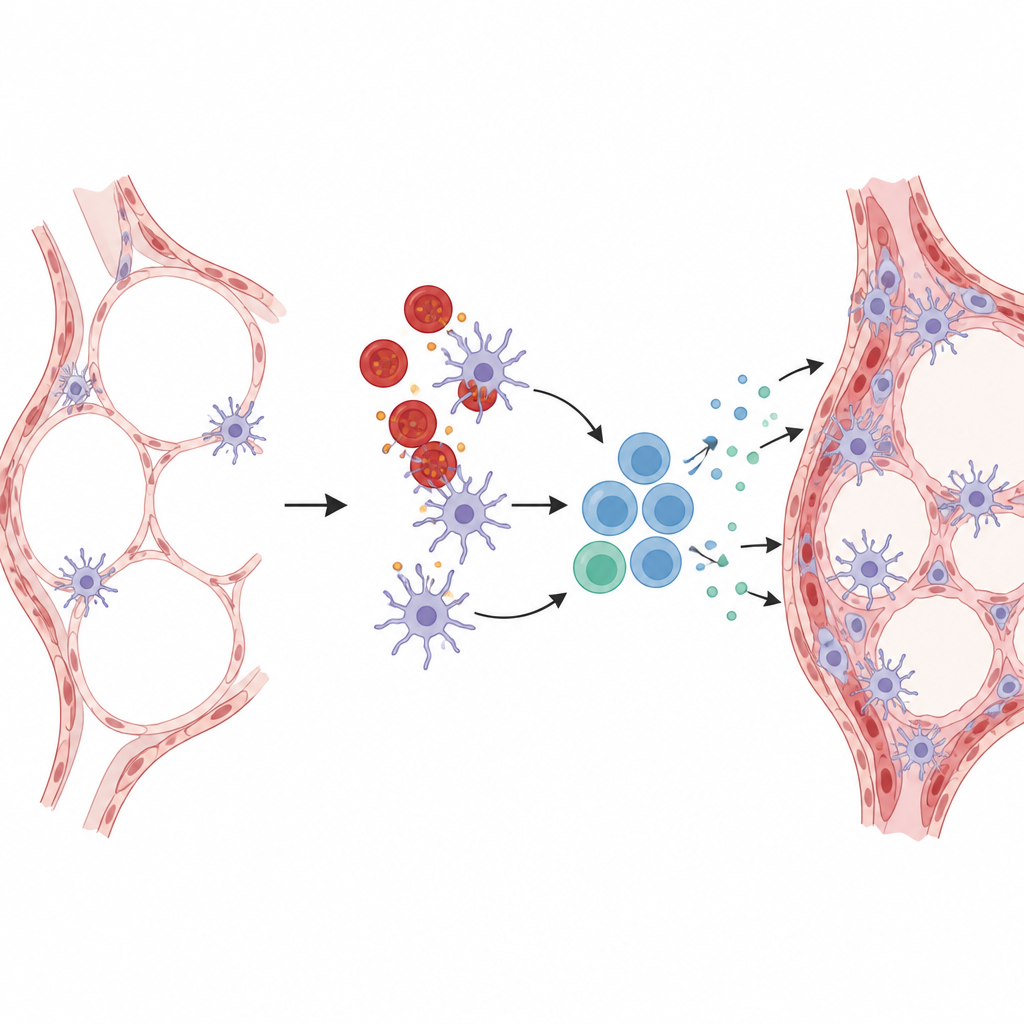
A blocked recycling system in immune cells
The team then asked why cDC2 accumulated in the lungs instead of being cleared once activated. They focused on autophagy, the internal recycling system cells use to break down worn-out parts. In infected mice, genes that support autophagy in lung dendritic cells were switched down, and direct measures of this pathway showed it was suppressed. At the same time, these cells underwent less programmed cell death and showed weaker ability to ingest parasite-infected red blood cells. When the researchers used drugs that boost autophagy, cDC2 numbers fell and their capacity to engulf targets improved, suggesting that normal recycling helps keep these cells in check and maintains their cleaning function.
A signaling chain that can be switched off
Digging deeper, the authors traced this brake on autophagy to a signaling chain involving pattern sensors on cDC2 and the proteins STAT3 and IRF4 inside the nucleus. Molecules from infected red blood cells activated two toll-like receptors on cDC2, which in turn triggered STAT3 and raised IRF4 levels. Together, STAT3 and IRF4 suppressed the autophagy machinery, allowed cDC2 to survive and pile up, and kept them in a pro-inflammatory mode. When mice were treated with a STAT3 inhibitor, or when IRF4 was selectively removed from myeloid cells, cDC2 numbers dropped, their recycling pathway revived, lung inflammation eased, and parasite levels in the blood declined more quickly.
What this means for future malaria care
In plain terms, the study shows that during malaria, a specific set of lung immune cells can get stuck in an overactive, poorly recycling state that fuels tissue damage. By blocking the STAT3–IRF4 pathway, the researchers were able to restore the cells’ internal cleanup system, reduce their harmful buildup, and soften the inflammatory storm in the lungs. While this work was done in mice, it points to the idea that future treatments for severe malaria might pair parasite-killing drugs with therapies that gently dial down damaging lung inflammation by tuning how dendritic cells handle stress and survival.
Citation: Hong, C., Deng, G., Jiang, Z. et al. Plasmodium yoelii infection induces lung injury by modulating type 2 conventional dendritic cells autophagy via the STAT3-IRF4 signaling. Cell Death Dis 17, 461 (2026). https://doi.org/10.1038/s41419-026-08675-4
Keywords: malaria, lung inflammation, dendritic cells, autophagy, STAT3 IRF4 signaling