Clear Sky Science · en
Dedifferentiation-driven oncogenic stemness promotes tumor-sustaining adaptability in the intestinal epithelium
Why this matters for gut health and cancer
Colorectal cancer is one of the leading causes of cancer death, yet tumors in the intestine do not always begin where scientists long assumed. This study explores how ordinary mature cells lining the gut can “rewind” their identity, regain stem cell traits, and seed tumors from the top surface down, a process that may help explain why some cancers are so adaptable and hard to treat.
Two different starting points for gut tumors
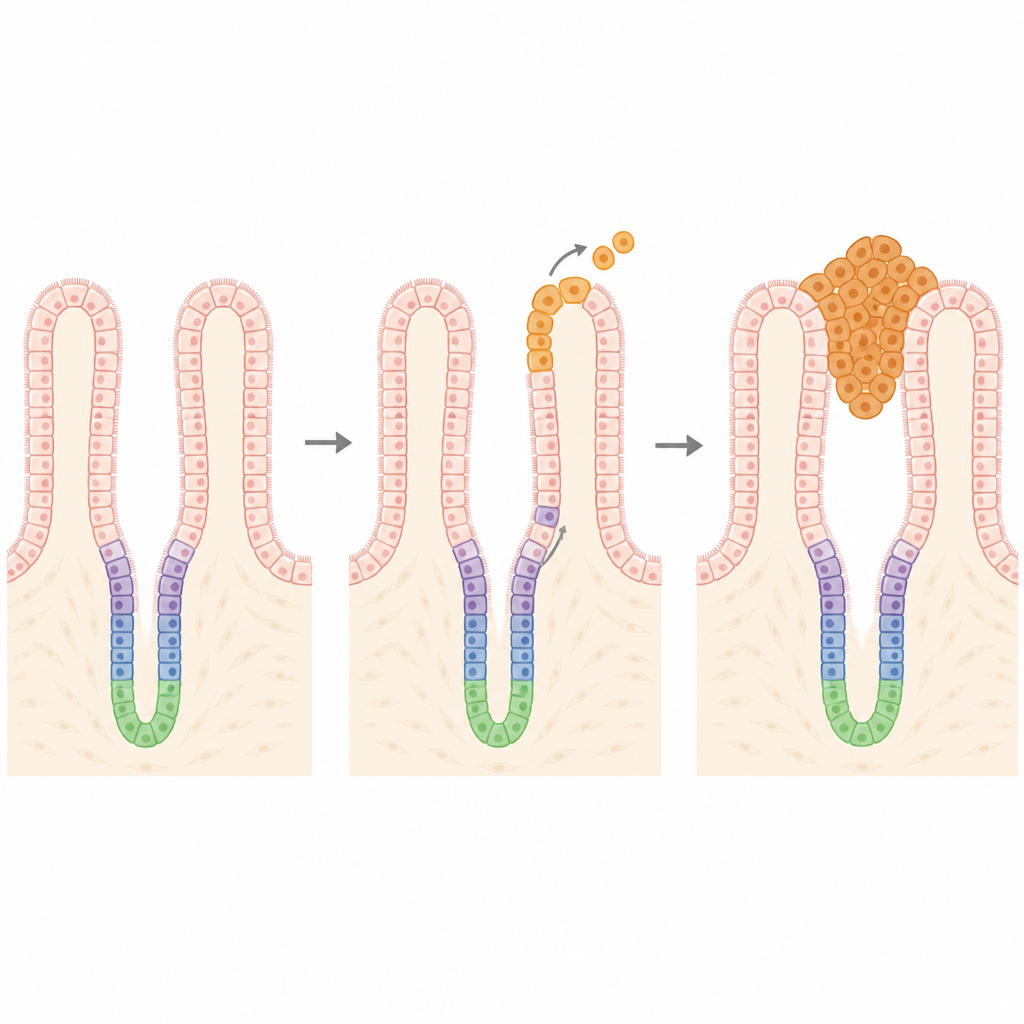
Our intestines constantly renew themselves using a small pool of stem cells tucked away in tiny pockets called crypts. Traditional thinking holds that cancers start when these stem cells acquire harmful mutations and expand from the bottom upward. However, many human colon polyps look as if they begin near the open inner surface of the gut. This work directly compares these two routes, asking whether tumors that start from mature surface cells that “turn back the clock” behave differently from those that begin in the usual stem cell compartment.
Rewinding cell identity at the surface
Using a genetically engineered mouse model, the researchers triggered two common colon cancer–related changes at once: they weakened a growth-restraining signal (through Smad4 loss) and boosted a growth-promoting signal (through beta catenin). When these changes were switched on across the intestinal lining, the first warning signs did not appear in the stem cell zones. Instead, cells on the villi, the fingerlike projections that normally contain only mature cells, began expressing markers associated with cancer stem cells, such as CD44 and Lgr5. These cells lost features of fully mature gut cells and formed new cryptlike pockets near the gut surface, suggesting that dedifferentiation and renewed “stemness” were taking hold.
Surface-born stem cells outcompete classical stem cells
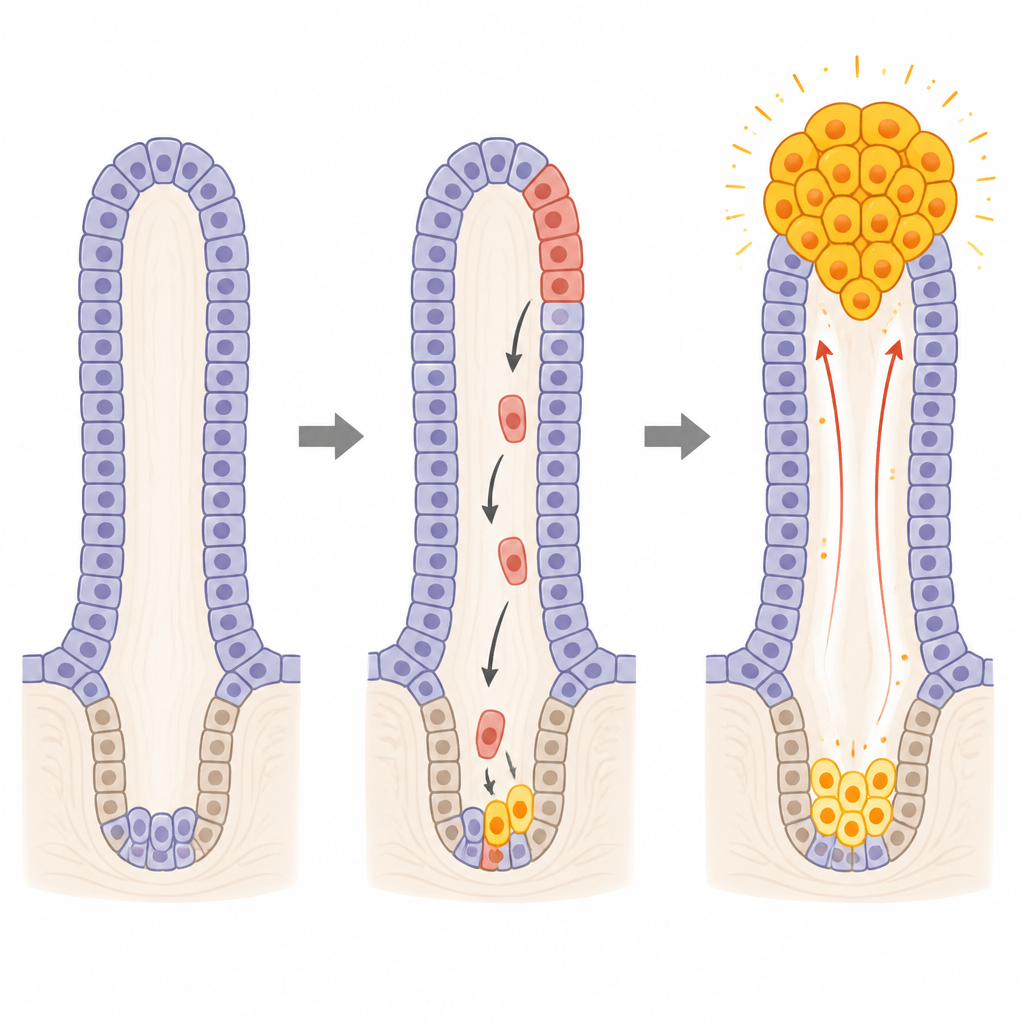
To see how mutant stem cells fare in their natural home, the team next turned the same mutations on only in the known Lgr5 stem cells in the crypts. Initially these mutated stem cells appeared in the crypts, but over time they were replaced by healthy neighbors, indicating that they could not hold their ground in the usual niche. At the same time, new clusters of stem-like cells appeared near the inner surface, where tumors began to grow. This pattern suggests that, under these genetic conditions, dedifferentiated surface cells have a selective advantage and are better able to sustain tumor growth than mutant stem cells that stay in the crypts.
Metabolic and signaling tricks that fuel growth
Top-down tumor growth required more than a simple identity shift. The villus cells carrying the mutations showed signs of low oxygen and ramped-up energy use, including increased glutamine metabolism and mitochondrial activity, along with protective antioxidant systems to handle the added stress. At the same time, a key communication pathway called Notch, normally active only in crypts and dependent on nearby support cells, became aberrantly active in the villus region before new crypts appeared and without its usual partners. Together, these changes point to a highly adaptable cell state that can grow without normal support signals and cope with a harsher metabolic environment.
Hidden diversity within cancer-like stem cells
Single-cell RNA sequencing provided a close-up look at the many different cell states emerging during this process. The researchers found several distinct stem-like populations among the mutant cells, some actively dividing and metabolically busy, others more quiescent and geared toward survival. One villus-derived group in particular carried gene activity patterns resembling embryonic stem cells and showed loss of normal intestinal identity markers, hinting at a deeply reprogrammed and flexible state. This diversity in growth, metabolism, and signaling within the mutant population may give tumors the tools to adapt to changing conditions and resist treatment.
What this means for future cancer strategies
In plain terms, this study shows that in the intestine, cancers can be sustained not only by classic stem cells at the base of the tissue but also by mature cells higher up that regain stem-like behavior and metabolic flexibility. These surface-born cancer stem cells can outcompete mutated crypt stem cells, reshaping how and where tumors arise. By revealing the roles of dedifferentiation, altered Notch signaling, and metabolic rewiring in driving top-down tumor growth, the work suggests that effective therapies for colorectal cancer may need to target these adaptable, rewound cell states rather than focusing solely on the traditional stem cell niche.
Citation: Zgeib, K., Hui, T., Garcia, S. et al. Dedifferentiation-driven oncogenic stemness promotes tumor-sustaining adaptability in the intestinal epithelium. Cell Death Dis 17, 514 (2026). https://doi.org/10.1038/s41419-026-08669-2
Keywords: colorectal cancer, cancer stem cells, dedifferentiation, intestinal epithelium, tumor metabolism