Clear Sky Science · en
Nuclear translocation of SLC25A10 isoform 3 promotes chemoresistance in HCC cells via CEBPB/BCL2A1 signaling
Why some liver tumors shrug off chemotherapy
Chemotherapy is meant to push cancer cells into self-destruction, yet many liver tumors resist treatment and keep growing. This study uncovers an unexpected player in that resistance: a metabolic transporter that usually works inside cell power stations but, under stress, moves into the cell’s control center and helps cancer cells survive chemotherapy.
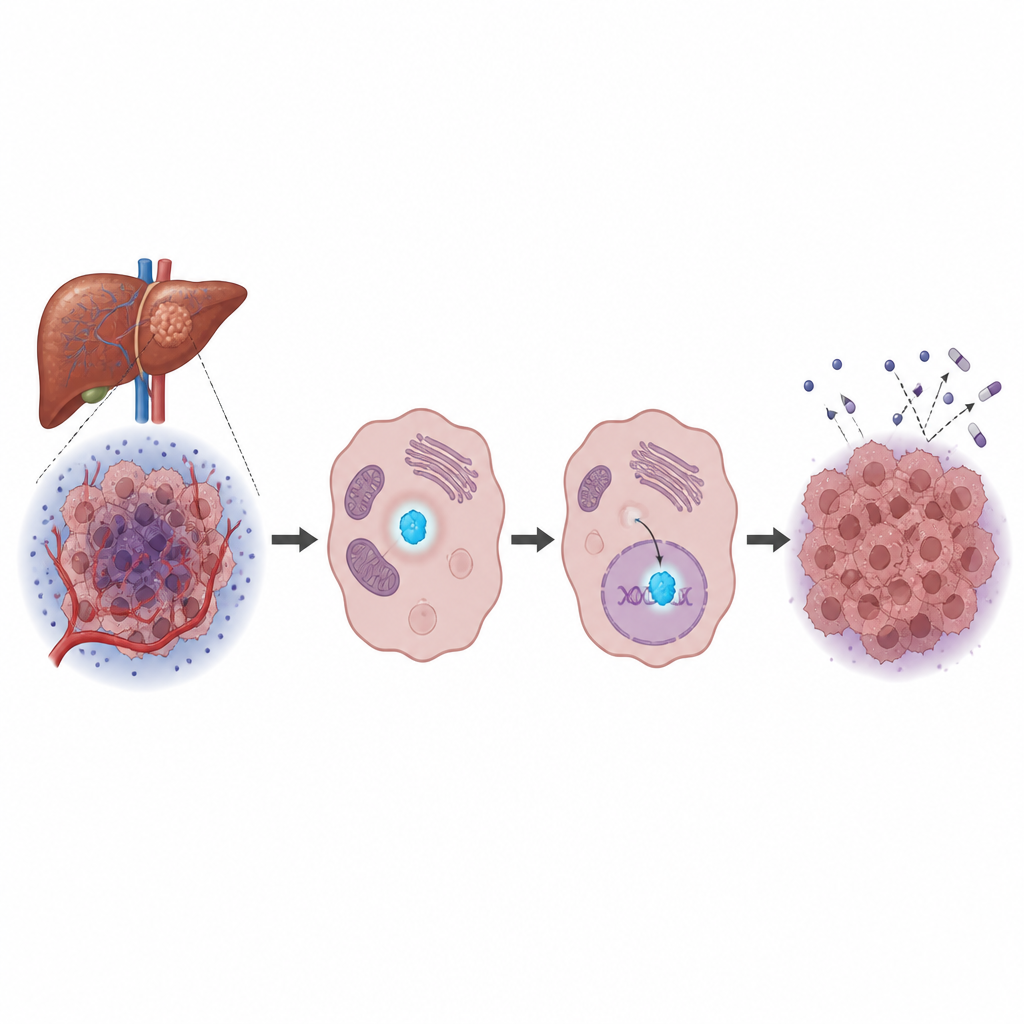
A hidden switch in liver cancer cells
Hepatocellular carcinoma, the most common form of liver cancer, often grows in regions with poor oxygen supply. The authors found that in these low-oxygen areas, liver cancer cells ramp up production of a protein called SLC25A10, normally a transporter in mitochondria, the cell’s energy factories. In patient samples and public cancer datasets, tumors with higher levels of this protein were more common and linked to worse survival, suggesting that SLC25A10 is tied to aggressive disease.
When oxygen drops, a new version takes over
Under low oxygen, cancer cells do not just make more SLC25A10, they favor a particular version of it, known as isoform 3. This variant carries a short sequence that acts like a postal code, allowing it to be ferried into the cell nucleus rather than staying in mitochondria. The team showed that a nuclear import protein, IPO7, recognizes this postal code and escorts isoform 3 into the nucleus. Removing that short sequence or reducing IPO7 levels kept isoform 3 out of the nucleus, confirming that this transport route is essential.
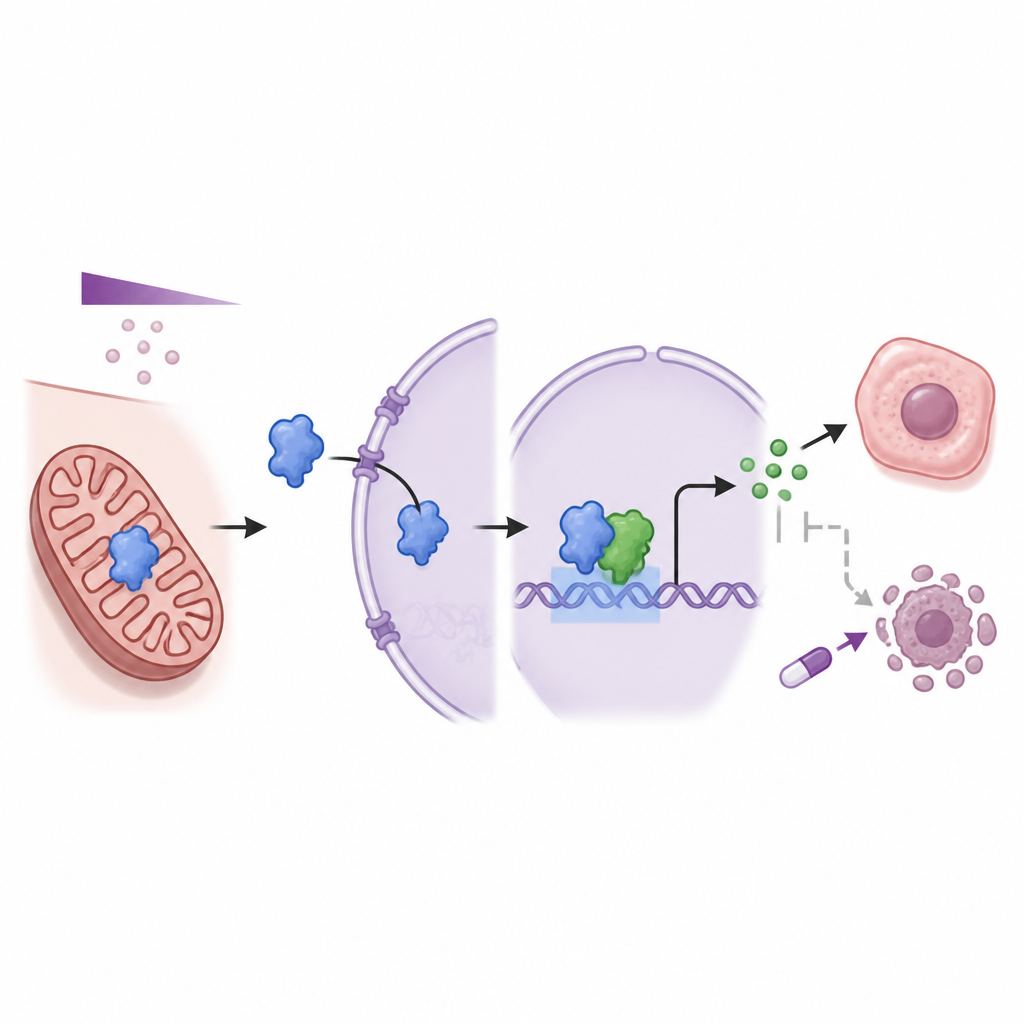
How nuclear SLC25A10 helps tumor cells cheat death
Once inside the nucleus, isoform 3 takes on a new role. Instead of shuttling small molecules, it partners with a transcription factor called CEBPB, a protein that helps turn genes on or off. Together, they boost the activity of a gene called BCL2A1, which produces a powerful anti-death signal in cells. Cancer cells with high isoform 3 had higher BCL2A1 levels, fewer signs of programmed cell death, and were more likely to survive exposure to the chemotherapy drug etoposide. When the researchers dialed down isoform 3 or BCL2A1, or blocked CEBPB, cancer cells became much more vulnerable to the drug and showed stronger activation of cell-death pathways.
Proof in animal models
The team then tested this survival circuit in mice carrying human liver tumors. Tumors engineered to produce extra isoform 3 grew better despite etoposide treatment and showed higher BCL2A1 and fewer markers of dying cells. Knocking down BCL2A1 or CEBPB reversed this protection, even when isoform 3 was abundant, underscoring that the survival advantage depends on this nuclear partnership. Importantly, a mutant form of isoform 3 that could no longer bind IPO7 and enter the nucleus failed to shield tumors from chemotherapy, directly linking nuclear entry to drug resistance.
What this means for future treatment
This work reveals that a protein long known for its mitochondrial job gains a second, nuclear role that helps liver cancer cells withstand chemotherapy in low-oxygen tumors. By moving into the nucleus, SLC25A10 isoform 3 helps switch on a gene that blocks cell death, making standard drugs less effective. The findings suggest that drugs designed to stop isoform 3 from reaching the nucleus or from cooperating with CEBPB might re-sensitize resistant liver tumors to existing chemotherapies, offering a potential new angle for treating difficult cases.
Citation: Liu, D., Dong, S., Cheng, S. et al. Nuclear translocation of SLC25A10 isoform 3 promotes chemoresistance in HCC cells via CEBPB/BCL2A1 signaling. Cell Death Dis 17, 491 (2026). https://doi.org/10.1038/s41419-026-08667-4
Keywords: hepatocellular carcinoma, chemoresistance, hypoxia, SLC25A10, apoptosis