Clear Sky Science · en
Elucidating the roles of microRNA-103a-3p in trophoblast invasion and SOX4-mediated extravillous differentiation induced by activin A
Why this research matters for pregnancy health
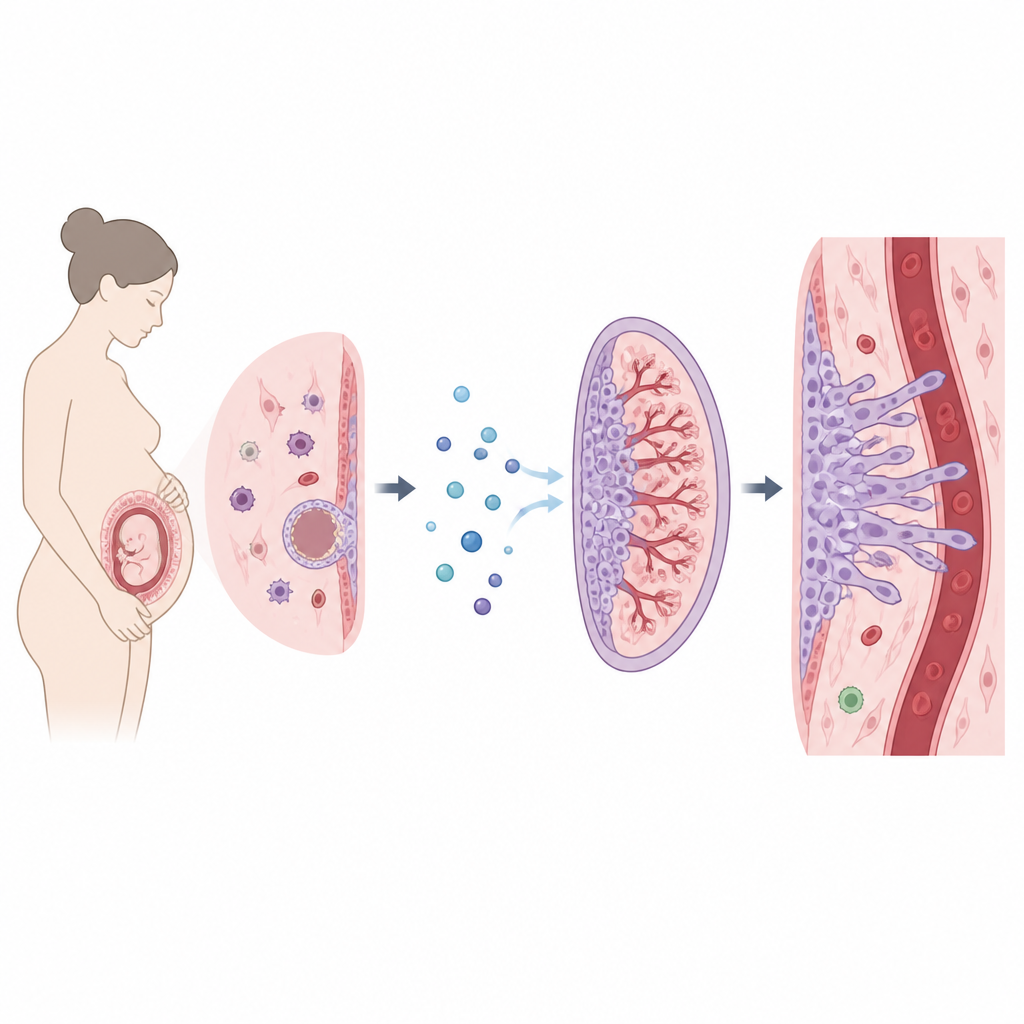
Problems with how the placenta anchors and feeds the baby lie at the heart of serious pregnancy complications such as preeclampsia, a condition marked by high blood pressure that can threaten both mother and child. This study looks closely at how certain tiny genetic regulators, called microRNAs, and a growth signal named activin A work together to help placental cells invade the mother’s uterus properly. Understanding this fine-tuned process could one day support better prediction and prevention of preeclampsia.
How the placenta builds a secure foothold
In early pregnancy, a special group of placental cells known as trophoblasts must burrow into the wall of the uterus and reshape the mother’s spiral arteries so that blood can flow freely to the growing fetus. A subset of these cells, called extravillous trophoblasts, are especially invasive and act a bit like controlled explorers, pushing into maternal tissue and widening the arteries. When this invasion is too weak, the placenta receives too little blood, which is strongly linked to early-onset preeclampsia. The authors focused on how activin A, a protein signal present in maternal blood, guides this invasion and what happens inside trophoblasts when they respond to it.
A tiny RNA switch that boosts cell invasion
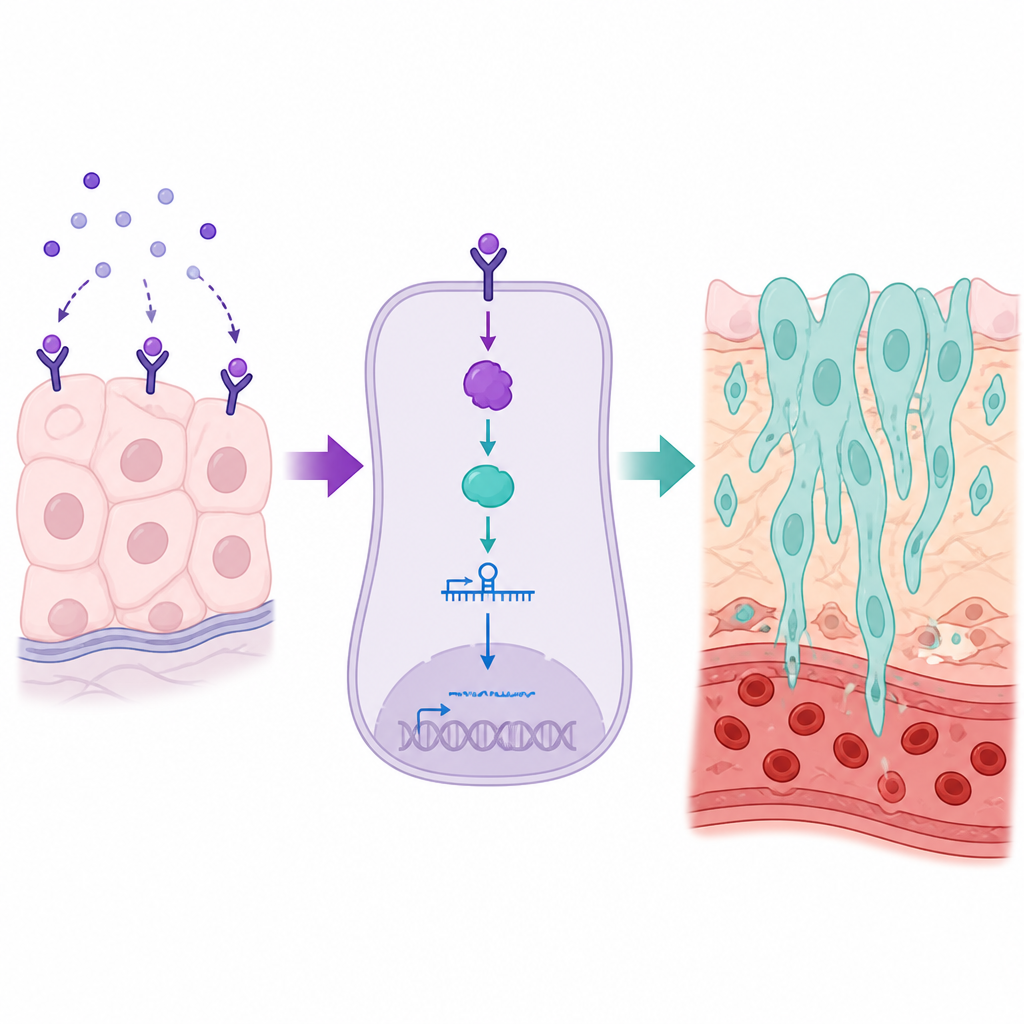
Using first-trimester placental cells taken directly from human tissue, the team treated the cells with activin A and then sequenced their small RNAs to see which ones changed. Out of more than 1600 microRNAs, they found 98 whose levels shifted, and one in particular, called miR-103a-3p, emerged as a central hub in the regulatory network. Activin A sharply increased miR-103a-3p, and when researchers artificially boosted this microRNA, trophoblasts became more invasive in a laboratory “Transwell” invasion test. Blocking miR-103a-3p did not fully stop invasion on its own, but it significantly weakened the extra invasion normally triggered by activin A, showing that this microRNA is a key part of the pro-invasion signal.
The signaling chain inside placental cells
The study then traced how activin A turns on miR-103a-3p. Activin A activates a well-known pathway inside cells involving SMAD proteins, which carry messages from the cell surface to the nucleus. When the researchers reduced SMAD2, SMAD3, or SMAD4, activin A could no longer raise miR-103a-3p levels as effectively, and expression of its host gene, PANK2, also fell. The team identified another player, a transcription factor called SOX4, which increased after activin A exposure and was required both for trophoblast invasion and for the rise in PANK2 and miR-103a-3p. Together these results outline a chain in which activin A activates SMAD proteins, which in turn help boost SOX4 and PANK2, leading to higher miR-103a-3p and stronger trophoblast invasion.
From stem-like cells to invasive specialists
To mimic how placental cells mature in early pregnancy, the researchers also studied human trophoblast stem cells as they differentiated into extravillous trophoblasts. In one of the stem cell lines, the levels of SOX4, PANK2, and miR-103a-3p all rose together as the cells acquired invasive properties. Forcing miR-103a-3p higher made these derived extravillous cells more invasive, while blocking it reduced their ability to move through a gel-like matrix. Knocking down SOX4 not only lowered PANK2 and miR-103a-3p, but also weakened invasion and reduced markers of mature invasive cells. These findings suggest that SOX4 and miR-103a-3p form a shared module that helps stem-like trophoblasts transition into specialized invasive cells that remodel the uterus.
Clues toward earlier warning signs of preeclampsia
Finally, by mining existing datasets from pregnant women, the authors found that activin A protein and an exosomal form of miR-103a-3p are elevated in the blood of patients with preeclampsia, particularly in the middle of pregnancy. Exosomes are tiny vesicles that carry signals between cells, hinting that placenta-derived miR-103a-3p may reach the mother’s circulation. While more clinical work is needed, the coordinated rise of activin A and exosomal miR-103a-3p suggests that this signaling pair could serve as early blood-based clues of placental stress and preeclampsia risk, long before symptoms become obvious.
Citation: Xie, J., Shannon, M.J., Zhu, H. et al. Elucidating the roles of microRNA-103a-3p in trophoblast invasion and SOX4-mediated extravillous differentiation induced by activin A. Cell Death Dis 17, 466 (2026). https://doi.org/10.1038/s41419-026-08665-6
Keywords: preeclampsia, placenta, trophoblast invasion, microRNA-103a-3p, activin A