Clear Sky Science · en
RNA N6-methyladenosine (m6A) regulates cell cycle progression in diffuse midline glioma (DMG) and confers sensitivity to FTO inhibition
Why tiny marks on RNA matter for children’s brain tumors
Diffuse midline gliomas are among the deadliest childhood brain cancers, with most children surviving less than a year after diagnosis and few effective treatments available. This study looks at an unexpected angle: tiny chemical marks on RNA, the molecules that help turn genes into proteins. By mapping these marks in tumor cells and testing a drug that alters them, the researchers uncover a new weakness in these cancers and point to a fresh strategy for therapy.
How a hidden code on RNA shapes tumor behavior
Inside every cell, RNA molecules carry messages from DNA to the protein-making machinery. Many of these messages are decorated with a small chemical tag called m6A, which can change how long RNAs last or how strongly they are used. The team focused on diffuse midline glioma, a pediatric brain tumor thought to arise from immature support cells in the brain and driven by powerful changes to how DNA is packaged. Because m6A helps control the development of these immature cells, the authors suspected that this “epitranscriptomic” code might also be crucial for tumor growth.
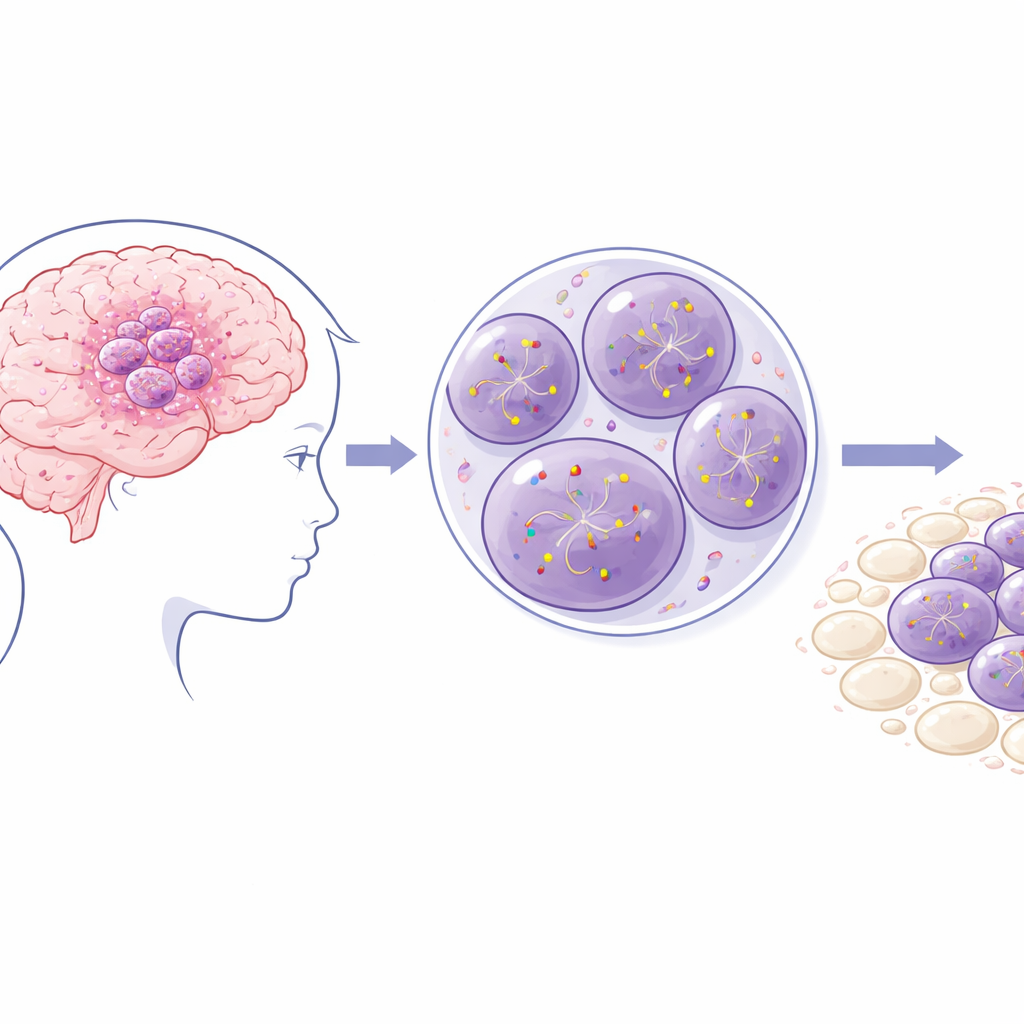
Mapping RNA marks in deadly brain tumors
Using direct RNA sequencing, which can read individual RNA molecules and detect their chemical tags, the researchers created the first high-resolution maps of m6A in cells taken from children’s diffuse midline gliomas and from noncancerous brain tissue. Tumor cells carried markedly higher levels of m6A overall, especially on RNAs linked to cell movement and invasion—traits that help cancer spread through the brain. In contrast, a smaller set of RNAs that had lower m6A in tumors were heavily involved in the cell cycle and chromosome segregation, the tightly choreographed process that allows cells to divide. The pattern suggested that RNA methylation helps tumors keep their aggressive, stem‑like identity while fine‑tuning the machinery of rapid cell division.
Turning off an RNA eraser stalls tumor cell division
The m6A tag is not permanent; enzymes can add it and others can remove it. The authors tested drugs that block two sides of this system in tumor cells: METTL3, which adds the mark, and FTO, which erases it. Inhibiting METTL3 had little effect, even at high doses. In contrast, blocking FTO with a small molecule called FB23‑2 sharply reduced the survival of tumor cells but spared noncancerous brain cells at similar doses, hinting at a therapeutic window. Microscopy and flow‑cytometry experiments revealed that treated tumor cells piled up in the DNA‑copying phase of the cell cycle and then underwent programmed cell death, indicating that their division process had become stressed and stalled.
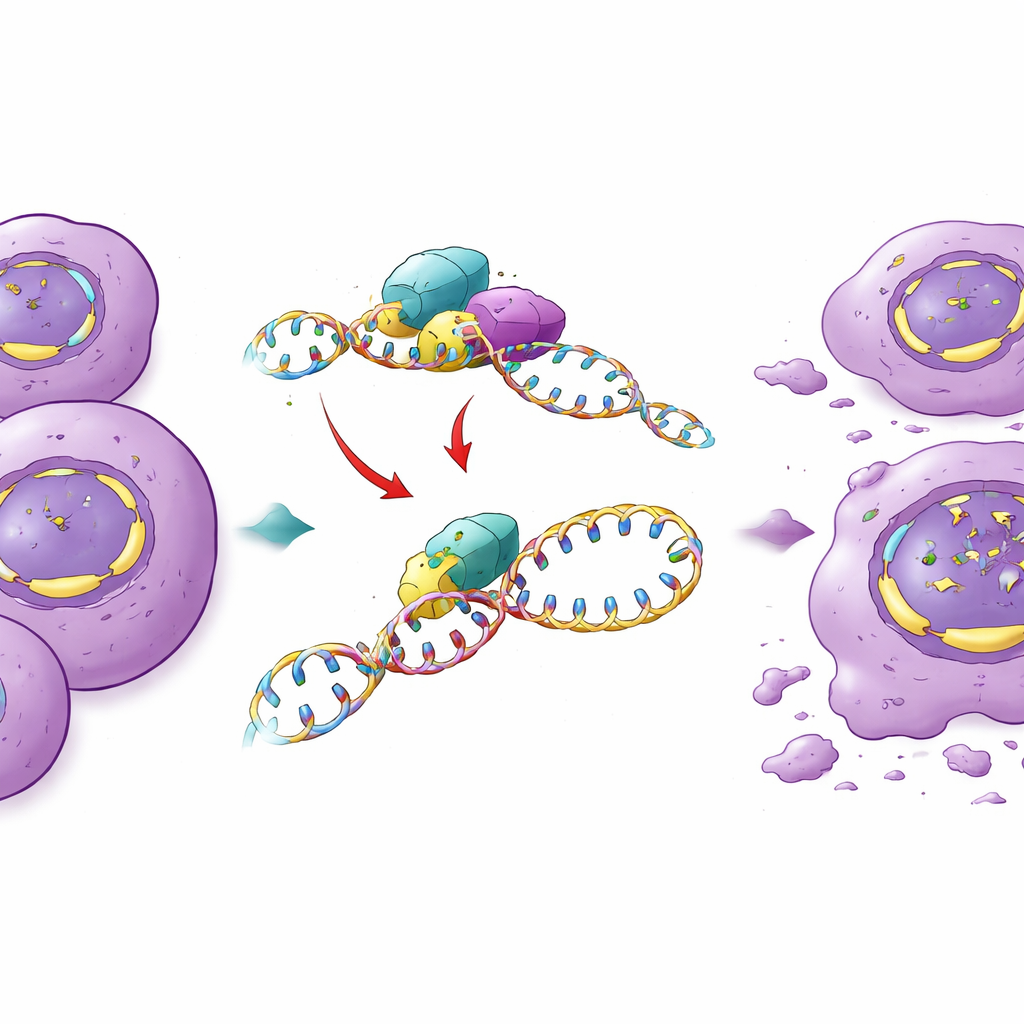
What changes inside the cell when FTO is blocked
To understand why FTO inhibition hits tumor cells so hard, the team measured global changes in RNA and protein levels after treatment. Across three different tumor cultures, FB23‑2 consistently turned down key drivers of cell division, including many components of the machinery that segregates chromosomes, while switching on genes that respond to DNA damage and cellular stress. Many of these RNAs carried m6A tags and were known to interact with YTHDF2, a protein that recognizes m6A and promotes RNA decay—another factor found at high levels in these tumors. Direct RNA sequencing after treatment confirmed that some sites with unusually low m6A in tumors partially regained these marks when FTO was inhibited, particularly in genes that control the cell cycle. Matching protein measurements showed parallel drops in central cell‑cycle regulators and increases in markers of apoptosis, reinforcing the picture that FTO helps tumors maintain fast, orderly division.
New opportunities and challenges for treatment
Together, these findings show that diffuse midline gliomas rely on a delicate balance of RNA methylation to sustain their growth, and that tipping this balance by inhibiting FTO can choke off their ability to multiply and survive. For non‑specialists, the key message is that cancer cells in these childhood brain tumors are unusually dependent on a reversible chemical mark on their RNA, and that drugs targeting the enzyme that removes this mark can selectively weaken them. While current FTO inhibitors do not yet cross the blood–brain barrier, the work highlights an urgent but promising path: developing brain‑penetrant drugs, or new delivery methods, that safely exploit this vulnerability to offer children more effective treatment options.
Citation: Ross, S.E., Holliday, H., Wang, E. et al. RNA N6-methyladenosine (m6A) regulates cell cycle progression in diffuse midline glioma (DMG) and confers sensitivity to FTO inhibition. Cell Death Dis 17, 371 (2026). https://doi.org/10.1038/s41419-026-08647-8
Keywords: diffuse midline glioma, RNA methylation, m6A, FTO inhibition, pediatric brain cancer