Clear Sky Science · en
Targeted inhibition of the CREB1-CtIP axis enhances the efficacy of abiraterone combined with radiotherapy in prostate cancer
Why this research matters
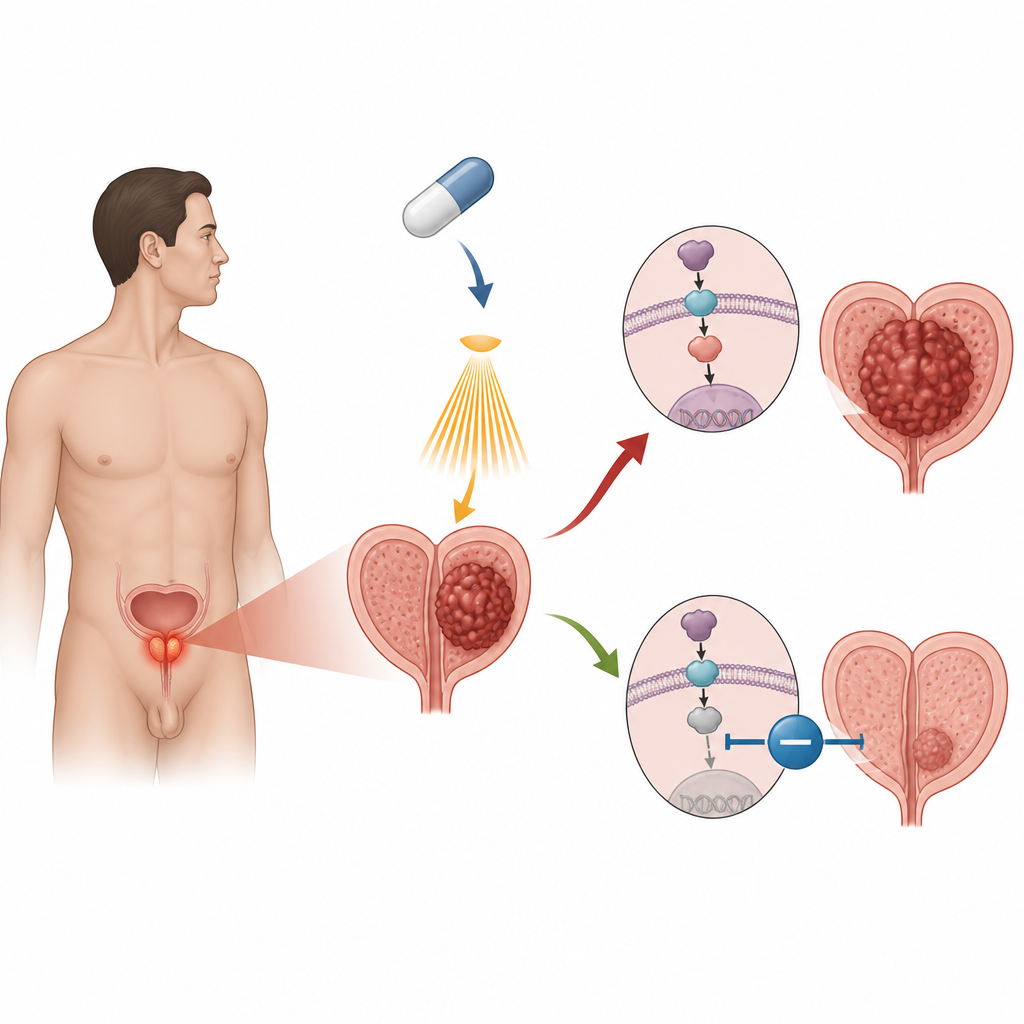
For many men with advanced prostate cancer, doctors combine hormone based drugs with radiation to slow the disease. Yet this approach does not help everyone, and tumors often learn to resist treatment. This study looks inside cancer cells to find out why the drug abiraterone plus radiotherapy sometimes falls short, and how a third medicine could make the combo work better.
Current treatments and their limits
Abiraterone is a pill that lowers male hormones which feed prostate tumors, while radiotherapy uses high energy beams to damage tumor DNA so the cells can no longer divide. Guidelines around the world recommend using both together for aggressive disease. When the authors examined recent clinical trials, they saw that this duo often delayed signs of cancer progression, but did not clearly extend overall life for many patients with widespread tumors. That mismatch suggested that cancer cells were finding ways to repair the radiation damage and survive.
A repair helper that shields cancer cells
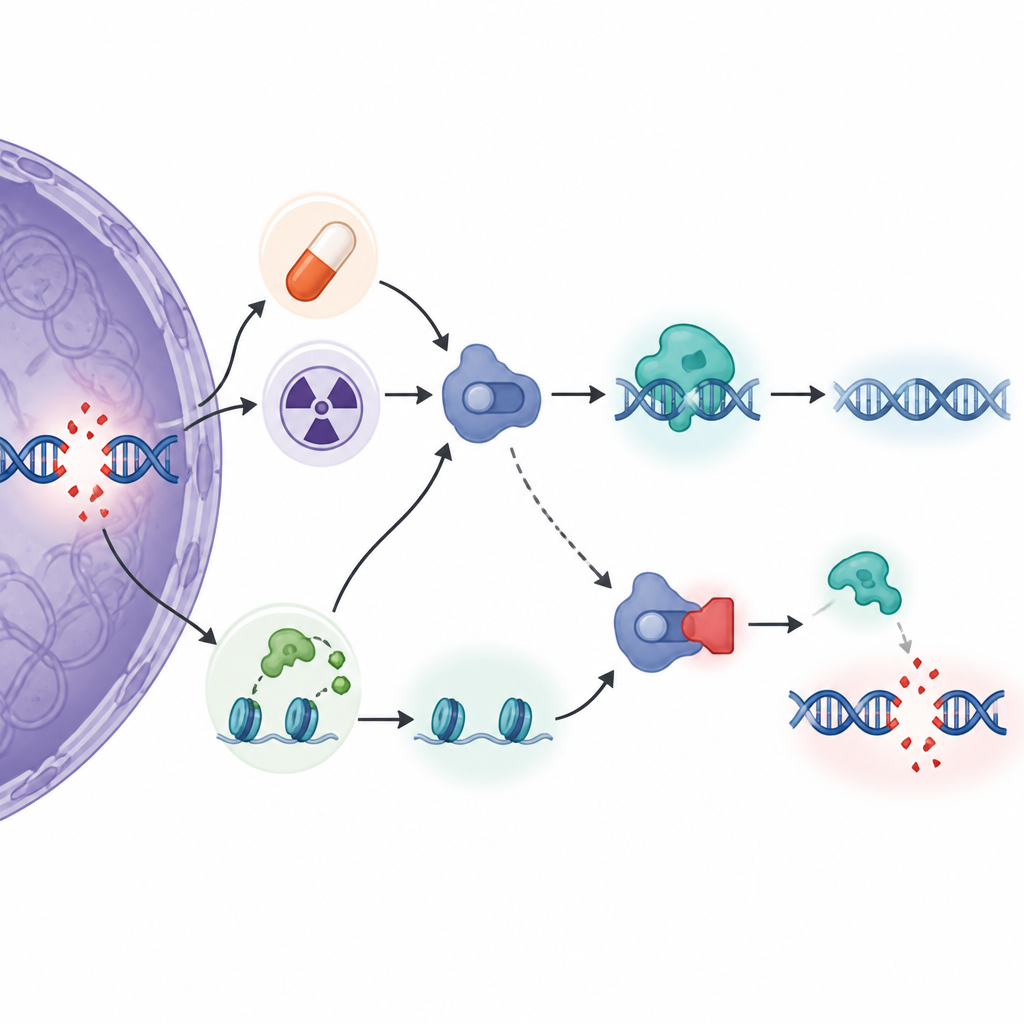
The team focused on a protein called CtIP that helps cells fix broken DNA using a precise repair route. In prostate cancer cells grown in the lab, both abiraterone and radiation raised CtIP levels, regardless of whether the cells carried the usual hormone receptor. When CtIP was artificially boosted, cancer cells repaired radiation damage faster, formed more colonies, and tumors in mice shrank less after treatment. Patient data from large cancer databases showed that men whose tumors had more CtIP tended to do worse, linking this repair helper to poor outcomes.
A control switch that turns repair on
The researchers next asked what turns CtIP production up or down. They discovered that a control protein called CREB1, which acts like a molecular light switch for many genes, sits on the CtIP control region in DNA. Abiraterone and radiation did not increase the amount of CREB1, but instead flipped it into an active state by adding a phosphate tag at a key spot. Once activated, CREB1 drove cells to make more CtIP and strengthened their ability to repair radiation damage. Blocking CREB1 in cells reduced CtIP levels and weakened the main high fidelity DNA repair pathway.
Epigenetic changes that open the door
The story went one step deeper. The CtIP control region in normal prostate cells is more heavily coated with methyl marks on DNA, which makes it harder for switches like CREB1 to bind. In cancer cells, enzymes called TETs had removed many of these marks in a CpG rich island near the CtIP start site. This demethylation opened the DNA, allowing activated CREB1 to latch on more easily and crank up CtIP production. When the team used a drug that blocks TET activity, methyl marks increased again, CREB1 bound less well, and CtIP levels dropped.
A new drug partner to strengthen radiation
Because both abiraterone and radiation ultimately protect cancer cells by activating CREB1, the authors tested a small molecule called 666-15 that prevents CREB1 from becoming active. In multiple prostate cancer cell lines, including those lacking the usual hormone receptor, 666-15 reduced DNA repair, increased radiation damage, and slowed cell growth. In mice with human prostate tumors, adding 666-15 to abiraterone plus radiation led to much smaller tumors than radiation or the drug pair alone, without obvious harm to major organs.
What this means for patients
This work suggests that an internal chain from CREB1 to CtIP lets prostate cancer cells patch up DNA damage caused by abiraterone plus radiotherapy, blunting the benefit of treatment. By blocking this chain with a CREB1 focused drug such as 666-15, doctors may one day make radiation and hormone therapy more effective, even in tumors that have lost typical hormone signals. While more testing is needed before this strategy reaches the clinic, the study points to a clearer molecular target for helping radiation work harder against prostate cancer.
Citation: Han, X., Song, L., Feng, Y. et al. Targeted inhibition of the CREB1-CtIP axis enhances the efficacy of abiraterone combined with radiotherapy in prostate cancer. Cell Death Dis 17, 435 (2026). https://doi.org/10.1038/s41419-026-08633-0
Keywords: prostate cancer, radiotherapy, abiraterone, DNA repair, CREB1 CtIP