Clear Sky Science · en
The cGAS-STING pathway in cancer: friend or foe
When Our Cells Turn a Virus Alarm on Cancer
The body carries a powerful burglar alarm that normally spots invading viruses by sensing stray DNA in the wrong place. This same alarm system, built around a pair of molecules called cGAS and STING, also reacts to damaged DNA inside cancer cells. Sometimes that reaction helps the immune system hunt down tumors; other times it quietly shields the cancer and helps it spread. This review article explores why this pathway can act as both protector and accomplice, and how doctors might learn to flip it to the body’s advantage.
How a Cellular Tripwire Detects Danger
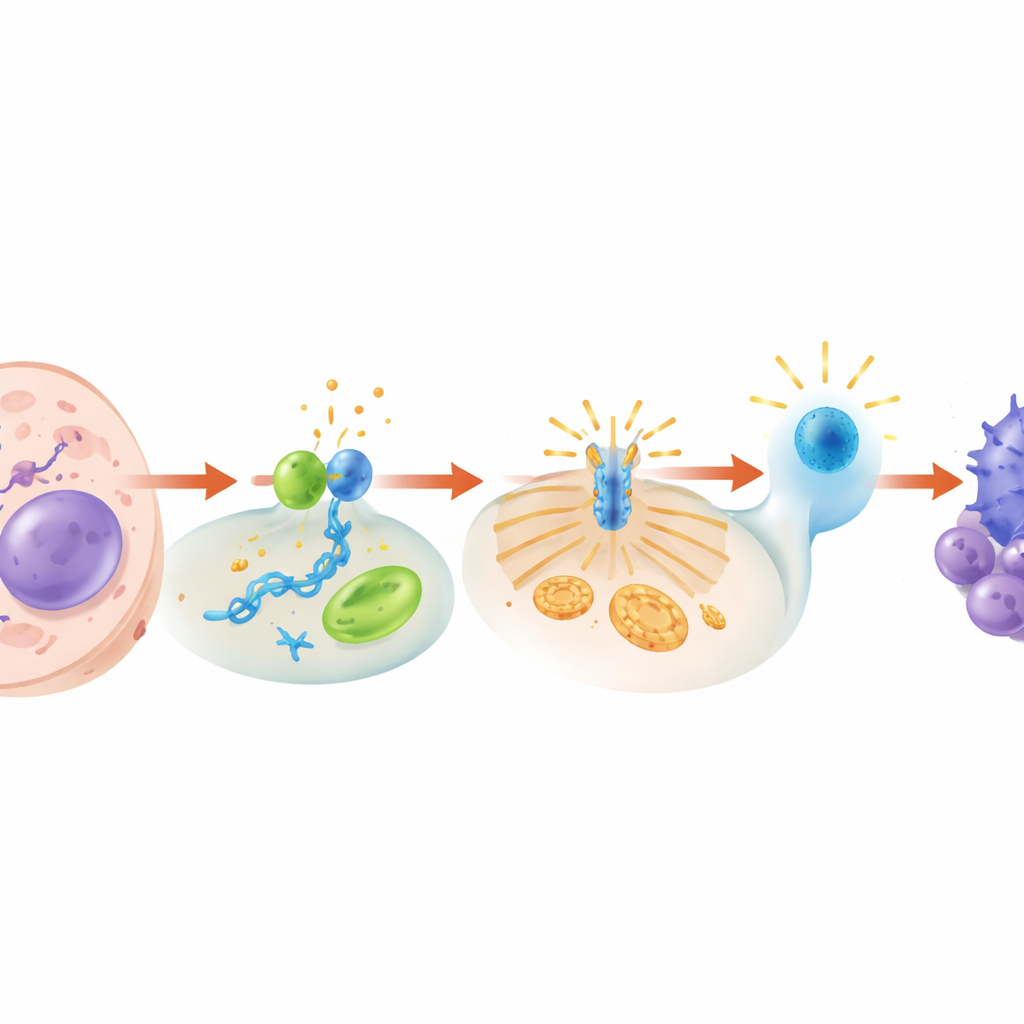
Inside healthy cells, DNA is safely packed away in the nucleus and in mitochondria. If double‑stranded DNA appears loose in the cell’s watery interior, it usually signals infection or severe damage. The protein cGAS sits ready to sense such DNA fragments. When it binds them, it produces a small ring‑shaped messenger molecule called cGAMP. cGAMP then switches on another protein, STING, which sits on internal membranes. Activated STING launches two major alarm routes: one that produces type I interferons, key immune‑boosting signals, and another that turns on inflammatory factors. Together they summon and activate immune cells that can attack virus‑infected or cancerous cells.
Why the Sensor Doesn’t Attack Our Own Genome
Given that every cell is full of DNA, a central question is how cGAS avoids mistaking the body’s own genetic material for an invader. The article describes several layers of protection. Physical barriers keep most DNA inside the nucleus or mitochondria, away from cGAS, which is often anchored at the cell membrane. When DNA breaks do occur, repair systems and digestive enzymes quickly clear loose fragments before they reach a danger level. Even inside the nucleus, where some cGAS is also found, it is held tightly on packaged DNA and blocked from switching on. During cell division, when the nuclear envelope temporarily disappears, additional chemical switches turn cGAS and its downstream partners off to prevent accidental self‑attack.
How the Same Alarm Can Fight or Fuel Cancer
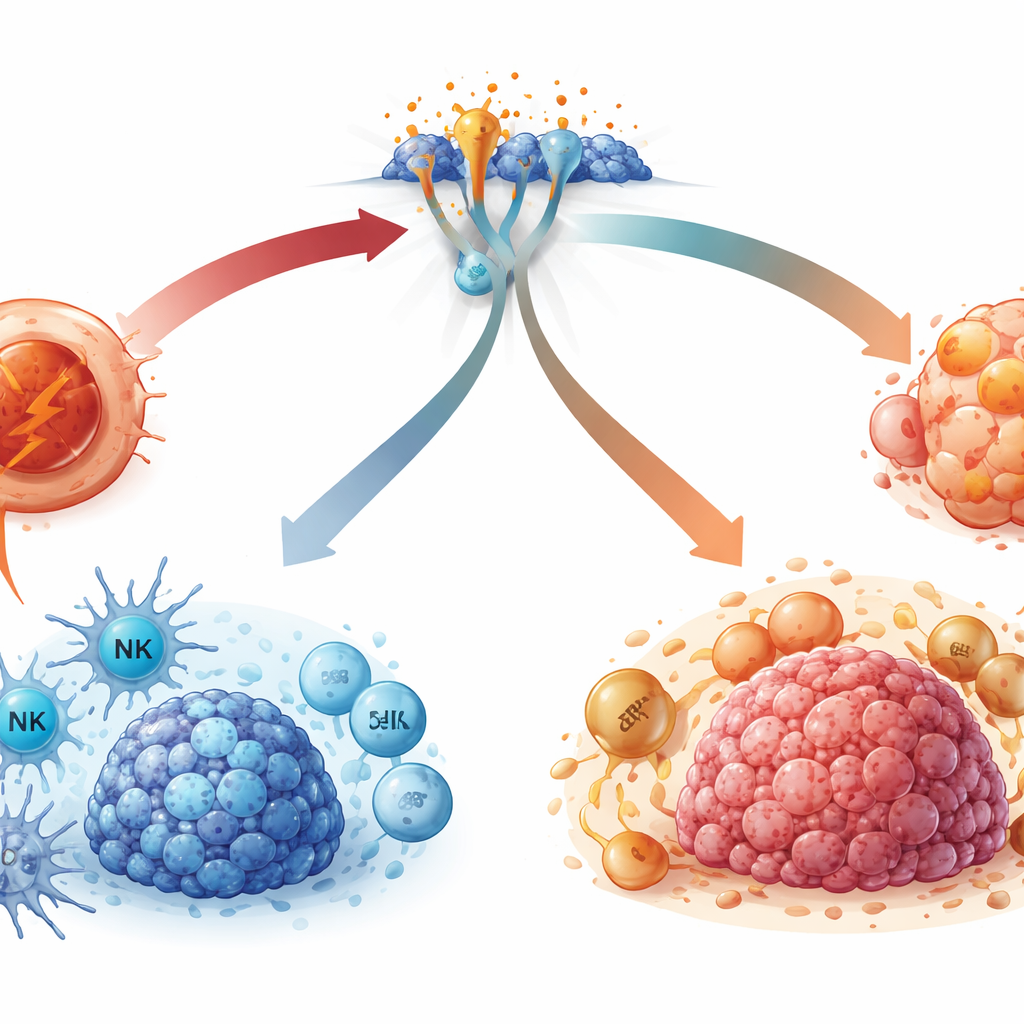
In tumors, chromosomes are often unstable, producing micronuclei and leaking DNA into the cytoplasm. This can chronically engage the cGAS‑STING alarm. Under the right conditions—strong, brief activation in and around tumor‑fighting immune cells—this promotes the release of interferons, helps dendritic cells present tumor material, and keeps killer T cells and natural killer cells active. It also encourages damaged precancerous cells to stop dividing, age, or die. However, when the signal is weak but constant inside cancer cells, they can adapt by damping down the beneficial interferon route while favoring alternative branches of the pathway. These alternate routes increase factors such as PD‑L1 on tumor cells, attract regulatory immune cells that blunt attack, and engage non‑classical inflammatory programs that support invasion and metastasis.
Re‑Wiring the Alarm for Therapy
Because cGAS‑STING can rouse the immune system, many experimental treatments try to stimulate it on purpose. Synthetic messengers and metal‑based particles are being tested to boost STING activity, often combined with radiation or drugs that damage tumor DNA and create more detectable fragments. Other approaches aim to block enzymes that destroy cGAMP outside cells, allowing this messenger to spread the alarm to nearby immune cells. At the same time, the review warns that simply turning the pathway on is not enough: prolonged or misplaced activation can expand suppressive T and B cells, raise PD‑L1, or cause harmful inflammation. Successful strategies will likely pair precise delivery systems with checkpoint‑blocking antibodies and careful selection of patients whose tumors still retain a responsive version of the pathway.
Finding the Sweet Spot Between Help and Harm
The authors conclude that cGAS‑STING is neither inherently good nor bad in cancer. Instead, it behaves like a finely tuned control knob whose effects depend on where the signal starts, how strong it is, how long it lasts, and which cells receive it. In fast‑changing tumors with unstable chromosomes, the same alarm that might once have suppressed cancer can be rewired to aid its growth and spread. Future treatments will need to read this context and then nudge the pathway toward short, focused bursts that rally immune defenders, while avoiding chronic activation that feeds tumor‑friendly inflammation. Learning to control this double‑edged alarm system could improve both cancer therapies and, in other settings, treatments that encourage tissue repair.
Citation: Li, Q., Song, Q., Ma, L. et al. The cGAS-STING pathway in cancer: friend or foe. Cell Death Dis 17, 374 (2026). https://doi.org/10.1038/s41419-026-08607-2
Keywords: cGAS-STING, cancer immunity, tumor microenvironment, innate immune sensing, immunotherapy