Clear Sky Science · en
Berzosertib enhances the sensitivity of pediatric diffuse midline glioma H3K27-altered cells to radiotherapy
Why this childhood brain cancer study matters
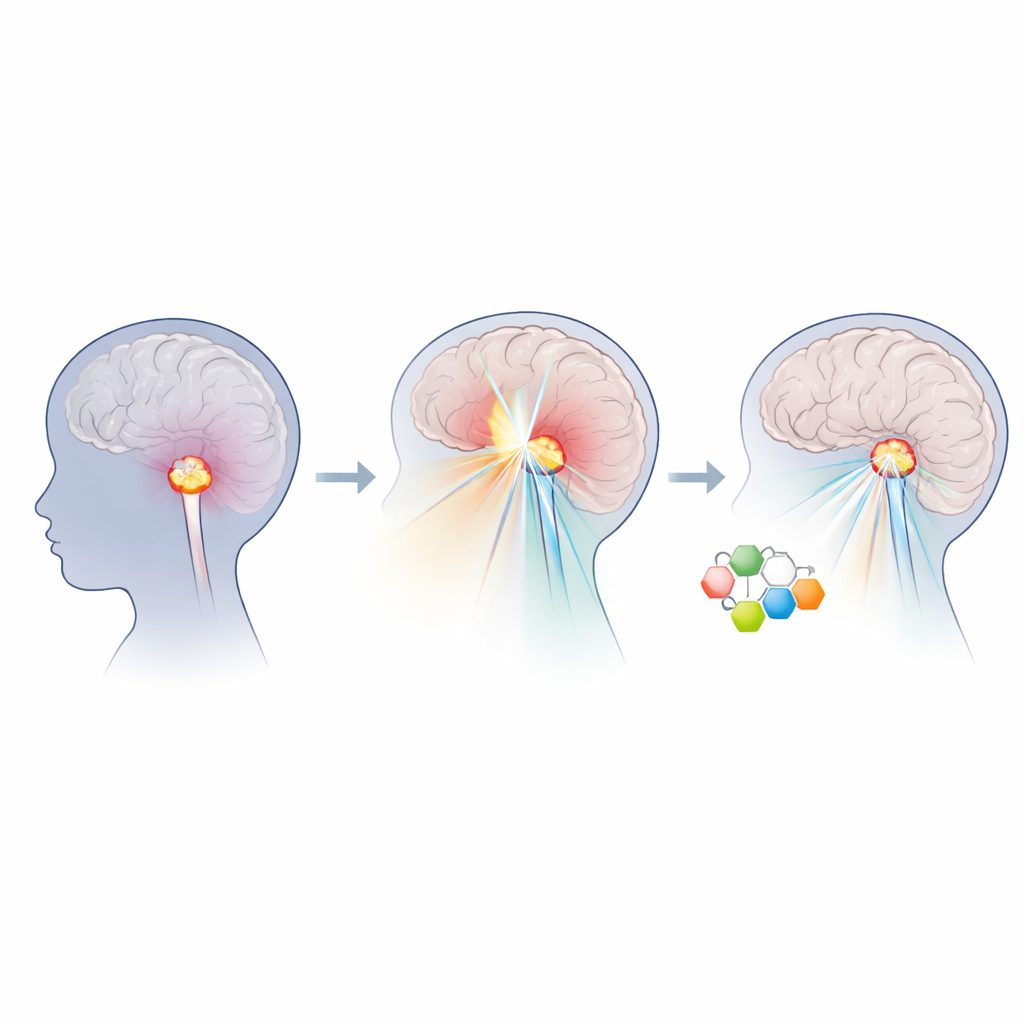
Diffuse midline glioma is a rare but devastating brain tumor that mainly strikes young children and almost always proves fatal within a year of diagnosis. At present, focused radiation is the only treatment that meaningfully slows the disease, and even then, it buys just a few extra months. This study explores whether an experimental drug, berzosertib, can make standard radiotherapy work harder against these tumors without needing to drastically change existing treatment routines.
A deadly tumor with few options
Diffuse midline gliomas grow deep in the brain’s central structures such as the brainstem, thalamus, and spinal cord, where surgery is too risky and complete removal is impossible. These tumors are driven by a specific change in a histone protein (known as H3K27 alteration) that rewires how genes are switched on and off, leading to aggressive growth. Children are usually diagnosed between ages seven and nine, and despite advances in understanding the tumor’s genetics, survival has barely improved. Chemotherapy, targeted drugs, and immune-based approaches have all been tested, but none have clearly extended life the way radiotherapy does, making radiation the cornerstone of care.
A massive search for radiation helpers
The research team set out to find drugs that could act as “boosters” for radiation—agents that would not replace radiotherapy but make tumor cells more vulnerable to it. They tested 687 cancer drugs, including many already in clinical use, across seven different diffuse midline glioma cell lines grown in the lab. Each drug was tried with and without clinically relevant doses of X-ray radiation. By tracking how well the cancer cells survived and grew, they identified a handful of compounds that worked noticeably better when combined with radiation than when given alone.
Berzosertib stands out
Among all candidates, berzosertib emerged as the most promising partner for radiotherapy. This drug blocks ATR, a key protein that helps cells pause and repair their DNA when it is damaged—exactly the kind of damage that radiation causes. When the researchers added berzosertib to three representative tumor cell lines and then exposed them to radiation, they saw a strong, more-than-additive drop in cell growth. At doses of radiation similar to those used in patients, much lower amounts of berzosertib were needed to curb cell growth, and the combination pushed long‑term survival of tumor cells down by orders of magnitude compared with radiation alone. Importantly, when the same tests were run with temozolomide, a common brain tumor drug, no such radiosensitizing effect was seen, highlighting that berzosertib’s impact was specific.
From flat dishes to 3D tumors and living hosts
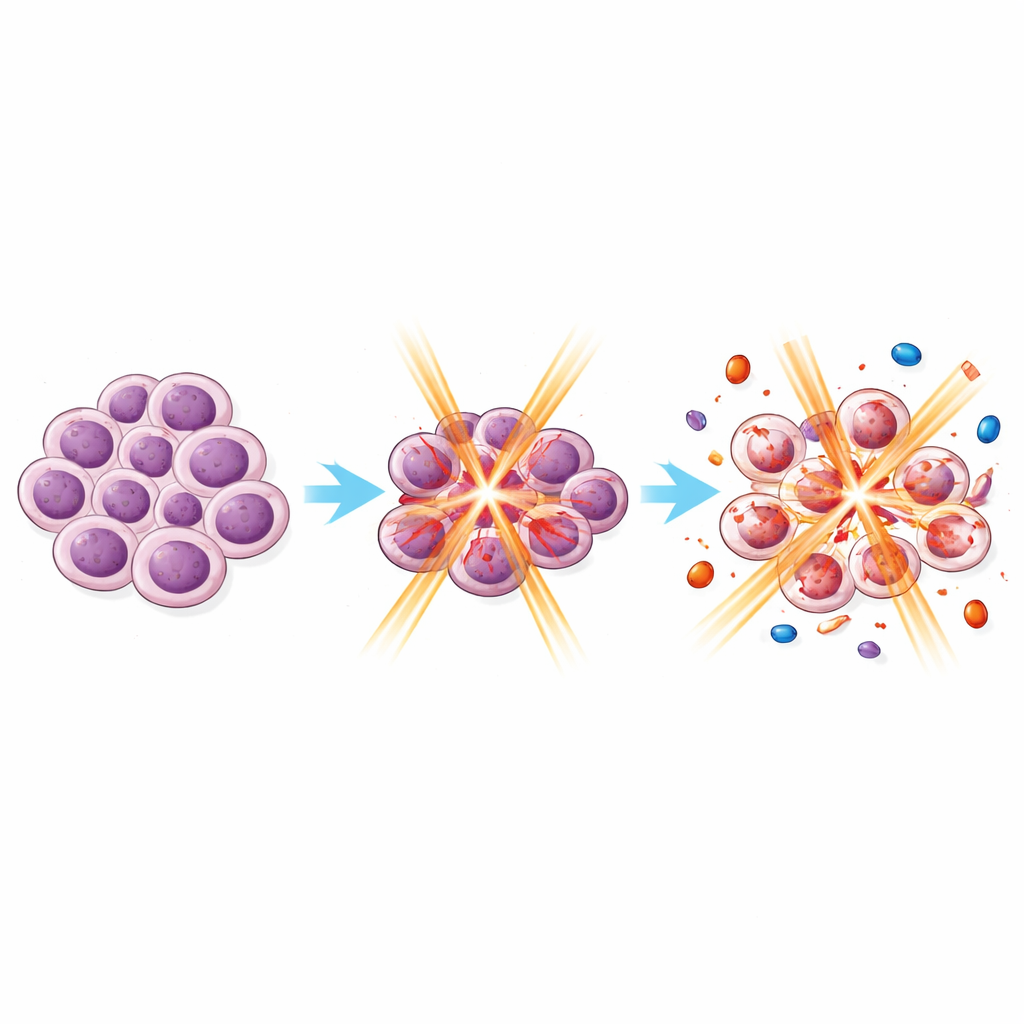
The group then moved beyond simple cell layers to more life‑like models. In 3D spheroid cultures—tiny, ball‑shaped clumps of tumor cells that mimic how tumors grow in the brain—radiation or berzosertib alone only slightly slowed expansion. But when combined, especially at realistic radiation doses, spheroids shrank or stopped growing, and staining showed far more dead cells inside. To approach real‑tissue conditions, the researchers used a chick egg membrane assay, where pretreated tumor cells are placed on a rich blood vessel network and allowed to form tumors. In this setting too, neither radiation nor berzosertib by itself significantly changed tumor weight, but together they sharply reduced tumor size, echoing the earlier lab findings.
What this could mean for children and families
Overall, the study shows that blocking a key DNA‑repair pathway with berzosertib can make diffuse midline glioma cells much more sensitive to the DNA damage caused by radiation. For families, this points to a hopeful idea: instead of relying on radiation alone, combining it with a carefully chosen drug might either make the treatment more effective or allow lower radiation doses while maintaining impact, potentially reducing side effects to the developing brain. The work is still preclinical—done in cell models and egg membranes, not yet in children—but it provides a compelling scientific basis to test ATR‑blocking drugs alongside radiotherapy in future clinical trials, especially if newer versions of these drugs can better reach the brain.
Citation: Gorainow, N., Sander, F., Picard, D. et al. Berzosertib enhances the sensitivity of pediatric diffuse midline glioma H3K27-altered cells to radiotherapy. Cell Death Dis 17, 331 (2026). https://doi.org/10.1038/s41419-026-08567-7
Keywords: diffuse midline glioma, pediatric brain cancer, radiotherapy, ATR inhibitor, berzosertib