Clear Sky Science · en
FBXO6 regulates colon cancer migration and invasion via ITGB1 ubiquitination and downstream signaling
Why this research matters
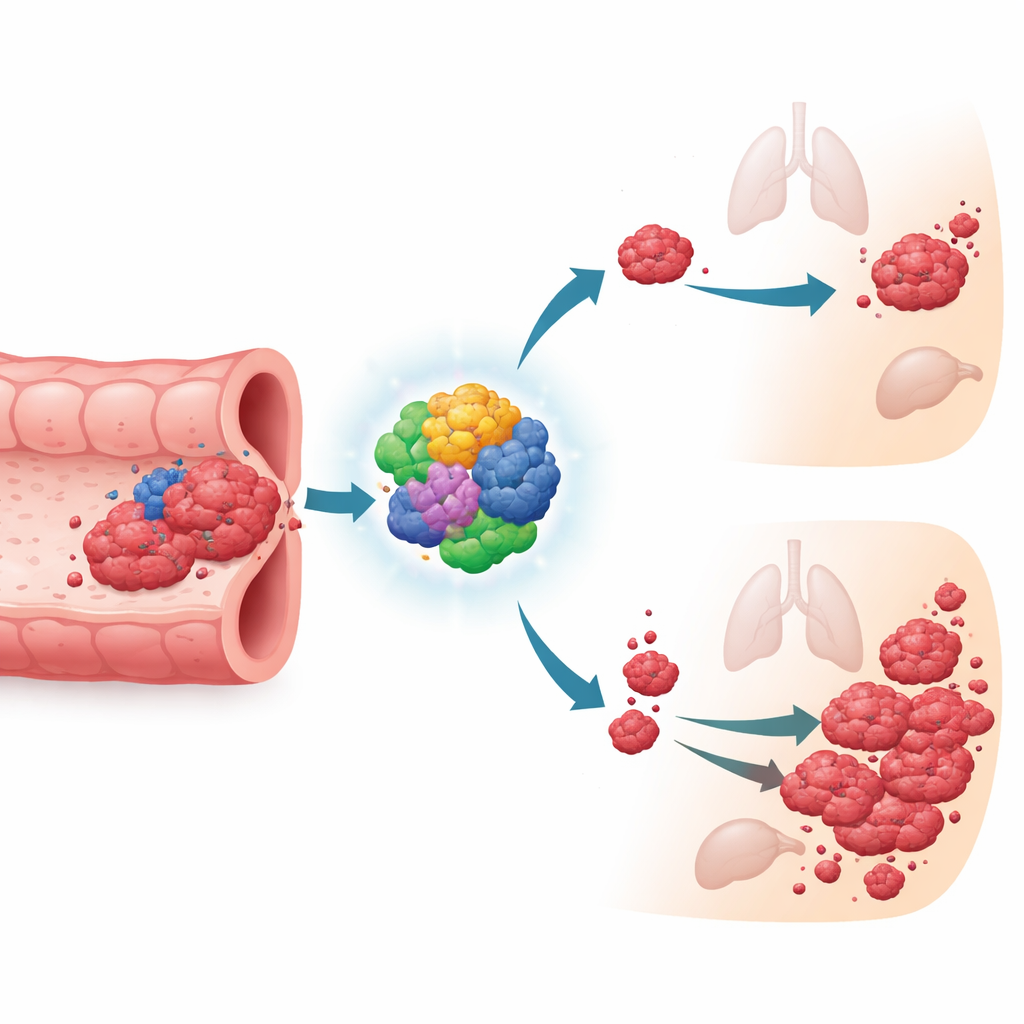
Colon cancer is one of the world’s most common and deadly cancers largely because it so often spreads from the intestine to distant organs. Once this spread, or metastasis, occurs, survival rates plummet. This study uncovers a built‑in cellular "brake" that helps keep colon cancer cells from breaking away and invading new tissues, and shows how strengthening this brake—or repairing it when it fails—could open new paths for treatment and prognosis.
A built‑in brake on tumor aggressiveness
The researchers focused on a protein called FBXO6, part of the cell’s waste‑disposal machinery that tags unwanted proteins for destruction. By mining large patient databases, they found that people with colon cancers expressing higher levels of FBXO6 tended to live longer and relapse less often. Intriguingly, the amount of FBXO6 dropped in more advanced tumors, hinting that cancer cells may progress in part by silencing this protective factor.
Watching cancer cells on the move
To see what FBXO6 actually does, the team manipulated its levels in two human colon cancer cell lines. When they forced the cells to make more FBXO6, the cells formed fewer colonies, crawled more slowly across a dish, and had a harder time squeezing through a gel that mimics surrounding tissue. When they dialed FBXO6 down, the opposite happened: cells divided more readily, migrated faster, and invaded more deeply. These simple but telling behavior tests showed that FBXO6 acts as a strong inhibitor of cancer cell growth, movement, and invasion.
Finding the key partner protein
Next, the scientists set out to discover which protein FBXO6 targets to exert these effects. Using a fishing‑like approach in which FBXO6 was used as bait, combined with mass spectrometry to identify the catch, they landed on a membrane protein called ITGB1. This molecule sits on the cell surface and helps cancer cells grip and pull on their surroundings—an ability closely linked to metastasis. Clinical data showed that high ITGB1 levels in colon cancer are tied to worse patient outcomes. In tumor samples from patients, ITGB1 was clearly elevated compared with nearby normal tissue, while FBXO6 levels were relatively unchanged, suggesting that ITGB1 is the dominant troublemaker in real tumors.
How the brake disrupts a growth signal chain
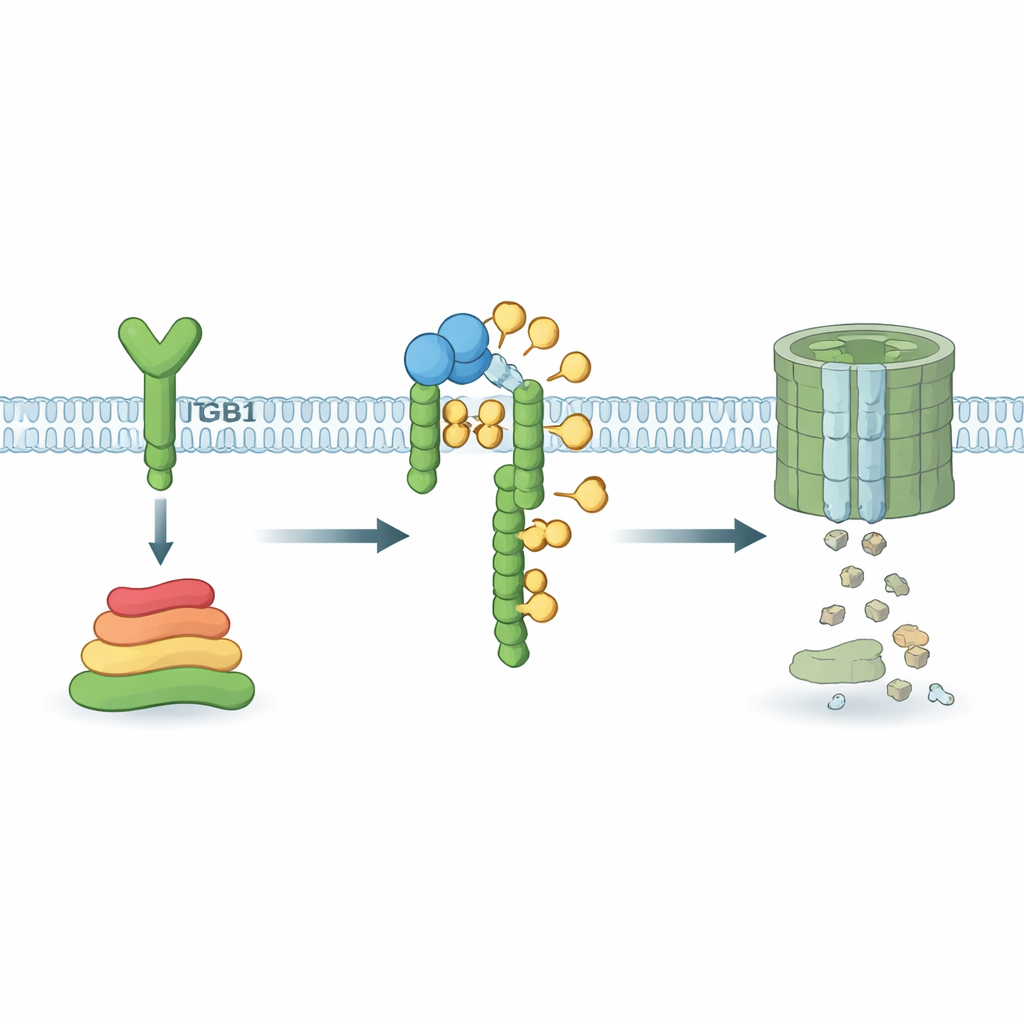
Zooming in further, the team confirmed that FBXO6 physically binds to ITGB1 inside cells. FBXO6 recognizes the sugar‑decorated portions of ITGB1 and attaches small molecular "tags" that mark ITGB1 for shredding by the cell’s protein‑recycling machinery. When FBXO6 was abundant, ITGB1 levels fell faster, and a chain of growth and survival signals downstream—often summarized as the FAK–PI3K–AKT–ERK pathway—was dialed down. When FBXO6 was removed or its sugar‑recognition site was mutated, ITGB1 stuck around longer and this signaling chain lit up. Adding extra ITGB1 could override FBXO6’s restraining effect, restoring strong signaling and aggressive behavior, which confirms that ITGB1 is the critical target.
Testing the mechanism in living tumors
The researchers then moved from cell dishes to mice, implanting colon cancer cells under the skin. Tumors engineered to produce more FBXO6 grew more slowly, showed fewer dividing cells, and had lower ITGB1 levels and weaker downstream signaling. Tumors with FBXO6 knocked down did the reverse: they grew faster and displayed heightened signaling activity. Additional experiments altering ITGB1 levels in this setting showed that boosting FBXO6 could counteract ITGB1’s tumor‑promoting influence, reinforcing the idea that these two proteins form a functional seesaw controlling how dangerous the cancer becomes.
What this means for patients
Taken together, the work paints FBXO6 as a natural defender against colon cancer spread. By targeting and removing ITGB1, FBXO6 weakens a powerful chain of signals that normally encourages tumor cells to grow, migrate, and invade. When FBXO6 is low or impaired, ITGB1 escapes this control, making metastasis more likely. This suggests that FBXO6 levels could help doctors gauge prognosis and that drugs restoring FBXO6 activity—or directly mimicking its attack on ITGB1—might slow or prevent the spread of colon cancer. Because ITGB1 is also linked to resistance to certain therapies, sharpening this cellular brake could eventually make existing treatments more effective.
Citation: Ren, N., Cheng, L., Huang, Z. et al. FBXO6 regulates colon cancer migration and invasion via ITGB1 ubiquitination and downstream signaling. Cell Death Dis 17, 324 (2026). https://doi.org/10.1038/s41419-026-08554-y
Keywords: colorectal cancer, metastasis, ubiquitination, integrin beta1, cell signaling