Clear Sky Science · en
Pellino1-mTOR/S6K1 signaling axis is a key pathogenesis for the development of polycystic kidney disease
When Kidney Cysts and Cancer Share a Hidden Switch
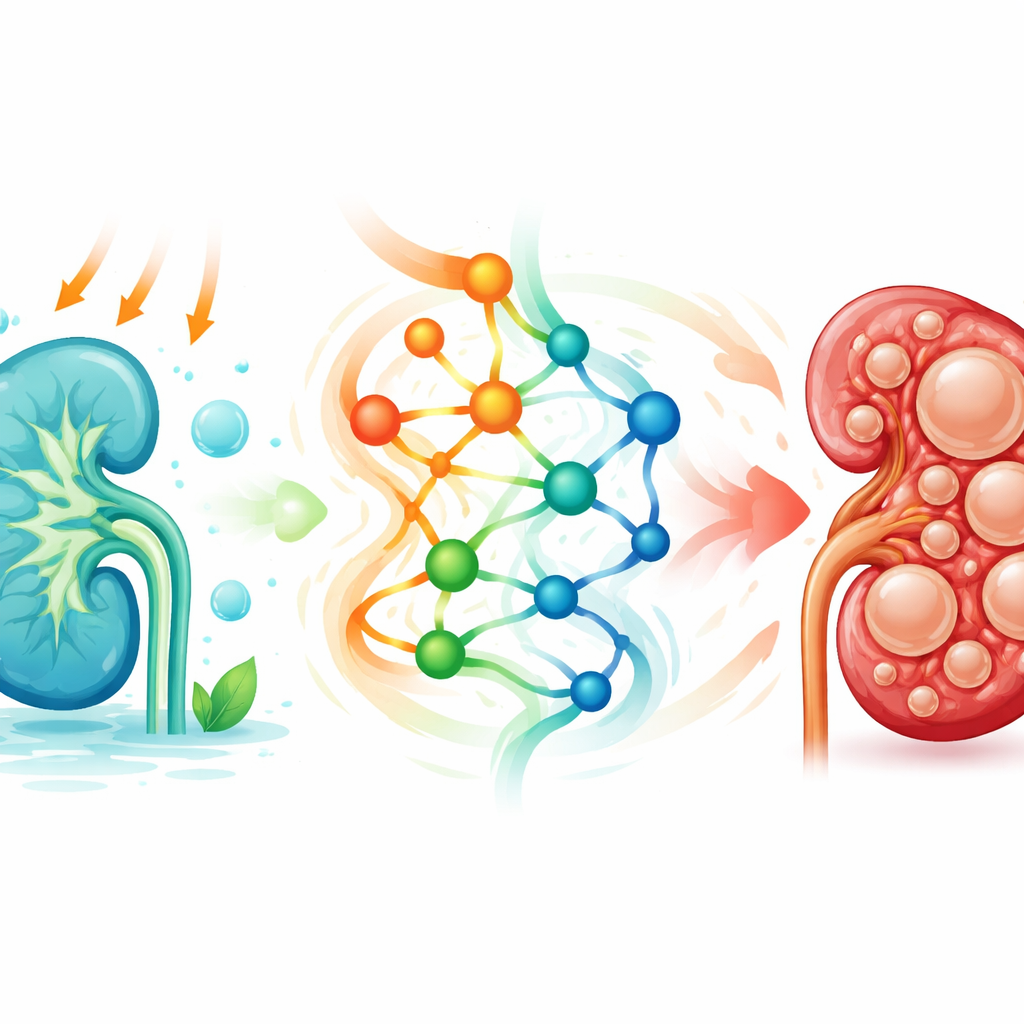
Polycystic kidney disease and kidney cancer might seem like very different illnesses, but they share a dangerous feature: runaway growth inside the kidney. This study uncovers a molecular "switch" that appears to fuel both the expansion of fluid-filled cysts seen in autosomal dominant polycystic kidney disease (ADPKD) and the aggressiveness of a common kidney cancer. Understanding this shared engine of growth could open the door to new treatments that slow kidney failure and perhaps lower cancer risk in vulnerable patients.
A Common Kidney Disease with Quiet but Serious Consequences
ADPKD is one of the most frequent inherited kidney disorders, affecting roughly one in a thousand people. Over many years, countless tiny fluid-filled sacs, or cysts, bud from the kidney’s tubules and gradually enlarge. As they expand, these cysts squeeze healthy tissue, weaken kidney function, and in about half of patients ultimately lead to kidney failure that requires dialysis or a transplant. People with ADPKD are also more likely to develop renal cell carcinoma, a form of kidney cancer, but the biological links between cyst growth, inflammation, and tumor formation have remained murky.
Inflammation Signals that Push Kidneys Toward Damage
The authors focused on a protein called Pellino1 (Peli1), part of the cell’s system for tagging other proteins with small "ubiquitin" molecules to alter their fate. Peli1 is switched on by toll-like receptors, sentinels on kidney cells that sense danger signals from infection or tissue injury. When activated, these receptors trigger inflammatory pathways that can protect in the short term but, if left on too long, contribute to chronic damage. By examining public cancer databases and tissue samples from patients with clear cell renal cell carcinoma, the team found that Peli1 levels were strikingly higher in tumors than in normal kidney tissue. Patients whose cancers showed high Peli1 had worse survival and more rapid disease progression, suggesting that this protein helps drive harmful growth.
How Extra Peli1 Turns Healthy Kidneys Cystic
To see what Peli1 does in living kidneys, the researchers engineered mice in which human Peli1 could be switched on with the antibiotic doxycycline. When Peli1 was activated, the animals developed enlarged, cyst-filled kidneys, heavy protein leakage in the urine, and rising blood markers of kidney failure. Microscopic analysis showed widespread ballooning of the tubules, scarring between them, and an influx of immune cells. Genes that respond to the inflammatory regulator NF-κB, including several cytokines and chemokines, were sharply elevated. Importantly, turning off doxycycline and allowing Peli1 levels to fall led to a clear improvement in the kidney’s appearance, indicating that excessive Peli1 alone was sufficient to trigger, and its removal to ease, cystic damage.
The Growth Pathway that Links Cysts and Cancer
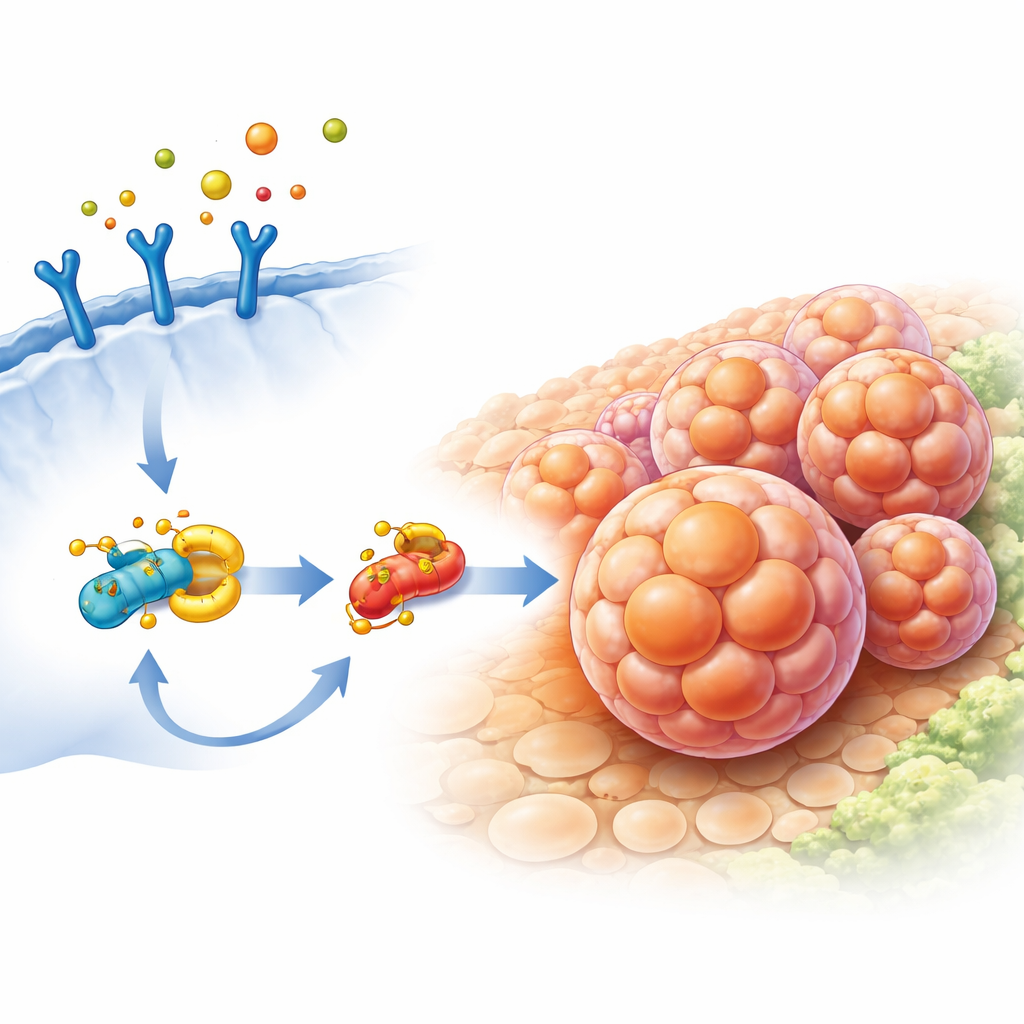
Digging deeper, the team explored how Peli1 boosts the growth of cyst-lining cells. They discovered that Peli1 physically binds to a protein called S6K1, a key component of the well-known mTOR growth pathway, which tells cells when to divide and build new proteins. Instead of marking S6K1 for destruction, Peli1 attached a specific type of ubiquitin chain that stabilized S6K1 and kept it active. Kidneys from Peli1-overexpressing mice showed increased activation of S6K1’s target, the S6 protein, especially in cyst-lining cells. In human kidney cell lines, raising Peli1 levels sped up cell division and movement, while reducing Peli1 made S6K1 less stable. Together, these results outline a chain of events: inflammatory receptors activate Peli1, Peli1 strengthens S6K1 and mTOR signaling, and this in turn drives the overgrowth and migration of tubular cells that form cysts and may evolve toward cancer.
What This Means for Patients and Future Treatments
This work positions Peli1 as a crucial connector between inflammation and uncontrolled growth in the kidney. By stabilizing S6K1 and amplifying mTOR signaling, Peli1 appears to help transform chronic inflammatory stress into expanding cysts and, in some cases, malignancy. While drugs that blunt mTOR already exist, their side effects limit long-term use in chronic kidney disease. Targeting Peli1 itself, or its interaction with S6K1, could offer a more selective way to quiet this harmful pathway while preserving other vital cell functions. Although more research is needed, especially in human studies, the Peli1–mTOR/S6K1 axis now stands out as a promising target for therapies aimed at slowing ADPKD progression and improving outcomes for patients at risk of kidney cancer.
Citation: Kim, S., Kim, MH., Ko, BK. et al. Pellino1-mTOR/S6K1 signaling axis is a key pathogenesis for the development of polycystic kidney disease. Cell Death Dis 17, 296 (2026). https://doi.org/10.1038/s41419-026-08479-6
Keywords: polycystic kidney disease, kidney cancer, inflammation, mTOR signaling, ubiquitin ligase Peli1