Clear Sky Science · en
Arachidonate lipoxygenase 5 metabolism axis promoting ferroptosis: a potential druggable target for doxorubicin-induced cardiomyopathy
Why this study matters for people with cancer
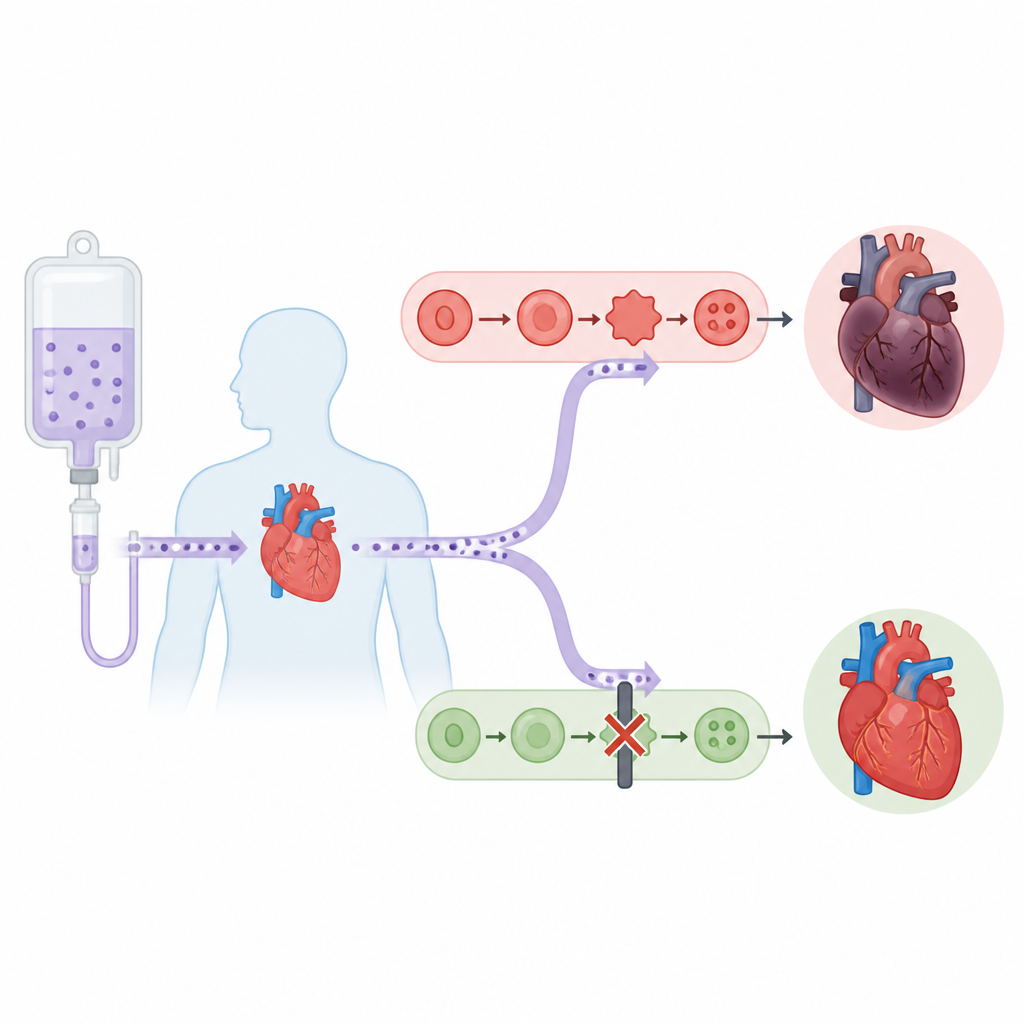
Doxorubicin is a powerful and long used chemotherapy drug that can save lives, but it can also quietly damage the heart and lead to heart failure years later. This study explores a newly recognized type of cell death in heart muscle, called ferroptosis, and asks whether blocking a specific fatty acid pathway in heart cells could protect the heart without dulling the cancer fighting power of doxorubicin.
A cancer drug that hurts the heart
Doxorubicin is widely used to treat blood cancers and solid tumors, yet its benefits are limited by a serious side effect: progressive weakening of the heart, known as doxorubicin induced cardiomyopathy. Many forms of heart cell injury have been proposed, but recent work points to ferroptosis, a form of death driven by iron and the buildup of damaged fats in cell membranes. In animal models, blocking ferroptosis reduces deaths from doxorubicin treatment, suggesting that understanding and stopping this process could help patients receive effective chemotherapy with less risk to their hearts.
A fatty acid pathway under suspicion
The authors focused on an enzyme called ALOX5, which normally helps convert arachidonic acid, a common building block of cell membranes, into active lipid messengers. By mining gene expression data and testing heart samples from patients with heart failure and from mice given doxorubicin, they found that ALOX5 and its product 5 HETE were strongly increased whenever the heart was under this kind of stress. In cultured heart like cells and in mice, doxorubicin boosted ALOX5 levels, linking this fatty acid pathway to drug related heart damage.
Turning up or turning down the damage switch
To test cause and effect, the team artificially increased ALOX5 only in heart muscle cells of mice. When these mice received doxorubicin, their hearts pumped less efficiently, showed more structural damage, and leaked more injury markers into the blood than control animals. Chemical signs of ferroptosis such as depleted glutathione, increased lipid peroxidation, and reduced protective enzymes GPX4 and SLC7A11 were also worse. These harms were eased by ferrostatin 1, a direct ferroptosis blocker. In contrast, when the researchers used a clinical ALOX5 inhibitor called zileuton, or used genetic tools to lower ALOX5, heart structure and pumping function were preserved and ferroptosis markers improved, both in mice and in heart cell cultures.
How the pathway pushes heart cells toward ferroptosis
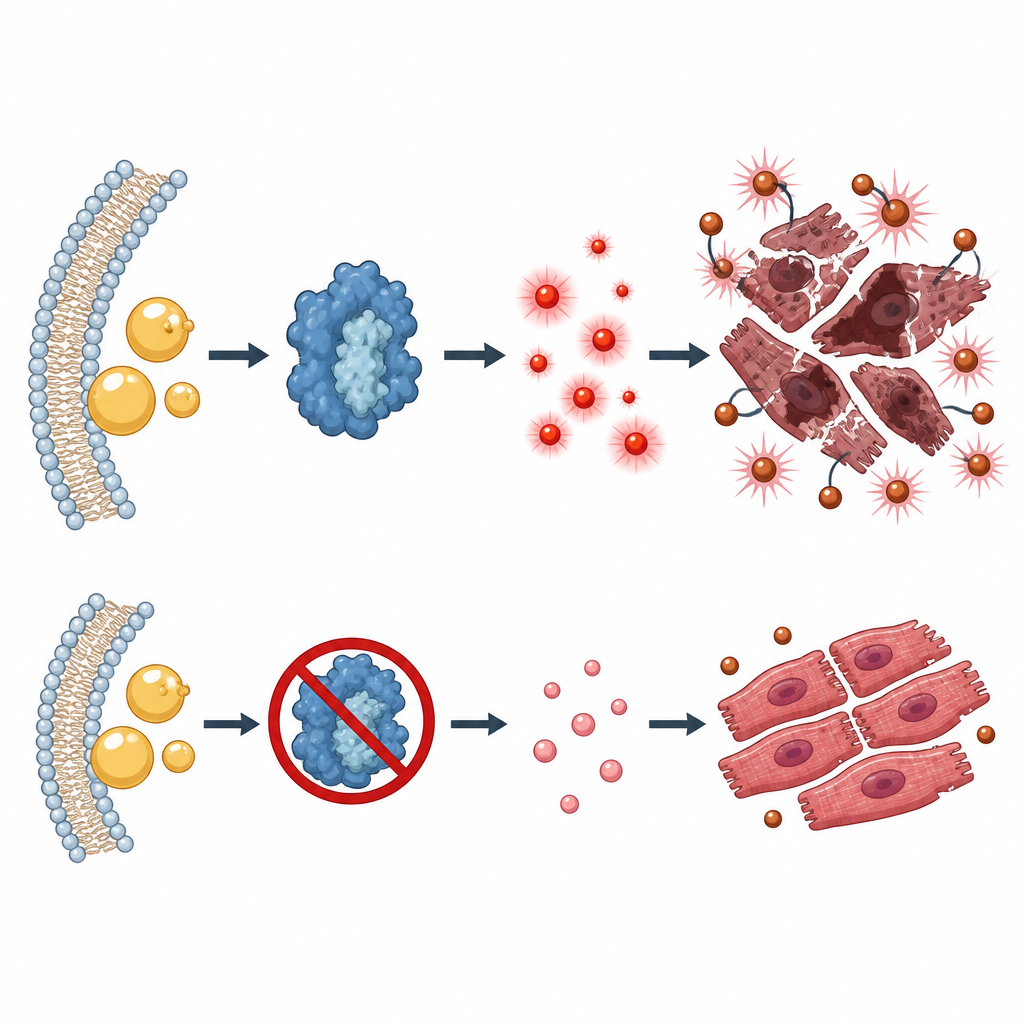
Digging deeper, the researchers showed that supplementing arachidonic acid, the fuel for ALOX5, made doxorubicin’s toxic effects worse, while blocking ALOX5 reversed this. The lipid product 5 HETE alone was able to trigger ferroptosis like changes in heart cells, including more oxidized fats and lower levels of the cell’s antioxidant defenses. At the molecular level, 5 HETE sped the breakdown of NRF2, a master regulator that normally switches on many antioxidant genes, by promoting its tagging with ubiquitin and disposal by the cell’s protein recycling system. This depended on a signaling route involving PI3K, AKT, and GSK 3β, which acts as a control knob for NRF2 stability.
Protecting the heart without weakening cancer treatment
Because any protective strategy must preserve doxorubicin’s anticancer action, the team tested whether ALOX5 inhibition interfered with tumor cell killing. In breast and liver cancer cell lines, adding zileuton did not blunt the ability of doxorubicin to reduce cancer cell survival. This suggests that blocking the ALOX5 pathway can shield the heart by restoring NRF2 and the cell’s antioxidant defenses, yet still allow doxorubicin to attack cancer cells effectively.
What this means for future care
In simple terms, the study identifies a “bad chemistry” route in heart cells where a common fatty acid is turned into a reactive product that helps iron driven damage spiral out of control. By blocking ALOX5 or its product 5 HETE, the researchers were able to keep the heart’s defense system, led by NRF2, from being dismantled, thereby reducing ferroptosis and heart injury in the face of doxorubicin. Because an ALOX5 inhibitor is already approved for other uses, these findings raise the possibility that, after careful clinical testing, the same drug might one day be used to help people receive life saving chemotherapy with a lower risk of long term heart damage.
Citation: Chen, L., Sun, X., Zhang, H. et al. Arachidonate lipoxygenase 5 metabolism axis promoting ferroptosis: a potential druggable target for doxorubicin-induced cardiomyopathy. Br J Cancer 134, 1529–1540 (2026). https://doi.org/10.1038/s41416-026-03376-3
Keywords: doxorubicin cardiotoxicity, ferroptosis, ALOX5, heart failure, zileuton