Clear Sky Science · en
Tumor vessel phenotype in colorectal cancer microenvironment according to age at diagnosis
Why Tumor Blood Vessels and Age Matter
Colorectal cancer is increasingly striking adults in midlife, yet most of what we know about the disease comes from older patients. This study asks a deceptively simple question with big implications: do the tiny blood vessels that feed colon tumors look different in younger versus older adults? Because blood vessels supply oxygen, nutrients, and immune cells to tumors, age-related changes in this hidden plumbing could help explain why early-onset colorectal cancer seems biologically distinct and why patients may respond differently to treatments.
Looking Inside Tumors at the Cellular Scale
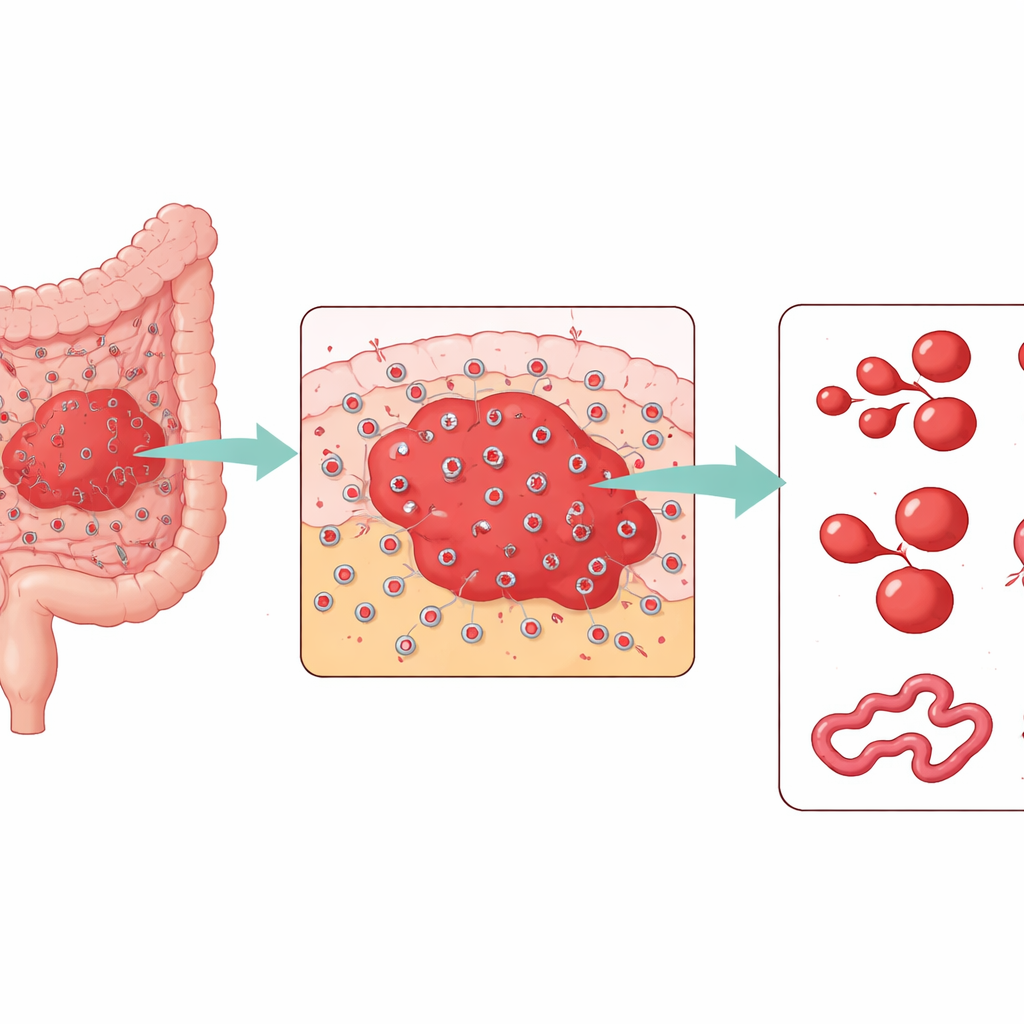
To explore this question, researchers drew on two large U.S.-wide health studies that have followed more than 170,000 nurses and health professionals for decades. Among 4,476 participants who developed colorectal cancer, tumor tissue was available and suitable for detailed analysis from 843 cases. The team used advanced multispectral immunofluorescence microscopy, which allows several different proteins to be visualized at once on the same tissue slice, combined with computer image analysis and machine learning. They focused on markers that identify endothelial cells, the cells that line blood vessels, and distinguished tumor tissue from the surrounding supportive tissue, or stroma.
How the Blood Vessel Map Was Drawn
Each tumor sample was scanned at high resolution, and software identified and measured more than 61,000 individual blood vessels marked by the protein CD34. The researchers then examined which of these vessels also carried other marker proteins associated with actively growing tips of new vessels, supporting “stalk” cells, venous vessels, or specialized immune cell–trafficking vessels. They also trained a machine-learning model, guided by expert pathologists, to recognize vessel shapes—small and indistinct “micro” vessels, squashed “collapsed” vessels, open “patent” vessels, and more twisted “irregular” ones—based purely on their geometry. This combination of molecular labeling and shape analysis created a detailed atlas of tumor vasculature for each patient.
What Changes With Patient Age
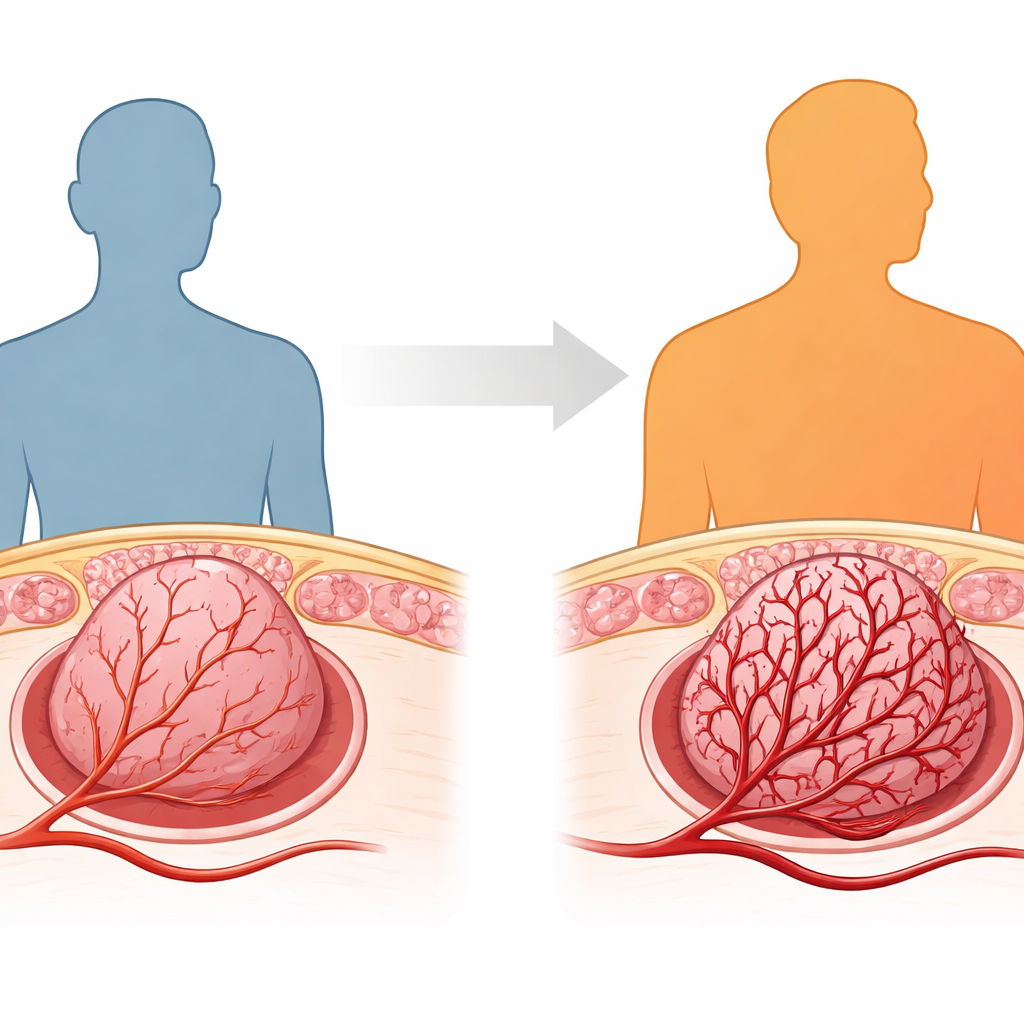
When the team compared vessel patterns against the age at cancer diagnosis, a clear trend emerged. Overall, tumors from younger patients had fewer CD34-positive vessels per unit area than tumors from older patients. An even stronger age-related difference appeared for vessels also positive for LAMB1, a protein linked to early stages of new vessel growth. After accounting for many other influences—such as sex, body weight, tumor location in the colon, and key genetic and epigenetic tumor features—patients diagnosed before age 55 were substantially less likely to have tumors with high overall vessel density or high density of LAMB1-marked vessels than patients diagnosed at age 70 or older. Importantly, this pattern was not seen in nearby noncancerous colon tissue, suggesting the effect is specific to the tumor microenvironment rather than a general age-related change in the intestine.
Vessels, Immunity, and Treatment Clues
The finding that younger-onset tumors tend to be more “hypovascular”—having fewer blood vessels—fits into a broader picture of early-onset colorectal cancer as biologically distinct. Previous work has shown that such tumors often have fewer immune cells infiltrating them and different mixtures of supporting stromal cells. Because blood vessels not only feed tumors but also serve as highways for immune cells and routes for drugs to reach cancer cells, sparser and differently patterned vasculature could contribute to the unusual immune landscape seen in younger patients. It may also influence which treatments work best; for example, therapies that target vessel growth might behave differently in a poorly vascularized tumor than in one with abundant vessels.
What This Means for Patients and Future Research
To a layperson, the main message is that colorectal cancers in younger adults are not simply the same disease happening earlier—they are built differently at the microscopic level. This study shows that, compared with tumors in older patients, early-onset colorectal cancers tend to have fewer blood vessels overall and fewer vessels bearing a marker of active new growth. If confirmed in other populations, these vascular signatures could become biomarkers that help researchers trace the causes of early-onset disease, refine risk models, and eventually tailor therapies by age and tumor type. Understanding how age shapes the tumor’s internal blood supply brings us a step closer to explaining why this cancer is rising in younger adults and how best to combat it.
Citation: Matsuda, K., Ugai, S., Miyahara, S. et al. Tumor vessel phenotype in colorectal cancer microenvironment according to age at diagnosis. Br J Cancer 134, 1375–1386 (2026). https://doi.org/10.1038/s41416-026-03373-6
Keywords: early-onset colorectal cancer, tumor blood vessels, cancer microenvironment, angiogenesis, age-related cancer biology