Clear Sky Science · en
ASH2L induces tamoxifen resistance via H3K4me3 dependent ITGA6/ERK signaling in ER-positive breast cancer
Why some breast cancers stop responding to a key drug
Many women with hormone-sensitive breast cancer take tamoxifen, a pill that blocks estrogen’s growth signal. For most, it works well—but for a troubling number, the cancer eventually outsmarts the drug and returns. This study uncovers a molecular "ringleader" called ASH2L that helps cancer cells evade tamoxifen and behave more like stubborn stem cells, and it suggests a new drug combination that could switch this resistance off.
A hidden switch inside tumor DNA
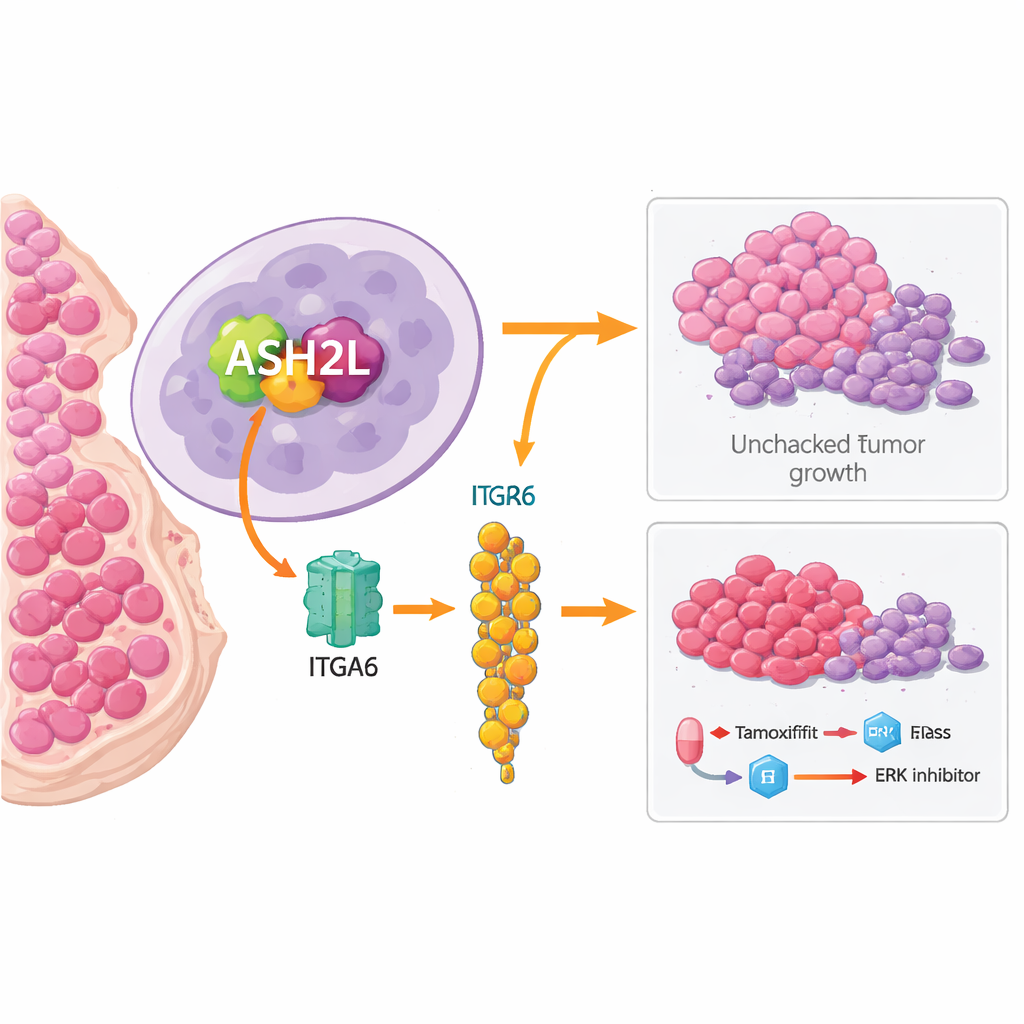
ASH2L is part of a protein team that decorates DNA packaging proteins with small chemical tags, subtly turning genes on or off. The researchers analyzed large patient datasets and found that the ASH2L gene is frequently amplified—copied extra times—in estrogen receptor (ER)-positive breast cancers, the most common breast cancer subtype. Tumors with unusually high ASH2L activity were more likely to come back and more likely to kill, even when patients had received tamoxifen. Interestingly, ASH2L levels did not simply track with estrogen receptor levels, implying that it drives risk through a different route.
From gene tagger to drug resistance driver
To see what ASH2L actually does in cells, the team boosted or blocked it in several ER-positive breast cancer cell lines and in mice. Extra ASH2L made cancer cells grow faster, form more colonies, and seed tumors more readily in animals. These ASH2L-high cells were also harder to kill with tamoxifen: they survived higher doses, formed more colonies after treatment, and showed fewer signs of programmed cell death. When ASH2L was reduced in naturally resistant cells, the opposite happened—the cells became more sensitive to tamoxifen and tumors in mice shrank more under the drug.
Feeding a pool of stubborn “stem-like” cells
The study also found that ASH2L expands a minority population of cancer cells with stem-like traits—cells that can regenerate a tumor and often shrug off treatment. Using specialized tests, the scientists showed that raising ASH2L increased the fraction of cells with high enzyme activity and surface markers typical of breast cancer stem cells, as well as their ability to grow as free-floating spheres in culture. Lowering ASH2L sharply reduced these stem-like populations and made it harder for injected cells to start tumors in mice, indicating that ASH2L fuels a reservoir of particularly dangerous cells.
A molecular relay: ASH2L to ITGA6 to ERK
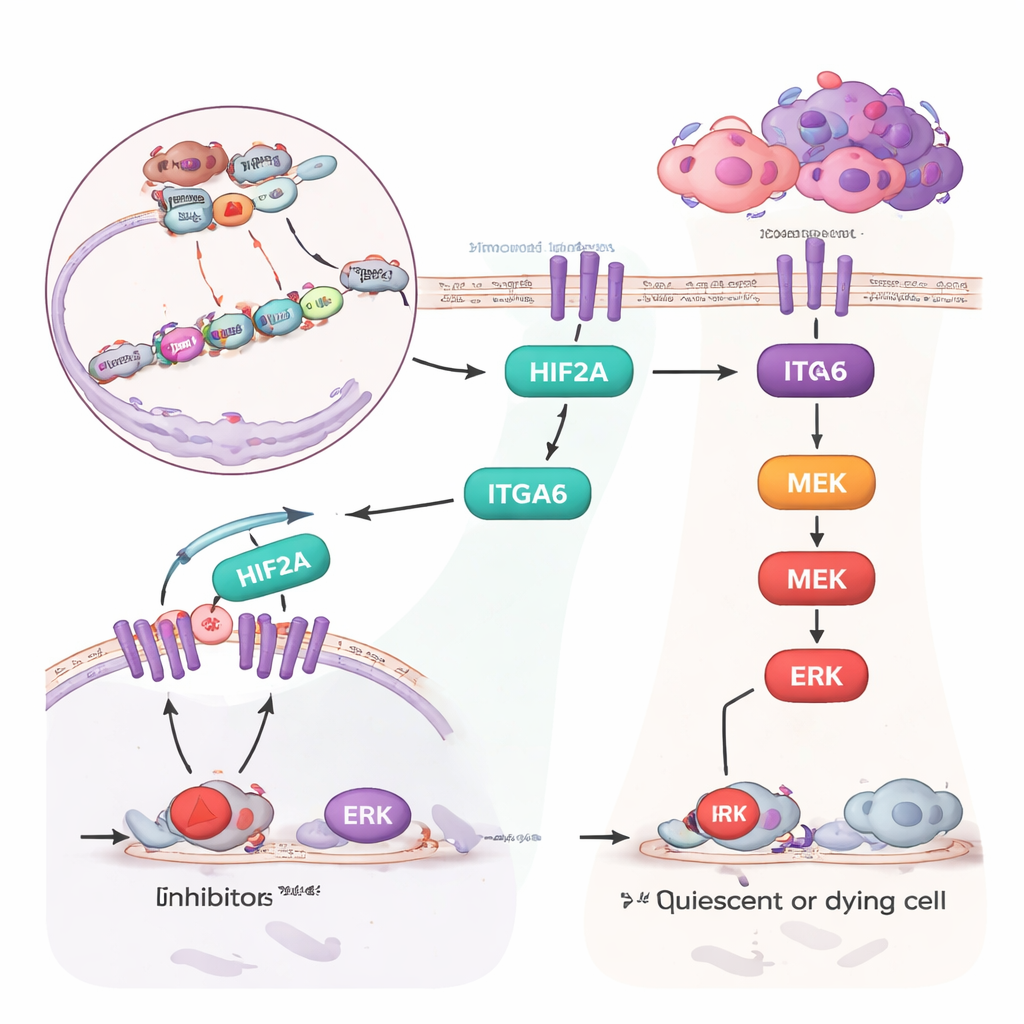
Digging into the mechanism, the researchers traced a chain reaction. ASH2L attaches to the control regions of two genes, HIF2A and ITGA6, and changes the local chemical marks on nearby DNA-packaging proteins in a way that favors gene activation. HIF2A in turn helps further boost ITGA6. The ITGA6 protein sits on the cell surface and activates an internal signaling route known as ERK, which is well known for promoting cell growth and survival. In ASH2L-high cells, ITGA6 and ERK activity rose, along with downstream proteins that push the cell cycle forward and prevent cell death. When the team knocked down ITGA6 or blocked ERK with a targeted inhibitor, the stem-like traits and drug resistance driven by ASH2L largely disappeared.
Combining medicines to outsmart resistance
Because ERK signaling turned out to be the crucial end point of this relay, the scientists asked whether pairing tamoxifen with an ERK-blocking drug could beat ASH2L-driven resistance. In cell dishes, tamoxifen or the ERK inhibitor alone had limited impact on ASH2L-high cells, but together they sharply reduced survival and colony growth. In mice carrying ASH2L-overexpressing tumors, tamoxifen alone barely slowed growth, and the ERK inhibitor alone did little. The combination, however, shrank tumors to a degree similar to tamoxifen treatment in control tumors without extra ASH2L.
What this means for patients
This work suggests that ASH2L acts as an epigenetic master switch that helps ER-positive breast cancers resist tamoxifen and maintain a pool of stem-like cells. By turning on ITGA6 and the ERK pathway, ASH2L lets tumor cells keep dividing and avoid death despite hormone therapy. The results point to two promising ideas: testing ASH2L levels as a marker to flag patients at risk of tamoxifen failure, and using a combination of tamoxifen and ERK inhibitors to re-sensitize resistant tumors. While more clinical research is needed, the study outlines a clear route from a DNA-level regulator to a practical strategy for restoring the power of a decades-old breast cancer drug.
Citation: Kye, YH., Moon, SJ., Cha, HR. et al. ASH2L induces tamoxifen resistance via H3K4me3 dependent ITGA6/ERK signaling in ER-positive breast cancer. Br J Cancer 134, 1150–1165 (2026). https://doi.org/10.1038/s41416-026-03347-8
Keywords: tamoxifen resistance, ER-positive breast cancer, ASH2L, cancer stem cells, ERK signaling