Clear Sky Science · en
Factor VIII restores bone parameters and modulates muscle proteo-metabolome in Factor VIII knockout male mice
Why a Clotting Protein Matters to Bones and Muscles
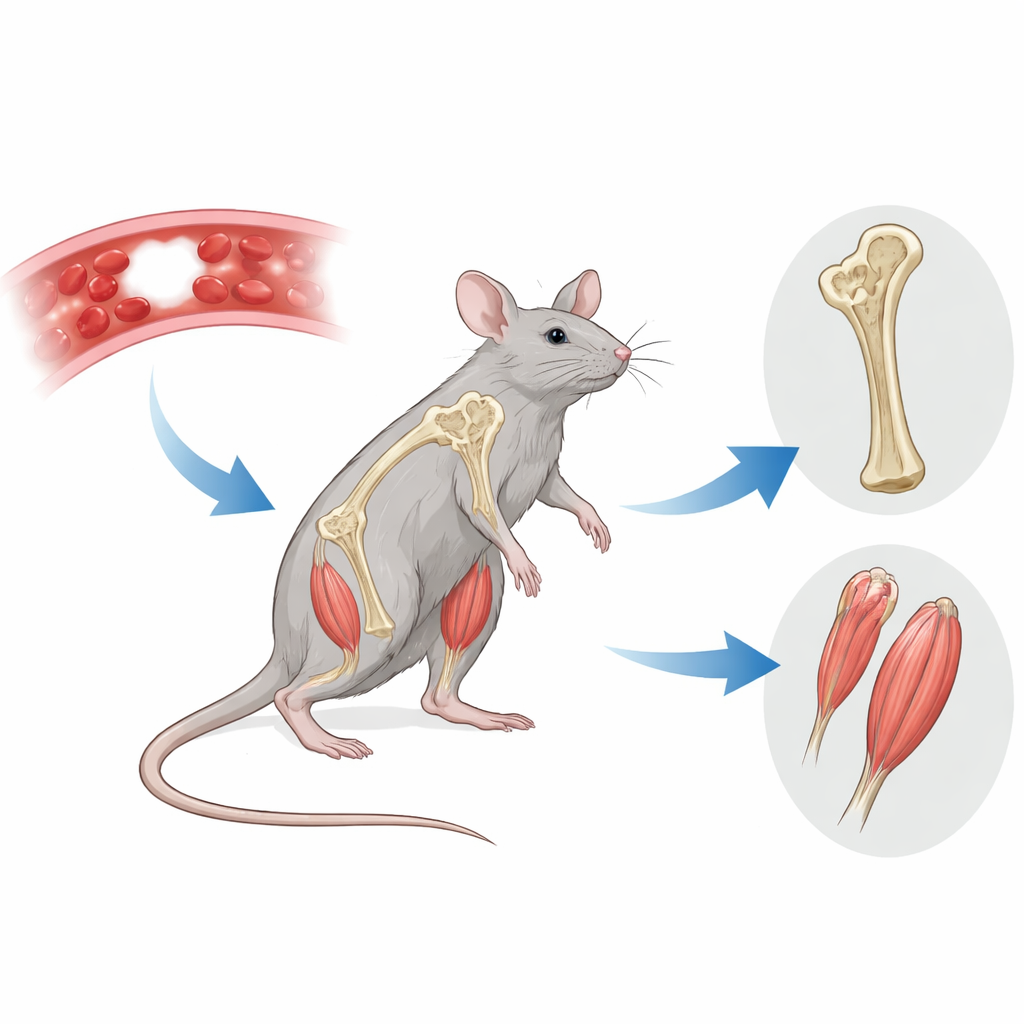
People with hemophilia A are known for problems with bleeding, but many also develop fragile bones and weak muscles. This study asks a simple but important question: does the missing clotting protein in hemophilia, called Factor VIII, directly shape how bones and muscles grow and stay healthy? By using mice that completely lack Factor VIII, and then giving some of them back a recombinant version of the protein, the researchers trace how this single molecule can influence the skeleton, blood vessels inside bone, and even the chemistry of muscle cells.
Weak Bones in the Absence of a Key Protein
The team first examined the bones of young and young-adult male mice that lack Factor VIII. Using high-resolution X-ray scans, they found that these animals had an osteoporotic-like bone pattern: less spongy bone volume, fewer tiny supporting struts inside the bone, and larger empty spaces. Bone mineral density tended to be lower as well. When they looked more closely under the microscope, they saw that the fine network of small blood vessels near the growing ends of bones was reduced, especially the veins and capillaries that nourish bone tissue. At the same time, the number of bone-building cells (osteoblasts) was clearly decreased in young animals, suggesting that the skeleton struggles to lay down enough new bone during the critical growth period.
Restoring Factor VIII Rebuilds Bone and Blood Vessels
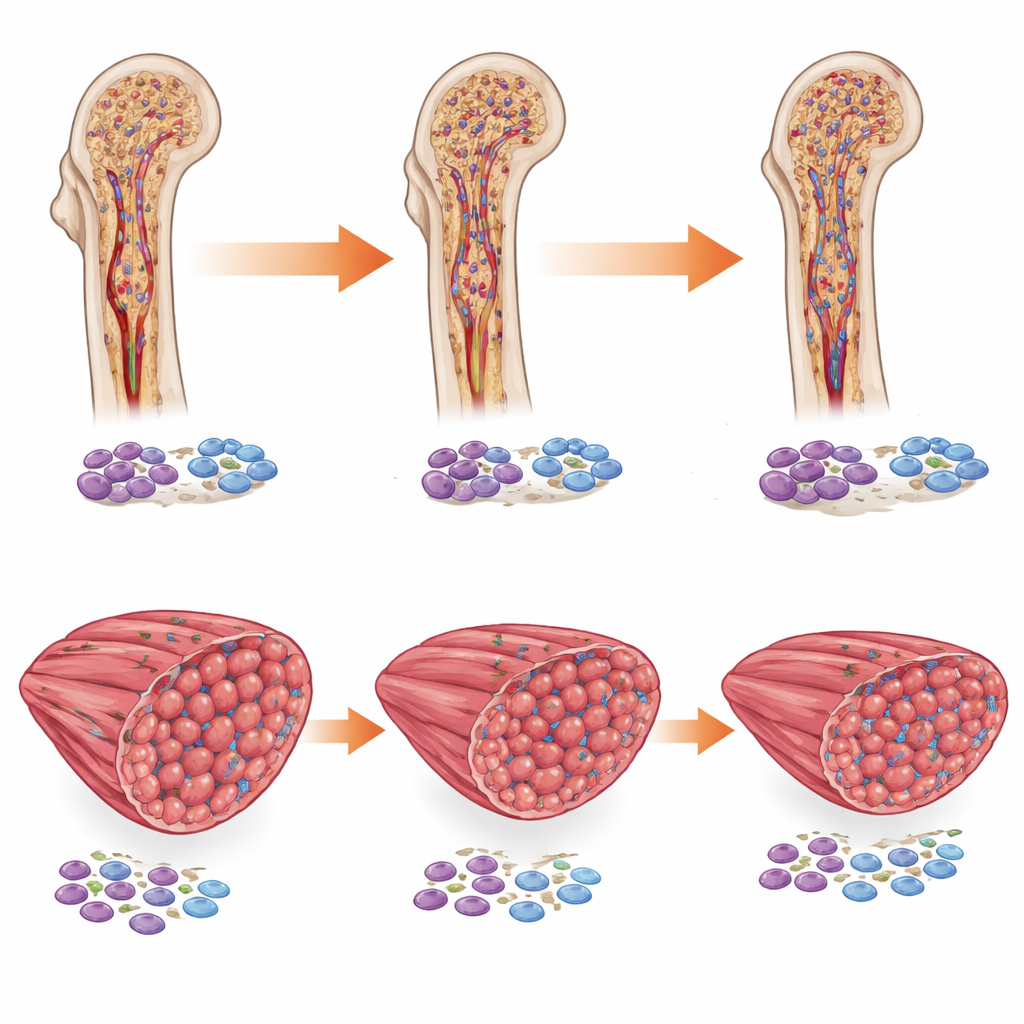
To find out whether this damage could be reversed, the scientists treated Factor VIII–deficient mice with weekly infusions of a recombinant Factor VIII protein for several weeks. After treatment, the inner structure of the long bones improved markedly: there was more spongy bone, more of the tiny supporting struts, and smaller gaps between them. The small-vessel network in the bone marrow also recovered toward normal, particularly the veins and capillaries. Bone-building cells increased, while bone-resorbing cells declined. Importantly, similar benefits were seen with both pegylated and non-pegylated versions of the protein, indicating that the positive effects came from Factor VIII itself rather than from chemical modifications on the drug. Together, these results suggest that Factor VIII helps maintain a healthy balance between bone formation, bone breakdown, and blood supply inside the skeleton.
Surprising Muscle Changes and Altered Cell Chemistry
The picture in muscle was more complex. Young Factor VIII–deficient mice actually had heavier leg muscles with larger fibers than normal, but as they matured their fiber types shifted toward a form that favors fast, powerful contractions yet tires easily. Detailed protein and metabolite analyses revealed that muscles lacking Factor VIII had dampened activity in energy factories (mitochondria) and in the machinery that makes new proteins, along with shifts in energy-related molecules and antioxidants. These changes point to muscles that demand more fuel and operate with poorer “metabolic economy,” which could ultimately translate into early fatigue and weakness, echoing what is seen in many people with hemophilia.
Partial Rescue of Muscle and Immune Responses
When the mice received recombinant Factor VIII, some of the abnormal muscle chemistry moved back toward normal, and muscle fibers became slightly smaller and more homogeneous. However, the basic mix of fiber types did not fully revert, and the structural muscle changes were only partly corrected. In a separate experiment, the researchers injured leg muscles with a toxin to mimic severe damage. Mice lacking Factor VIII showed reduced early recruitment of pro-inflammatory macrophages—immune cells that help clear debris and kick-start repair—but this defect was partly fixed by Factor VIII treatment. Even so, fully regenerated muscles in treated mice still differed from those in normal animals, suggesting that once early developmental or vascular changes have occurred, they cannot be completely undone later in life.
What This Means for People with Hemophilia
Overall, the study shows that Factor VIII is more than a clotting aid: it helps shape bone structure, supports the tiny blood vessels that feed growing bone, and influences how muscles use energy and recover from injury. Giving back Factor VIII in mice can largely repair bone weakness and improve the bone’s blood supply, while only partly normalizing muscle properties. For people with hemophilia A, these findings support early and consistent Factor VIII replacement to protect bone health, and suggest that additional strategies may be needed to fully address muscle weakness and early-onset frailty.
Citation: Babuty, A., Muñoz-Garcia, J., Christophe, O.D. et al. Factor VIII restores bone parameters and modulates muscle proteo-metabolome in Factor VIII knockout male mice. Bone Res 14, 30 (2026). https://doi.org/10.1038/s41413-025-00485-2
Keywords: hemophilia A, Factor VIII, bone health, skeletal muscle, recombinant therapy