Clear Sky Science · en
Allogeneic hematopoietic stem cell transplantation after azacitidine and venetoclax salvage in relapsed/refractory AML: a multicenter real-world study by the French AURAML group
Why this matters to patients and families
For people with a hard to treat blood cancer called acute myeloid leukemia, running out of treatment options can feel terrifying. This study looks at whether a newer drug combination can safely help more patients reach a stem cell transplant, the one treatment that still offers a real chance of long term survival when the disease comes back.
A new path toward transplant
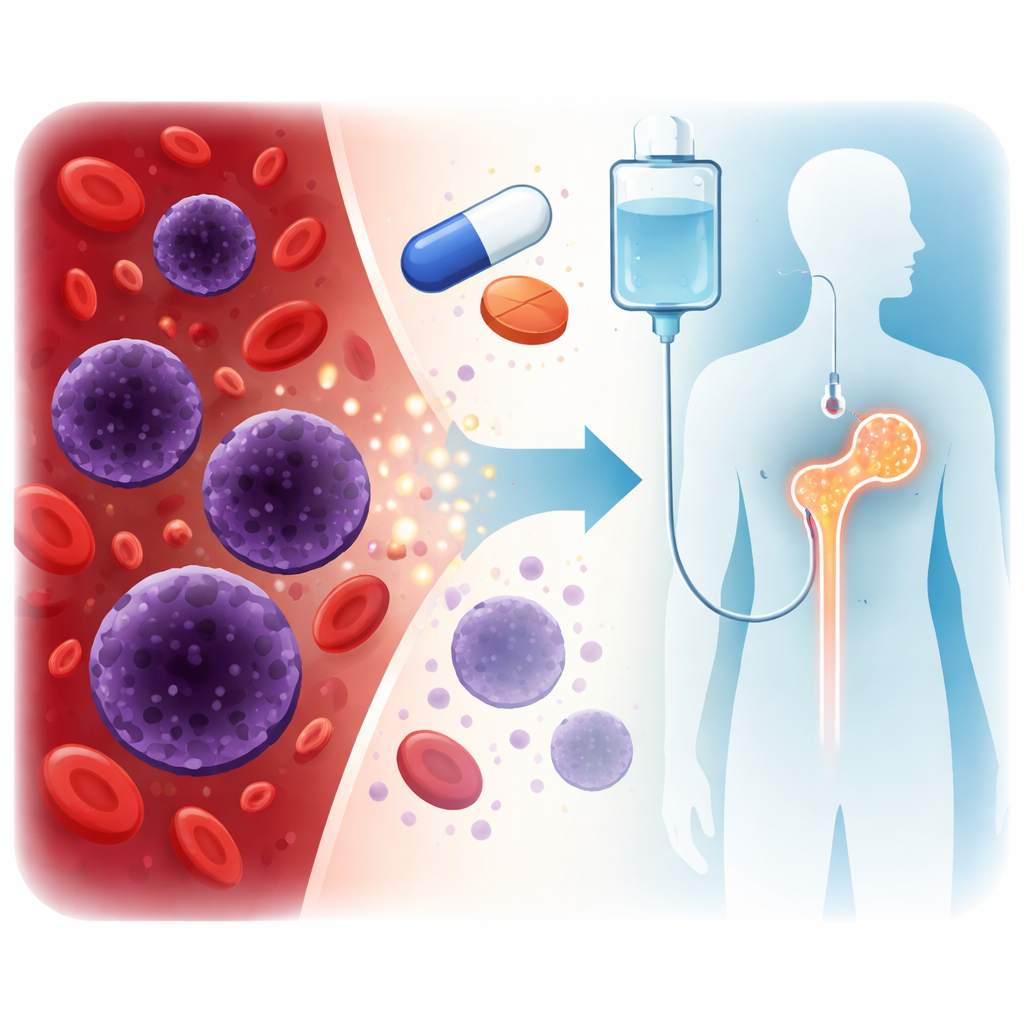
When this leukemia returns or fails to respond to standard strong chemotherapy, doctors usually try another round of harsh drugs to shrink the cancer before stem cell transplant. These rescue treatments can be very toxic and often do not work well, especially in older or frailer adults. The drug pair azacitidine and venetoclax was first tested in patients too fragile for intensive chemotherapy, but doctors soon began using it as a rescue option in tougher cases as well. The French AURAML group set out to see how patients actually did in everyday practice when they went to transplant after this gentler drug mix.
Who was studied and how
The researchers reviewed records from the VENAURA registry, which tracks people treated at 12 centers in one French region. They focused on 75 adults whose leukemia had come back or never fully responded, and who then received azacitidine plus venetoclax before an allogeneic stem cell transplant, where blood forming cells are donated by another person. Most patients had already tried at least one earlier treatment, and many had features that usually predict a poor outcome. Doctors also measured tiny traces of remaining leukemia in the bone marrow, known as measurable residual disease, just before transplant.
Survival, relapse, and safety
After a typical follow up of about a year and a half, roughly six out of ten patients were still alive two years after transplant, and the median survival had not yet been reached. About one third had seen their leukemia return by two years, which is in line with or better than many older reports in similar high risk groups. Deaths not caused by leukemia itself were uncommon, with a two year non relapse death rate just above one in ten. Severe forms of graft versus host disease, where donor cells attack healthy tissues, were also relatively rare. These findings suggest that using the azacitidine and venetoclax combination does not add major extra harm before transplant and may even spare patients some of the damage seen with heavy chemotherapy.
The importance of early response
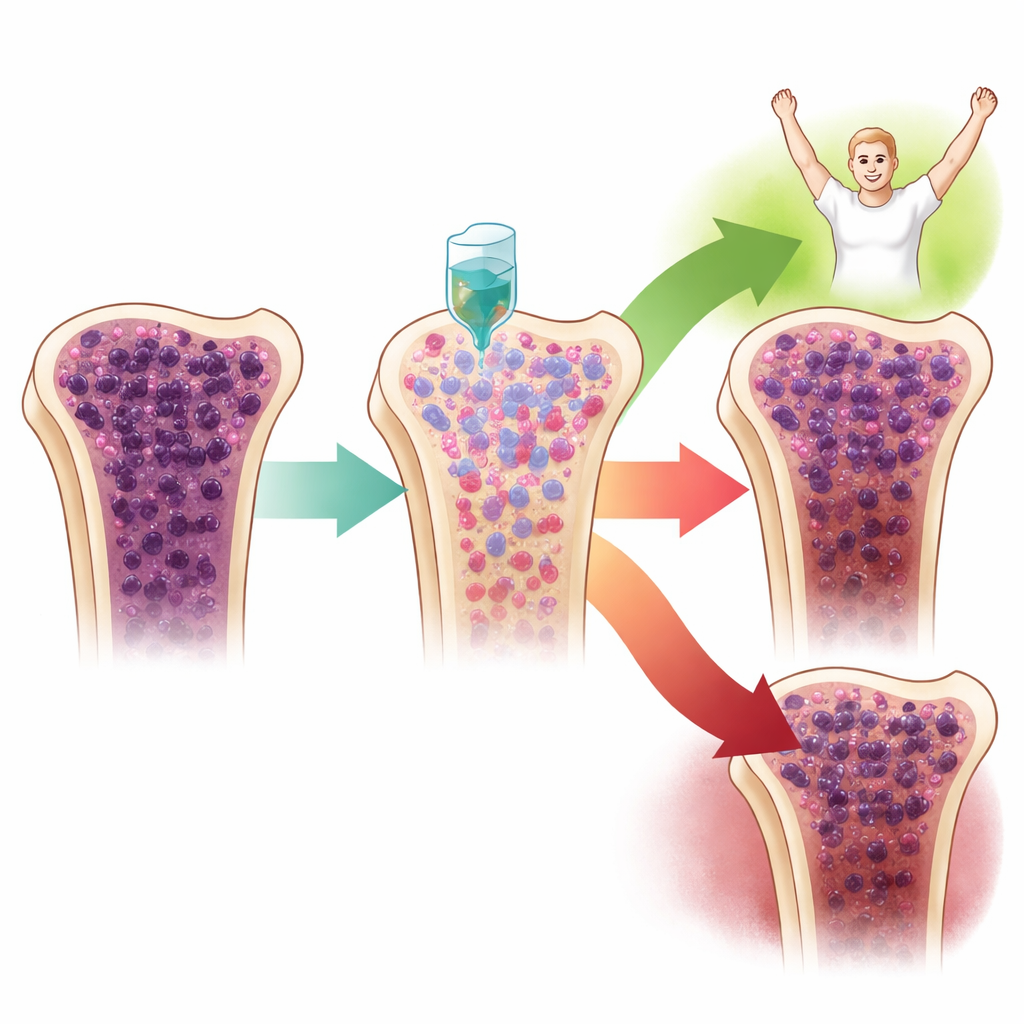
A striking message from the study is that how quickly the leukemia shrank mattered a lot. Patients whose disease went into remission after the very first treatment cycle with azacitidine and venetoclax had better overall survival and were less likely to relapse after transplant. Those who needed more cycles before responding, or who still had detectable leukemia cells just before transplant, faced a higher risk of the disease coming back. The team built a simple three tier risk picture: people with early deep responses did best, those with late and incomplete responses did worst, and everyone else fell in between.
How it compares with older chemotherapy
To put these results into context, the researchers carefully matched these 75 patients with another 75 who had received traditional intensive rescue chemotherapy before transplant at the same hospital center. The two groups had similar survival after transplant and similar chances of keeping both relapse and serious graft versus host disease at bay over time. However, there was a clear trend toward fewer deaths from causes other than leukemia in the azacitidine and venetoclax group, hinting that this route may be kinder to the body while still controlling the cancer well enough to reach transplant.
What this means going forward
For patients and clinicians facing relapsed or resistant acute myeloid leukemia, this real world study supports azacitidine plus venetoclax as a practical bridge to donor stem cell transplant, with survival comparable to older drug combinations and signs of lower treatment related harm. It also shows that checking how quickly the disease clears after the first cycle, and how much is left just before transplant, can help flag who is most at risk of relapse. While more rigorous trials are still needed, the work offers cautious hope that a less punishing route to curative transplant is becoming available for a wider range of people.
Citation: Tauveron-Jalenques, U., Aspas Requena, G., Gross, Z. et al. Allogeneic hematopoietic stem cell transplantation after azacitidine and venetoclax salvage in relapsed/refractory AML: a multicenter real-world study by the French AURAML group. Bone Marrow Transplant 61, 551–558 (2026). https://doi.org/10.1038/s41409-026-02834-z
Keywords: acute myeloid leukemia, stem cell transplant, azacitidine venetoclax, relapsed leukemia, minimal residual disease