Clear Sky Science · en
Risk factors for alloimmune lung syndromes after allogeneic hematopoietic cell transplantation in children
Why some children struggle to breathe after cancer treatment
For children who receive a bone marrow transplant, surviving the original disease is only part of the story. Months after treatment, some develop serious lung problems that can be difficult to detect early and hard to treat once established. This study explores which children are most at risk of these lung injuries, with the goal of catching trouble sooner and tailoring care to prevent lasting damage.
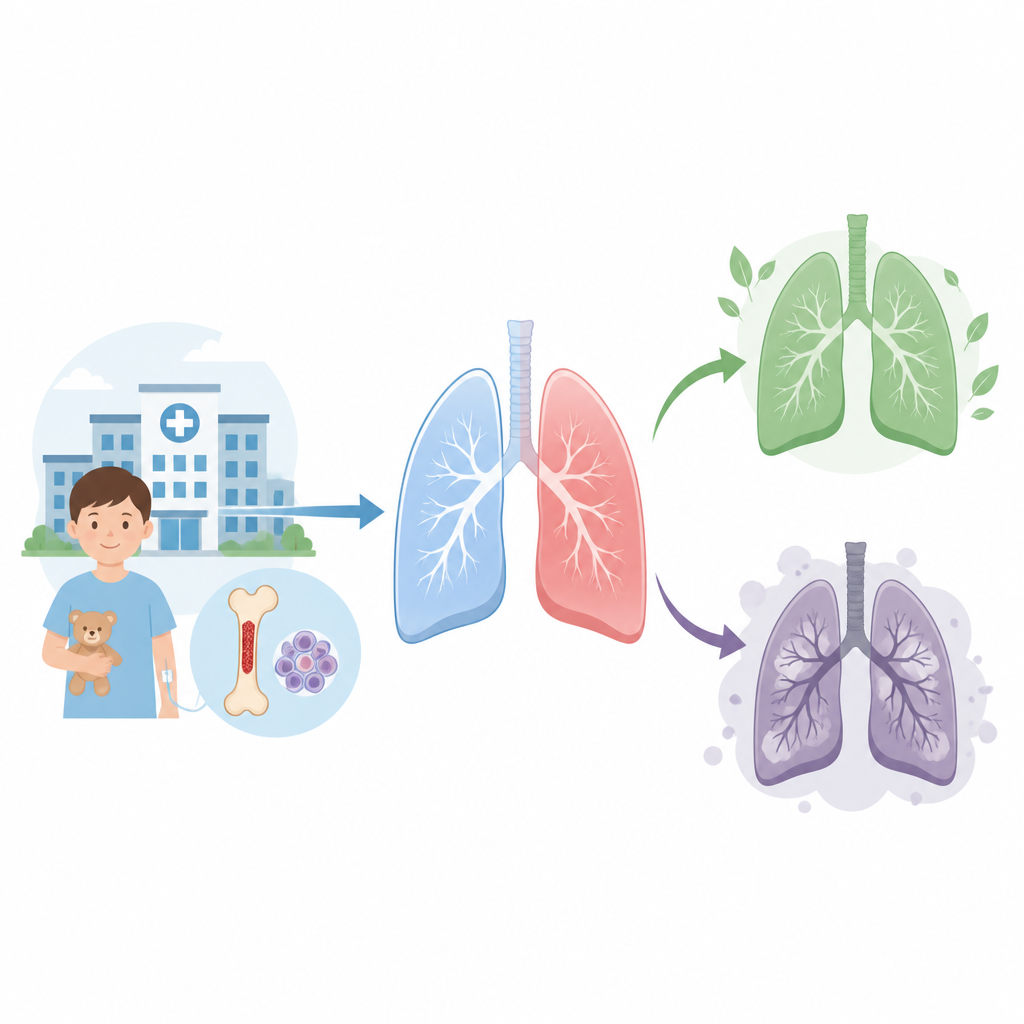
Two types of transplant related lung injury
The researchers focused on two non infectious lung syndromes that can appear after a donor stem cell transplant. The first, called idiopathic pneumonia syndrome, tends to strike within the first few months and involves widespread inflammation throughout the lungs. The second, bronchiolitis obliterans syndrome, usually arises later and mainly scars the tiny airways, slowly choking off airflow. Both problems stem from the new immune system reacting against the lungs and can be fatal in a large share of affected children, making prevention and early recognition essential.
A large group of young patients followed over time
The team analyzed records from 633 children and young adults who received their first donor stem cell transplant in two Dutch centers over a twenty year period. Just over half were treated for cancer and the rest for non cancerous conditions such as immune deficiencies or inherited metabolic diseases. The researchers combined basic clinical information, details of the pre transplant treatment, viral infections, and repeated blood tests taken in the months after transplant. They then used statistical methods that account for deaths and graft failure to see which features predicted later lung injury.
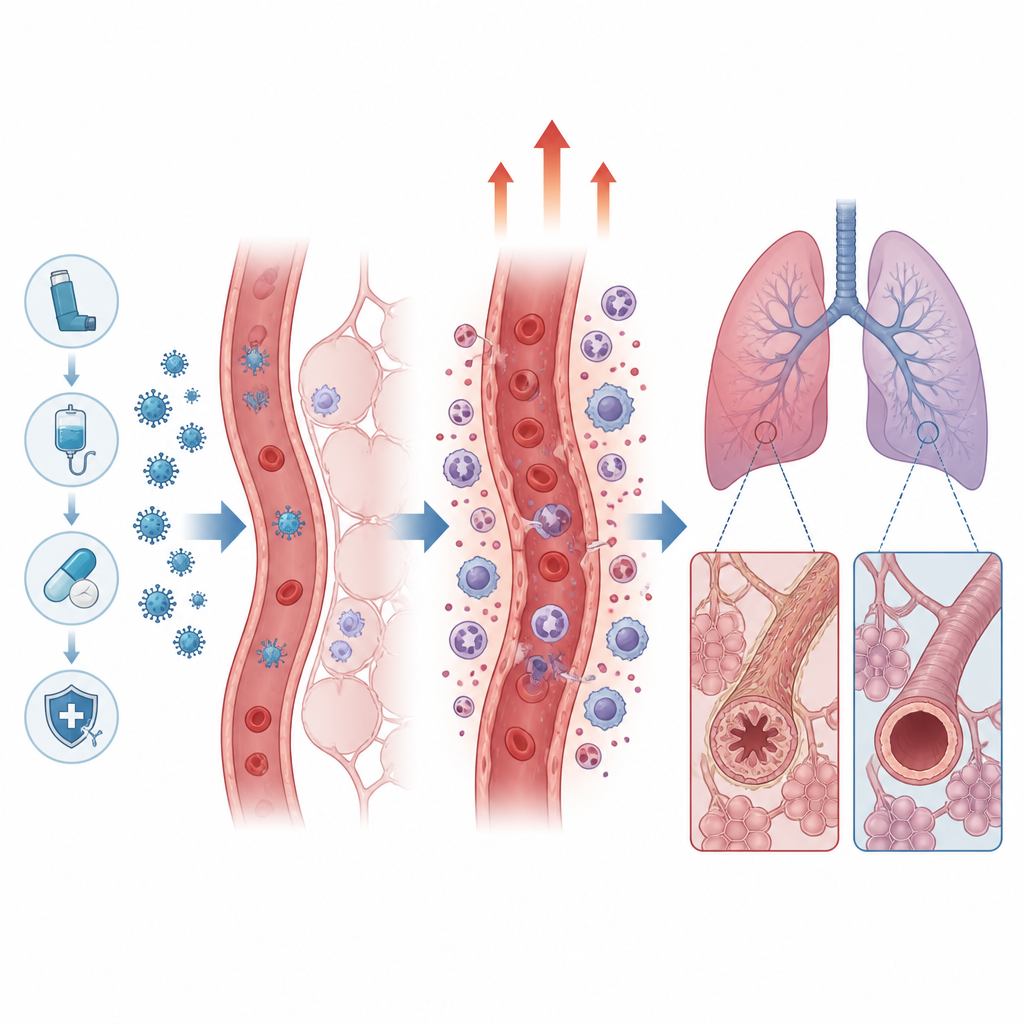
Which children were at highest risk
About one in eight patients developed alloimmune lung syndromes, split between the early pneumonia like form and the later airway scarring form. Children transplanted for non cancer conditions and those who experienced reactivation of adenovirus in their blood were more likely to develop the early pneumonia type. The specific drug cocktail used to prepare the body for transplant also mattered. Regimens containing busulfan together with cyclophosphamide, with or without melphalan, were linked to a much higher risk of both early and late lung injury than gentler approaches using busulfan with fludarabine, total body irradiation, or non intensive conditioning.
Warning signs hidden in routine blood tests
Beyond these baseline factors, the study found that simple blood based markers in the first three months after transplant carried important clues. A higher score on an index that reflects stress and damage in blood vessel lining cells was tied to later lung problems, supporting the idea that injury to these cells helps trigger disease. Children who went on to develop the early pneumonia type often had unusually high white blood cell and lymphocyte counts. Those who later developed airway scarring tended to show increased numbers of certain helper T cells, especially activated and memory cells, suggesting an over eager immune system that may be targeting the lungs.
What these findings mean for care
Although this was a retrospective study and cannot prove cause and effect, it paints a clearer picture of who is most vulnerable to serious lung complications after a stem cell transplant. Choosing less toxic conditioning regimens when possible, closely managing viral infections such as adenovirus and respiratory viruses, and paying attention to simple scores of vessel stress and immune cell counts may help doctors spot children who need extra monitoring or earlier intervention. In everyday terms, the work brings us closer to turning a dangerous late surprise into a preventable or at least more manageable side effect of life saving transplants.
Citation: Dekker, L., Versluys, B.A., de Koning, C.C.H. et al. Risk factors for alloimmune lung syndromes after allogeneic hematopoietic cell transplantation in children. Bone Marrow Transplant 61, 569–576 (2026). https://doi.org/10.1038/s41409-026-02829-w
Keywords: pediatric stem cell transplant, lung complications, idiopathic pneumonia syndrome, bronchiolitis obliterans, adenovirus reactivation