Clear Sky Science · en
Dynamics of BCMA expression in patients with relapsed/refractory multiple myeloma receiving BCMA-directed CAR-T therapy
Why this matters for people living with myeloma
For people with multiple myeloma, new immune-based treatments like CAR-T cell therapy have brought fresh hope when standard drugs stop working. Yet many patients still see their disease return. This study asks a simple but important question: how much of a key target on myeloma cells is needed for CAR-T cells to work well, and what happens to that target when the cancer comes back?
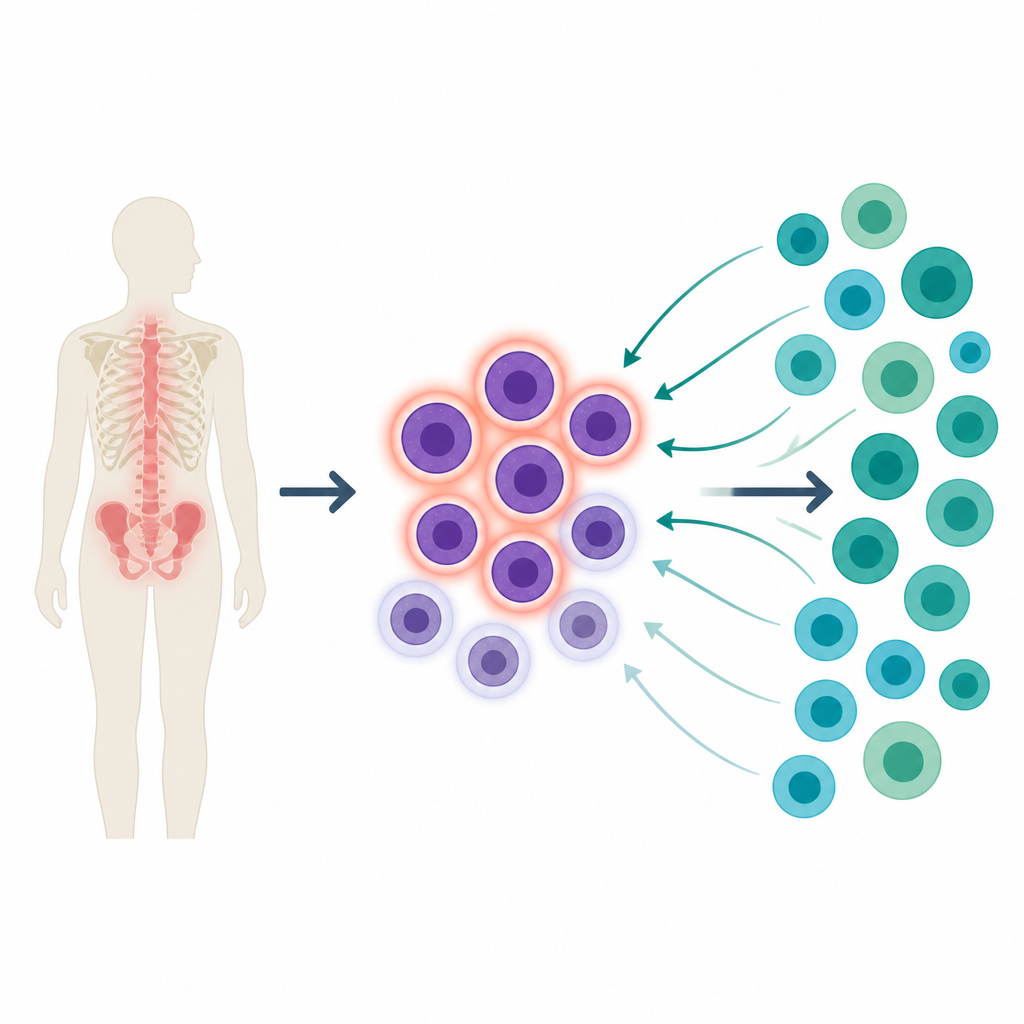
A key flag on cancer cells
The research focuses on a protein called BCMA that sits on the surface of myeloma cells. BCMA acts like a flag that helps specially engineered immune cells, called CAR-T cells, find and attack the cancer. Two BCMA-directed CAR-T products are now used in routine care, and many patients achieve deep remissions. But because most are not cured, understanding how BCMA behaves over time could help explain why some treatments fail and how best to use them in sequence.
Measuring BCMA in the real world
The team studied 76 adults with relapsed or hard-to-treat multiple myeloma who received standard BCMA CAR-T therapy at a single center. They examined bone marrow samples taken before treatment and again if the disease later relapsed. BCMA levels on myeloma cells were measured in two ways: flow cytometry, which reads how brightly cells glow when tagged with a BCMA-sensitive dye, and immunohistochemistry, which stains tissue slices under the microscope. All evaluable patients had some BCMA before treatment, but the amount varied widely from person to person.
More BCMA, better responses
When researchers compared BCMA levels with how patients fared, a clear pattern emerged for one of the tests. Higher BCMA levels measured by flow cytometry were linked to deeper responses and longer time before the cancer grew again. Patients whose cells showed stronger BCMA signals were more likely to reach very good partial response or complete response and stayed in remission longer, especially among those receiving the product ciltacabtagene autoleucel. In contrast, BCMA levels estimated by tissue staining did not line up as well with outcomes, suggesting that the more detailed flow-based method gives more useful clinical information.
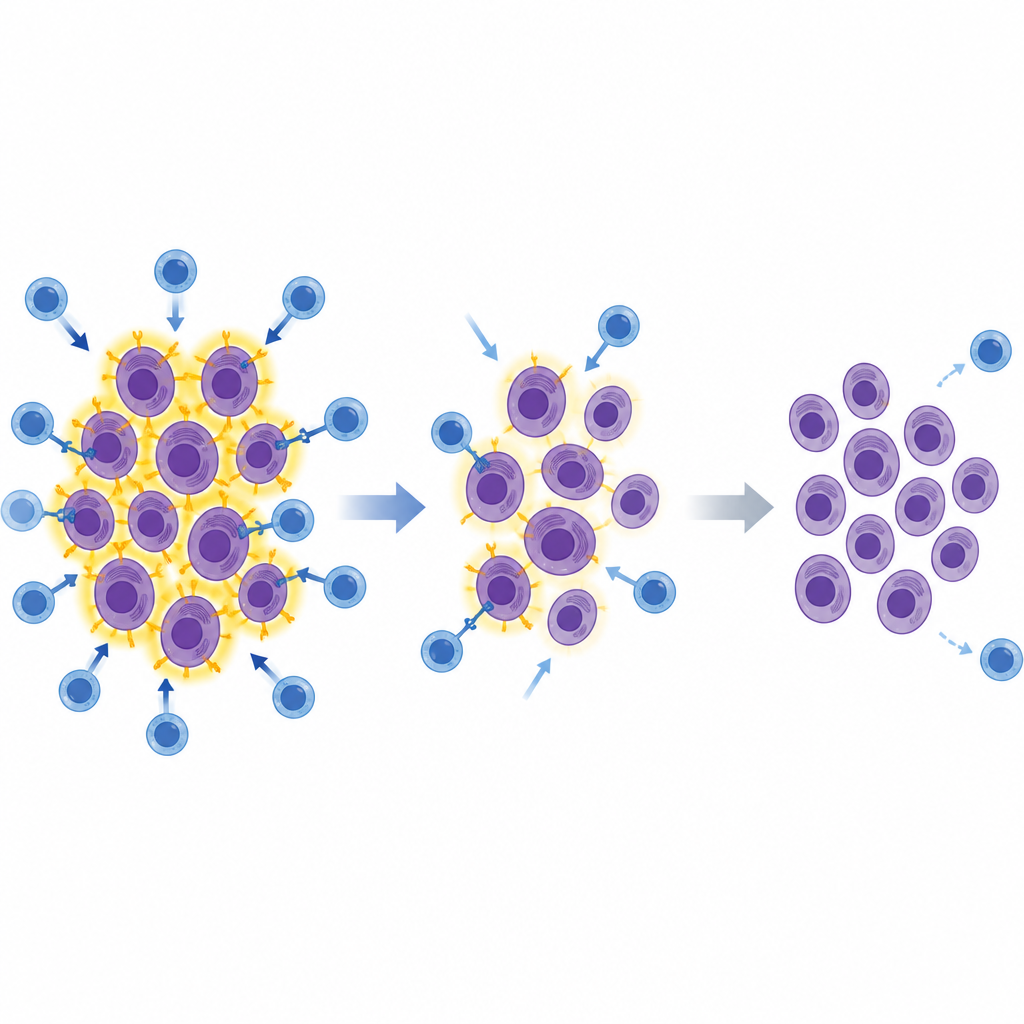
What happens when the cancer returns
Among patients who relapsed after CAR-T therapy, most still had BCMA on their myeloma cells when tested by flow cytometry. True loss of the target appeared uncommon. However, about half of the patients with paired samples showed a noticeable drop in BCMA levels at relapse compared with before treatment. This “turning down” of the BCMA flag, rather than its complete disappearance, may make it harder for CAR-T cells and other BCMA-targeting drugs to recognize and kill cancer cells. Interestingly, the two testing methods sometimes disagreed at relapse: a minority of patients appeared to lose BCMA by tissue staining but still had detectable levels by flow cytometry.
What this means for future treatment choices
For patients and clinicians, these findings suggest that how brightly myeloma cells display BCMA before CAR-T therapy can influence both the depth and durability of response. BCMA does not usually vanish when disease returns, but its signal often gets weaker, which may reduce the impact of later BCMA-based treatments. Simple, widely available tests like flow cytometry could help track this target over time and guide decisions about when and how to reuse BCMA-directed approaches or switch to therapies aimed at different markers.
Citation: Rana, M.S., Fernandez-Pol, S., Jensen, A. et al. Dynamics of BCMA expression in patients with relapsed/refractory multiple myeloma receiving BCMA-directed CAR-T therapy. Blood Cancer J. 16, 79 (2026). https://doi.org/10.1038/s41408-026-01474-2
Keywords: BCMA, CAR-T therapy, multiple myeloma, antigen expression, treatment resistance