Clear Sky Science · en
Linvoseltamab versus real-world International Myeloma Working Group standard-of-care in triple-class exposed relapsed/refractory multiple myeloma
Why this research matters to patients and families
For people living with multiple myeloma, a blood cancer that often comes back after treatment, options can run out after standard drugs stop working. This study looks at a new type of immune‑based medicine called linvoseltamab and asks a practical question: how well does it perform compared with the best treatments doctors are already using around the world for patients whose disease has become very hard to treat?
A stubborn blood cancer in need of new answers
Multiple myeloma starts in plasma cells, which normally help the body fight infections. Over time, many patients receive several modern drug classes, including proteasome inhibitors, immune‑modulating pills, and antibodies against a target called CD38. When a person’s cancer has been exposed to all three, or no longer responds to them, doctors call it “triple‑class exposed” or “triple‑class refractory.” At that stage, outcomes are generally poor, even though newer treatments such as cell therapies and other antibodies have become available in recent years.
A new antibody that brings immune cells to the tumor
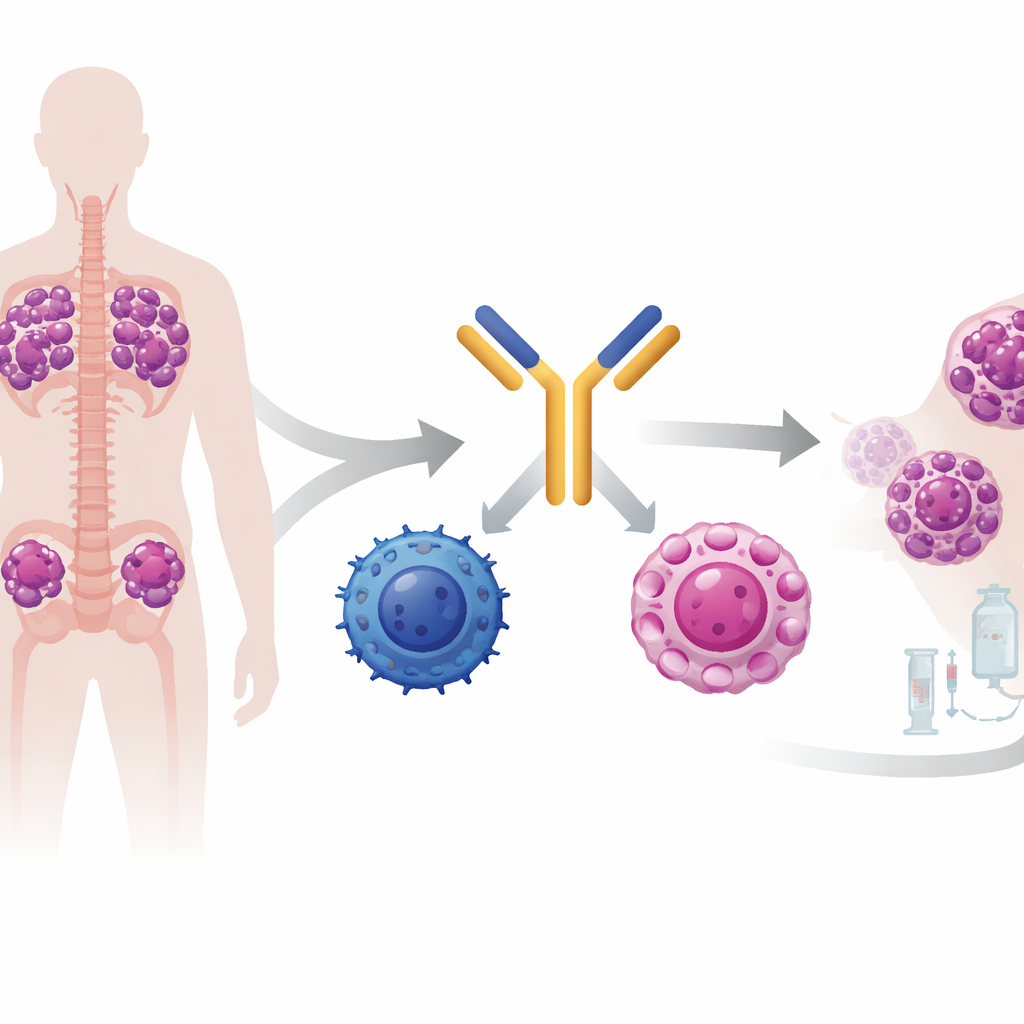
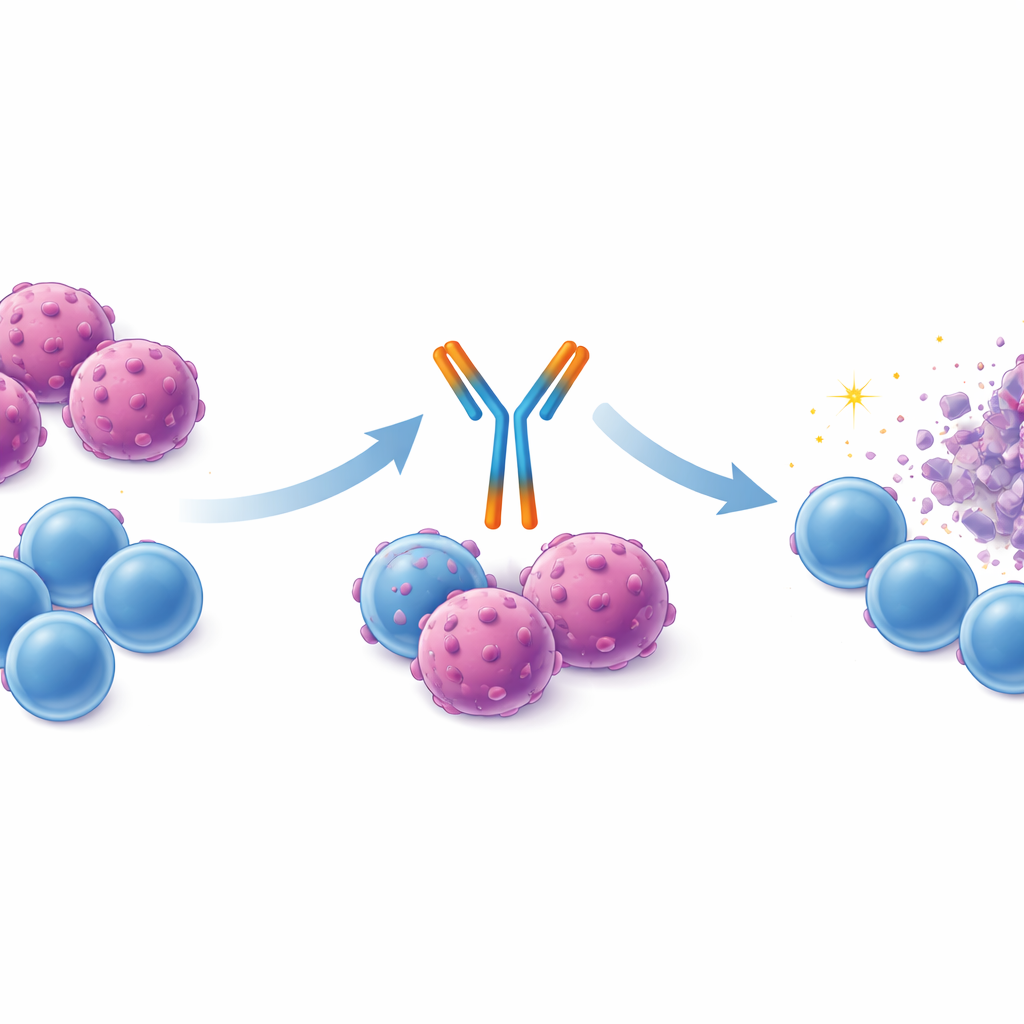
Linvoseltamab is a laboratory‑made antibody designed to latch onto two different cell types at once. One end recognizes BCMA, a marker on myeloma cells, and the other end grabs CD3 on T cells, a key part of the immune system. By physically bringing T cells into close contact with the cancer cells, the drug is meant to trigger targeted killing of the tumor. Linvoseltamab has shown promising results in early clinical trials, leading to approval in Europe and the United States for patients with relapsed or refractory multiple myeloma who have already received many prior treatments.
Comparing trial patients with real‑world care
The researchers focused on 105 participants in the Phase 2 part of a trial called LINKER‑MM1, all of whom received a 200 mg dose of linvoseltamab after their cancer had progressed on previous therapies. To understand whether these results were truly meaningful in everyday practice, they created a comparison group from medical charts at leading myeloma centers in the United States, Europe, and Asia. This “external control arm” included 203 patients who met similar eligibility rules, had received at least three prior lines of therapy, and were treated with what their doctors judged to be the best available real‑world standard of care. That standard of care was diverse and included more than 60 different drug combinations, among them cell therapies targeting BCMA and antibody‑drug conjugates.
Stronger tumor responses and longer control of disease
Because the two groups were not randomized, statisticians adjusted for many baseline differences—such as age, performance status, kidney function, blood counts, and prior treatments—so the comparison would better reflect what might have happened if patients had been assigned to linvoseltamab or to other therapies. After this balancing, linvoseltamab produced an objective response—that is, a measurable shrinkage of the cancer—in about 70% of patients, compared with about 43% in the weighted real‑world group. Deeper responses were also more common with linvoseltamab. Time until the cancer worsened (progression‑free survival) and time until a new treatment was needed were both substantially longer with linvoseltamab; in the trial, the median for these measures had not yet been reached at the time of analysis, while it was around six to twelve months in the comparison group.
Impact on survival and checks on robustness
Overall survival—the length of time patients lived after starting a given treatment—also favored linvoseltamab. Patients in the trial had a median survival of about 28 months, slightly longer than the roughly 25 months seen with standard care in the matched real‑world group, despite many of those real‑world patients going on to receive additional advanced therapies such as cell therapy later on. The team ran multiple sensitivity analyses, changing how they defined certain outcomes, excluding patients with very short expected survival, and using alternative statistical methods. Across nearly all these checks, linvoseltamab’s advantage in response rates and in delaying progression or the need for new treatment remained consistent.
What this means for people with hard‑to‑treat myeloma
To a lay reader, the bottom line is that linvoseltamab appears to help more patients’ tumors shrink, and keeps their disease under control for longer, than the mix of advanced treatments currently used at top myeloma centers for similar, heavily pretreated patients. Even when compared against a strong real‑world benchmark that already includes high‑tech options like cell therapy and BCMA‑targeting drugs, linvoseltamab stands out as an effective new option. While this kind of comparison is not as definitive as a randomized trial and has some limitations, the results suggest that linvoseltamab offers meaningful hope for people whose myeloma has stopped responding to other major drug classes.
Citation: Kumar, S., Jagannath, S., Weisel, K.C. et al. Linvoseltamab versus real-world International Myeloma Working Group standard-of-care in triple-class exposed relapsed/refractory multiple myeloma. Blood Cancer J. 16, 44 (2026). https://doi.org/10.1038/s41408-026-01466-2
Keywords: relapsed refractory multiple myeloma, bispecific antibody, BCMA targeted therapy, real world evidence, linvoseltamab