Clear Sky Science · en
Remineralization of early caries lesions by calcium hypophosphite in vitro: a surface microhardness study
Why Fixing Early Tooth Decay Matters
Before a cavity needs a filling, there is usually a quiet phase where tooth enamel has begun to soften but the surface is still intact. At this stage, the damage can often be reversed simply by helping the tooth rebuild lost minerals. This study explores a new toothpaste ingredient, calcium hypophosphite, and asks whether it can repair these early lesions as well as, or even better than, common ingredients like fluoride and hydroxyapatite. The findings could influence what future everyday toothpastes look like.
How Teeth Wear Down and Build Back Up
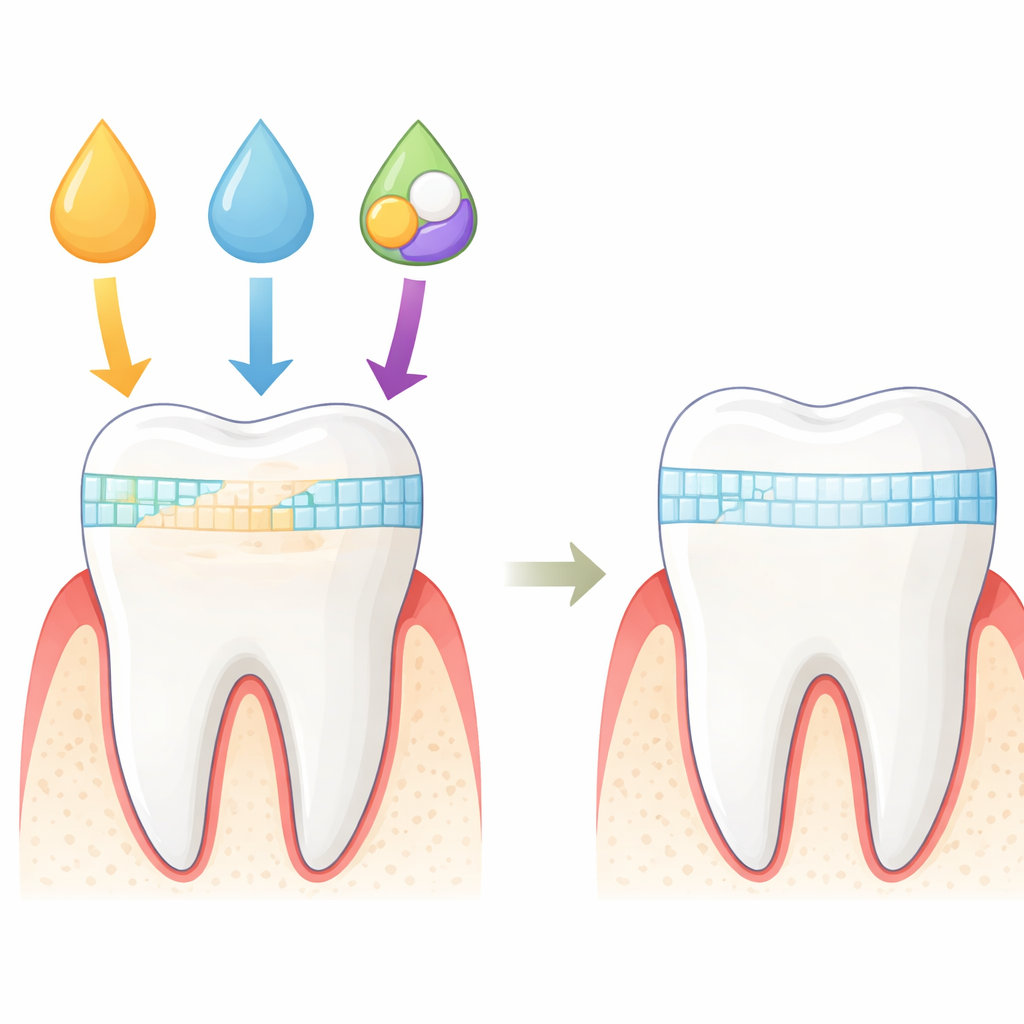
Our teeth are constantly caught in a tug-of-war. Acids from bacteria in dental plaque dissolve minerals out of enamel, slowly weakening it. At the same time, saliva and toothpaste ingredients can put minerals back, a process called remineralization. If the rebuilding wins, early decay can be stopped or reversed. Modern toothpastes usually rely on fluoride, which hardens enamel, or on tiny particles of hydroxyapatite, the same mineral that makes up most of tooth enamel. The authors of this paper wondered whether supplying extra calcium in a highly soluble form could make this natural repair process more effective.
A New Calcium Source Put to the Test
Calcium hypophosphite is a calcium salt that dissolves easily in water and is already used safely in foods and supplements. Because it releases calcium ions readily, it seemed a promising candidate for helping enamel rebuild. To compare it with established options, the researchers created four toothpastes that were identical except for their active ingredient: one contained calcium hypophosphite, one contained hydroxyapatite, one contained both together, and one contained fluoride at a typical over-the-counter strength. Bovine teeth, which are similar to human teeth for this purpose, were used to create realistic early decay spots in the laboratory.
Simulating Everyday Mouth Conditions
To mimic what happens in a human mouth over time, the team used a “pH cycling” model. Each tooth sample cycled through an acidic bath to mimic decay, three brief exposures a day to a slurry of one of the test toothpastes, and long periods in artificial saliva to allow repair. This routine was repeated for 14 days. Before and after the test period, the hardness of each lesion was measured with a tiny diamond tip that presses into the enamel surface. The shallower the indentation, the harder the enamel. By comparing hardness before and after treatment, the scientists could calculate how much of the lost mineral had effectively been restored.
Which Toothpaste Worked Best?
All four toothpastes made the softened enamel significantly harder, showing that each one promoted some level of repair. However, there were clear differences in how much restoration occurred. The combination toothpaste, containing both calcium hypophosphite and hydroxyapatite, produced the largest gain, restoring nearly ninety percent of the lost hardness. Calcium hypophosphite on its own performed better than either hydroxyapatite alone or fluoride alone, which in this study produced similar levels of improvement. These results suggest that simply adding this highly soluble calcium source can noticeably boost enamel repair.
Why the Combination May Be Stronger
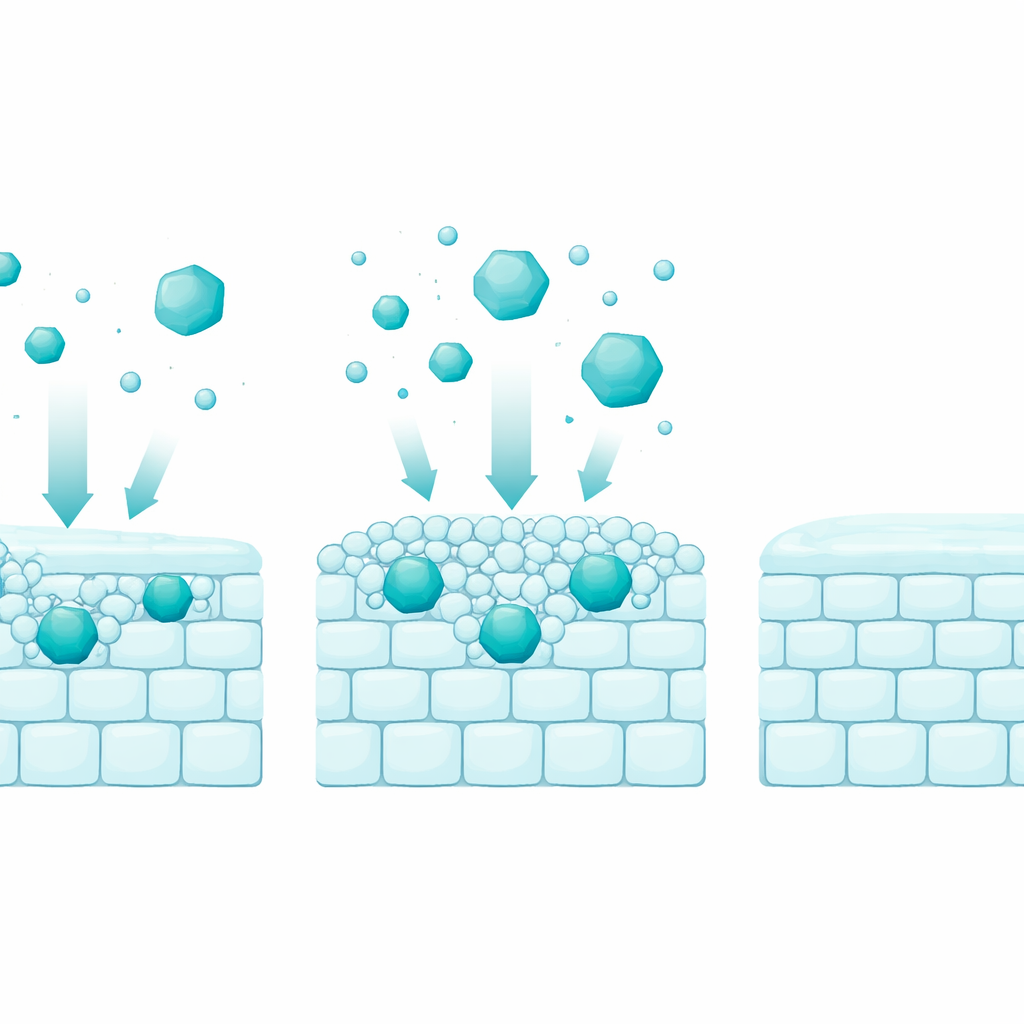
The authors propose a straightforward explanation for the strong performance of the mixed toothpaste. Hydroxyapatite particles can lodge in the tiny pores of damaged enamel and act as seed crystals where new mineral can grow. Calcium hypophosphite, meanwhile, floods the area with calcium ions that can pair with phosphate from saliva to form fresh mineral on and within the enamel surface. Together, these two actions—filling pores with solid mineral and feeding further growth with dissolved calcium—appear to work in synergy, giving the tooth more complete and durable repair than with either ingredient on its own.
What This Could Mean for Everyday Toothpaste
This study was done outside the human body and cannot capture all the complexities of the mouth, such as natural saliva flow and the full mix of oral bacteria. Still, it provides strong early evidence that calcium hypophosphite, especially when combined with hydroxyapatite, can effectively rebuild enamel weakened by early decay. For everyday users, this points toward future toothpastes that may go beyond simply slowing cavities to actively rebuilding tooth surfaces more efficiently, helping keep small problems from turning into painful, costly fillings.
Citation: Amaechi, B.T., Vohra, R., Abdollahi, S. et al. Remineralization of early caries lesions by calcium hypophosphite in vitro: a surface microhardness study. BDJ Open 12, 47 (2026). https://doi.org/10.1038/s41405-026-00440-1
Keywords: tooth remineralization, toothpaste ingredients, calcium hypophosphite, early dental caries, enamel repair