Clear Sky Science · en
Impact of Triton solution irrigation protocol on root fracture resistance: a comparative in vitro study of different irrigation protocols
Why this matters for your teeth
Root canal treatment can save a damaged tooth, but dentists also worry about keeping that tooth strong enough to last. This study looked at whether a new all-in-one cleaning liquid used during root canals affects how easily tooth roots might crack compared with more familiar cleaning routines. For anyone who wants their treated teeth to stay in place for years, understanding how these solutions affect strength is important.
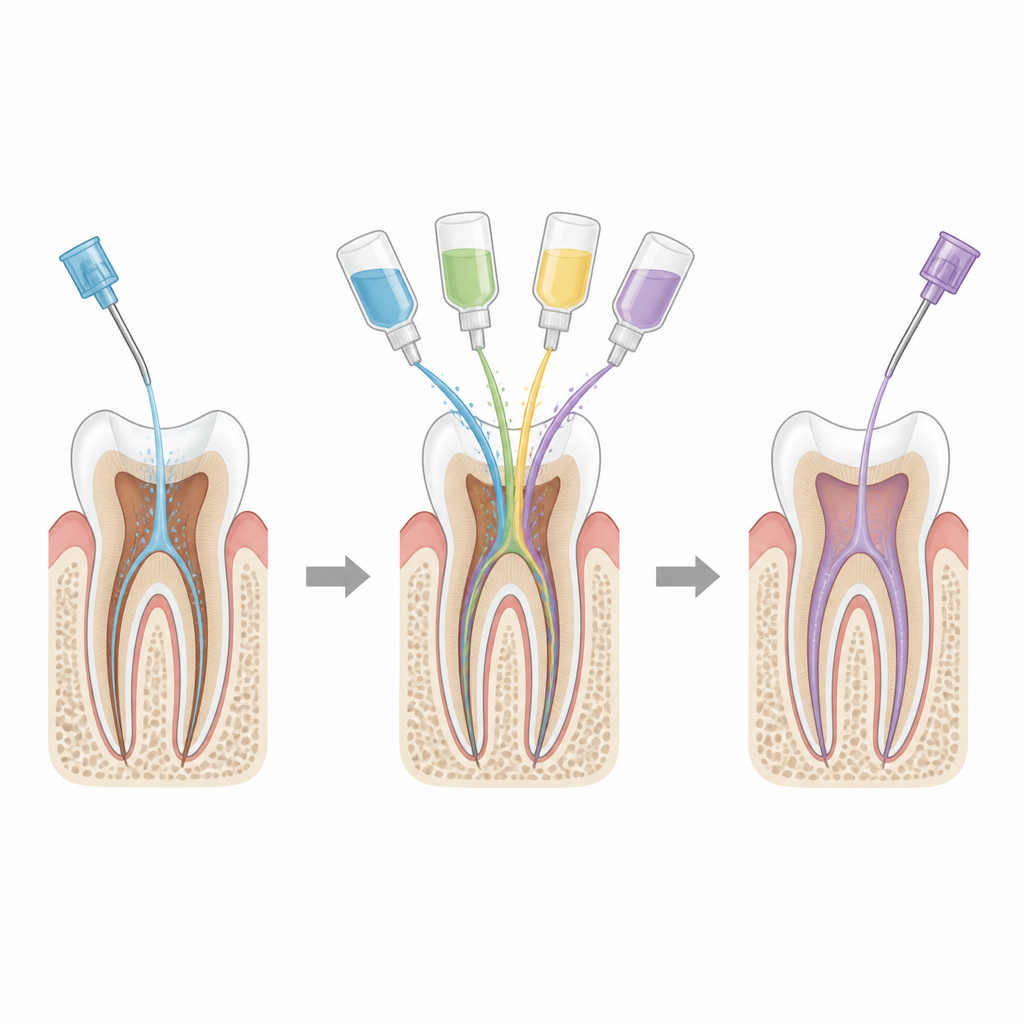
How dentists clean inside a tooth
During a root canal, the dentist removes infected tissue from deep inside the tooth and then rinses the narrow channels with special liquids to wash away debris and kill germs. Traditionally, this means using several different solutions in a set order, which can be time consuming and technique sensitive. Each liquid has its own job, such as dissolving soft tissue, removing mineral deposits, or attacking bacteria and fungi, but together they may also change the physical properties of the tooth’s inner hard tissue.
A new all in one solution on trial
The product tested here, called Triton, is designed as a single irrigating solution that combines the cleaning and disinfecting roles normally shared by several liquids. It contains a lower level of standard root canal bleach along with mild mineral removing agents and surface active ingredients that help it spread and penetrate. Earlier laboratory work showed that Triton can remove debris, reach deep into the root canal, and fight microbes, but no one had yet checked whether it makes the tooth root more or less likely to fracture.
What the researchers did with real teeth
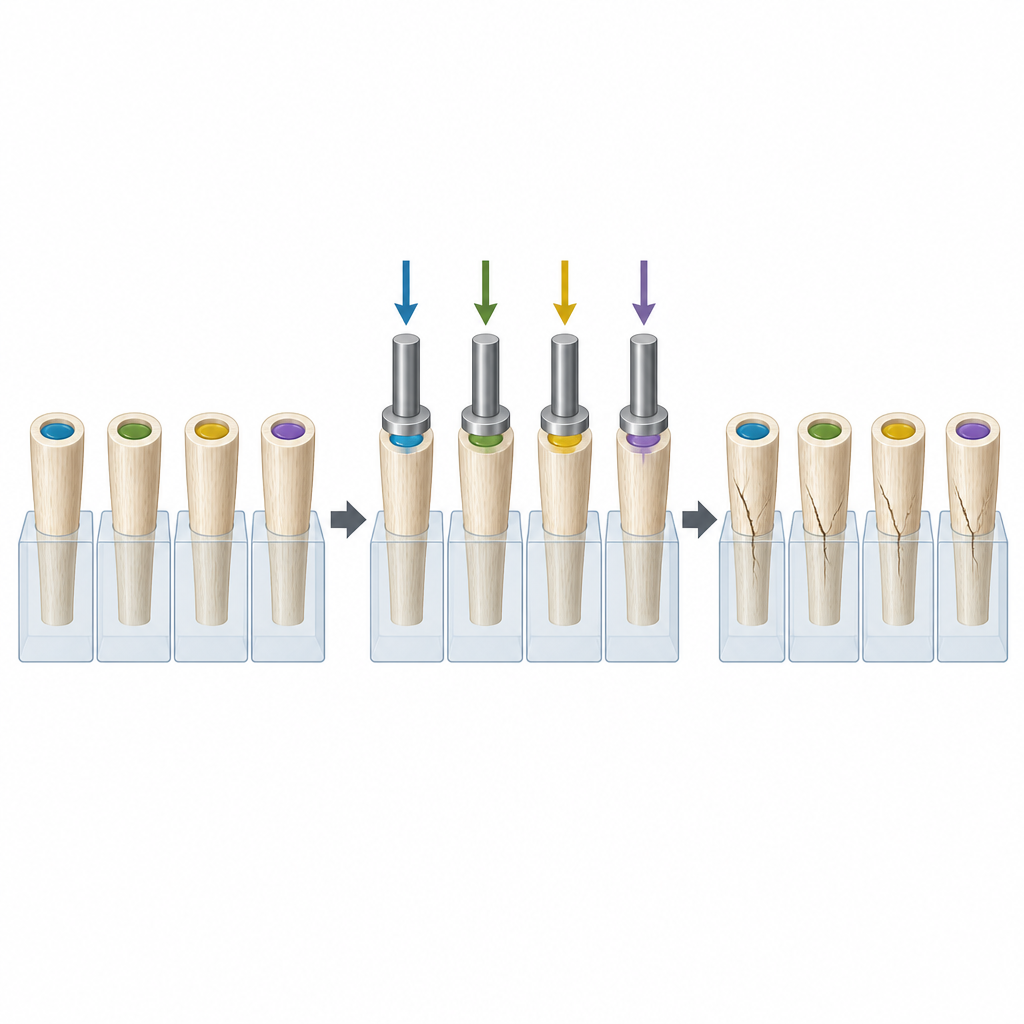
The team used 64 freshly extracted human premolar teeth with one root and one canal, trimmed to a standard length. All were shaped with the same mechanical files, and the thickness of the remaining dentin was carefully measured so the groups would be comparable. The teeth were then divided into four groups: one cleaned only with Triton throughout; one cleaned with a common multi step routine using bleach, a strong mineral remover, and an antiseptic; one using only bleach; and one using only distilled water as a comparison. After cleaning, the roots were stored in moist, body like conditions for a week.
How root strength and cracks were tested
To mimic how a tooth sits in the jaw, each root was coated in a thin elastic layer and set in an acrylic block with a small portion left exposed. A metal rod then pressed straight down into the canal opening at a controlled speed until the root fractured. The machine recorded the force needed to break each root, and two examiners inspected the pieces with magnification to classify the type of crack as vertical, slanted, or shattered into several parts. The researchers compared both the forces and the crack patterns among the four cleaning methods using standard statistical tests.
What the study found about root strength
The average force needed to break the roots was highest in the distilled water group and lowest in the Triton group, with the two bleach based protocols falling in between. However, the differences were modest and not statistically significant, meaning they could easily be due to natural variation among teeth rather than the solutions themselves. The most common crack type across all groups was an oblique, or slanted, fracture, followed by vertical and shattered patterns, and these patterns also did not differ meaningfully between cleaning methods.
What this means for patients and dentists
For patients, the key message is that using the new all in one Triton solution to clean root canals did not weaken tooth roots compared with more traditional multi step liquids in this laboratory setting. While distilled water showed slightly higher strength, it does not provide the infection control needed for real treatment. Within the limits of this in vitro study, Triton appears to clean and disinfect without compromising the mechanical integrity of the root, suggesting that dentists may be able to simplify parts of the procedure without making treated teeth more prone to fracture.
Citation: Alsayegh, P., Ayoubi, H.R. & Alsayed Tolibah, Y. Impact of Triton solution irrigation protocol on root fracture resistance: a comparative in vitro study of different irrigation protocols. BDJ Open 12, 55 (2026). https://doi.org/10.1038/s41405-026-00428-x
Keywords: root canal, tooth fracture, endodontic irrigant, Triton solution, dentin strength