Clear Sky Science · en
Status epilepticus-induced 12/15-lipoxygenase drives neuroinflammation and contributes to neuronal injuries and behavioral comorbidities
When Seizures Leave Lasting Scars
Most people think of a seizure as a short, frightening episode that ends when the shaking stops. But a long lasting seizure, called status epilepticus, can set off a chain reaction of brain inflammation and cell damage that lingers for years. This study explores whether shutting down a single enzyme in the brain can soften that inflammatory storm, protect vulnerable nerve cells, and ease later problems with memory and mood.
The Hidden Fire After Prolonged Seizures
Status epilepticus is a medical emergency in which seizures run together for more than a few minutes without full recovery in between. Even when doctors stop the visible convulsions with antiseizure drugs, a silent fire often continues inside the brain. Immune cells in the brain, mainly microglia and astrocytes, release waves of inflammatory molecules that can kill neurons, rewire brain circuits, and raise the risk of chronic epilepsy, anxiety, and memory problems. Standard antiseizure medicines do not directly address this delayed inflammatory damage, which has pushed researchers to search for new targets.
An Enzyme That Fans the Flames
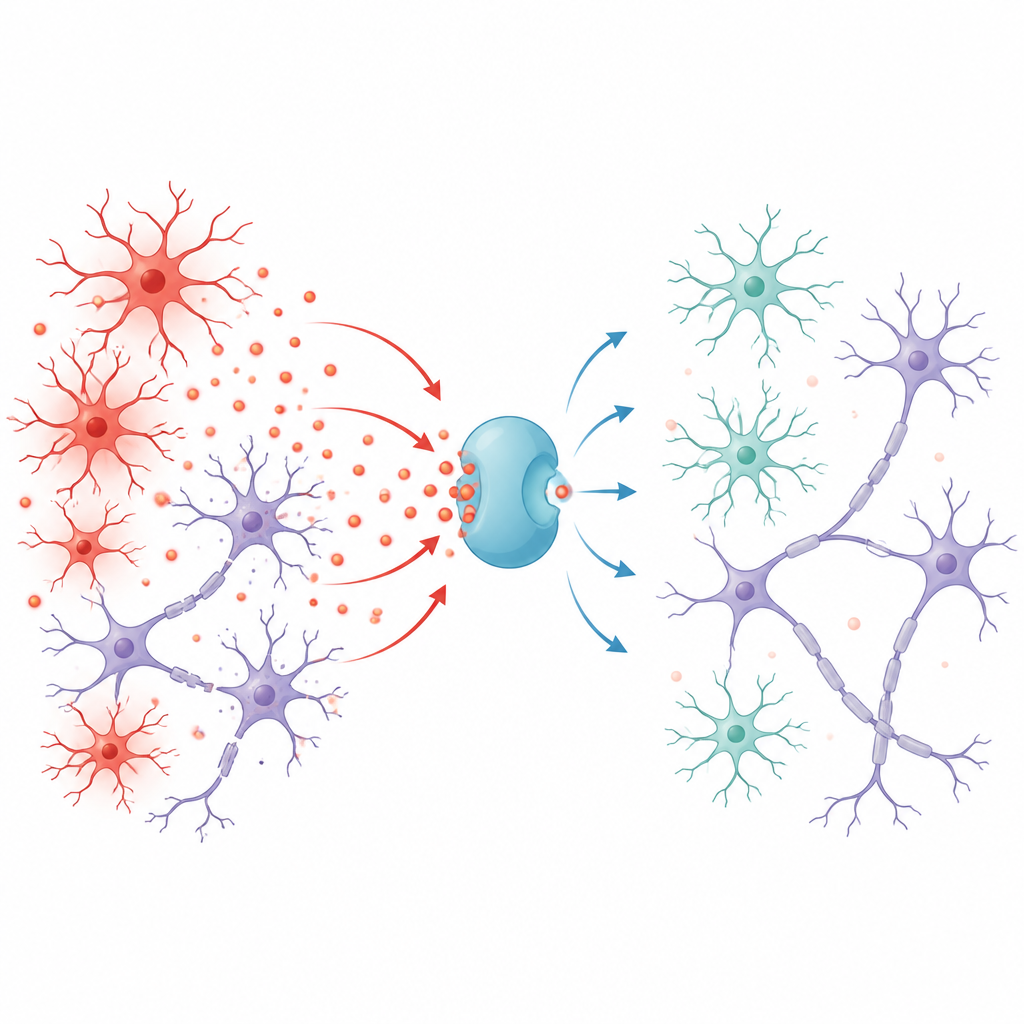
The team focused on 12/15 lipoxygenase, an enzyme found throughout the brain that converts fatty acids into reactive chemical messengers. These products can boost harmful oxidants and stir up inflammation. In mice, the researchers first used bacterial toxins to trigger brain inflammation and found that the gene for 12/15 lipoxygenase was switched on early and strongly, in step with classic inflammatory markers. In brain immune cells grown in dishes, blocking this enzyme with a small molecule called ML351 sharply reduced the release of key inflammatory proteins, suggesting that 12/15 lipoxygenase acts as an amplifier for the brain’s immune response.
Blocking the Damage After a Severe Seizure
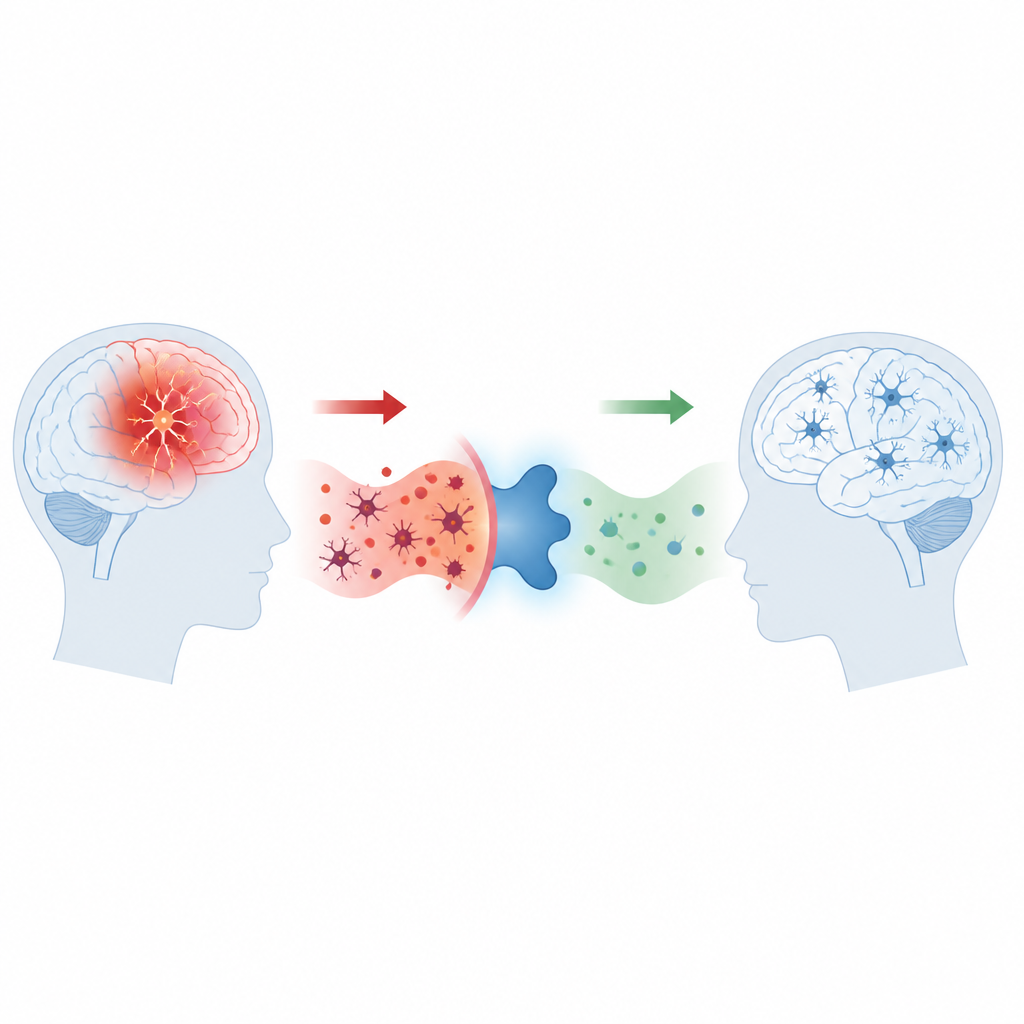
The scientists then turned to a mouse model of status epilepticus. They induced a one hour seizure, stopped it with the drug diazepam, and only then gave ML351, mimicking a realistic treatment delay in people. One day later, mice that had seized but received no enzyme blocker showed a surge of inflammatory genes in the hippocampus, a memory related region. Their brain sections revealed highly activated microglia and astrocytes and many degenerating neurons. In contrast, mice treated with ML351 after the seizure had much lower levels of inflammatory signals, milder glial activation, and far fewer dying neurons in key hippocampal zones, even though seizure severity itself had been the same.
Lasting Benefits for Mood and Memory
To see whether early inflammation control leads to long term benefits, another group of mice received ML351 once daily for only five days after status epilepticus, then recovered for a month. Untreated seizure mice later behaved in ways that suggest anxiety, avoiding the center of an open field and the lit side of a box. They also struggled with memory tasks, showing poor recognition of new objects and reduced success in a simple maze that tests short term spatial memory. Mice that had received ML351 were much less anxious and performed closer to normal on these memory tests. When their brains were examined, they showed less chronic activation of glial cells and many more surviving neurons in the hippocampus than untreated seizure animals.
A New Partner for Seizure Medicines
This work shows that 12/15 lipoxygenase is a key driver of the inflammatory cascade that follows status epilepticus and that blocking it soon after the seizure can preserve brain cells and improve later behavior in mice. While more research is needed to confirm these effects in other seizure models and to see whether it can reduce the development of chronic epilepsy itself, the study suggests a practical strategy. In the future, drugs that target this enzyme could be given alongside standard seizure stopping medicines, not to halt the initial convulsions, but to limit the slow burn of inflammation that otherwise leaves lasting scars on memory and mood.
Citation: Rakib, M.A., Cho, E.B., Yasmen, N. et al. Status epilepticus-induced 12/15-lipoxygenase drives neuroinflammation and contributes to neuronal injuries and behavioral comorbidities. Acta Pharmacol Sin 47, 1471–1487 (2026). https://doi.org/10.1038/s41401-025-01743-z
Keywords: status epilepticus, brain inflammation, hippocampus, neuroprotection, epilepsy comorbidities