Clear Sky Science · en
AI and experimental convergence: a synergistic pathway to JAK2 inhibitor discovery
Why This Matters for Future Medicines
Many cancers and autoimmune diseases are driven by an overactive signaling protein called JAK2, which acts like a jammed-on switch inside cells. Finding safe, precise drugs that turn this switch down is difficult and expensive using traditional trial-and-error chemistry. This study shows how combining artificial intelligence with laboratory experiments can dramatically speed up the hunt for new JAK2-blocking pills, potentially leading to better treatments that reach patients faster and at lower cost.
The Cellular Switch Behind Inflammation
JAK2 belongs to a small family of enzymes that help cells respond to chemical messages from the immune system and blood-forming tissues. When these enzymes misfire—often because of specific DNA mutations—cells receive constant growth and survival signals. In people, this can lead to blood cancers, chronic inflammation, and joint damage. Doctors already have a few drugs that target JAK2, but some cause side effects or do not work well enough. One big challenge is that the key pocket where drugs bind looks very similar across the entire JAK family, making it hard to design medicines that shut down JAK2 without disturbing its close relatives.
Teaching Computers to Recognize Good Drug Candidates
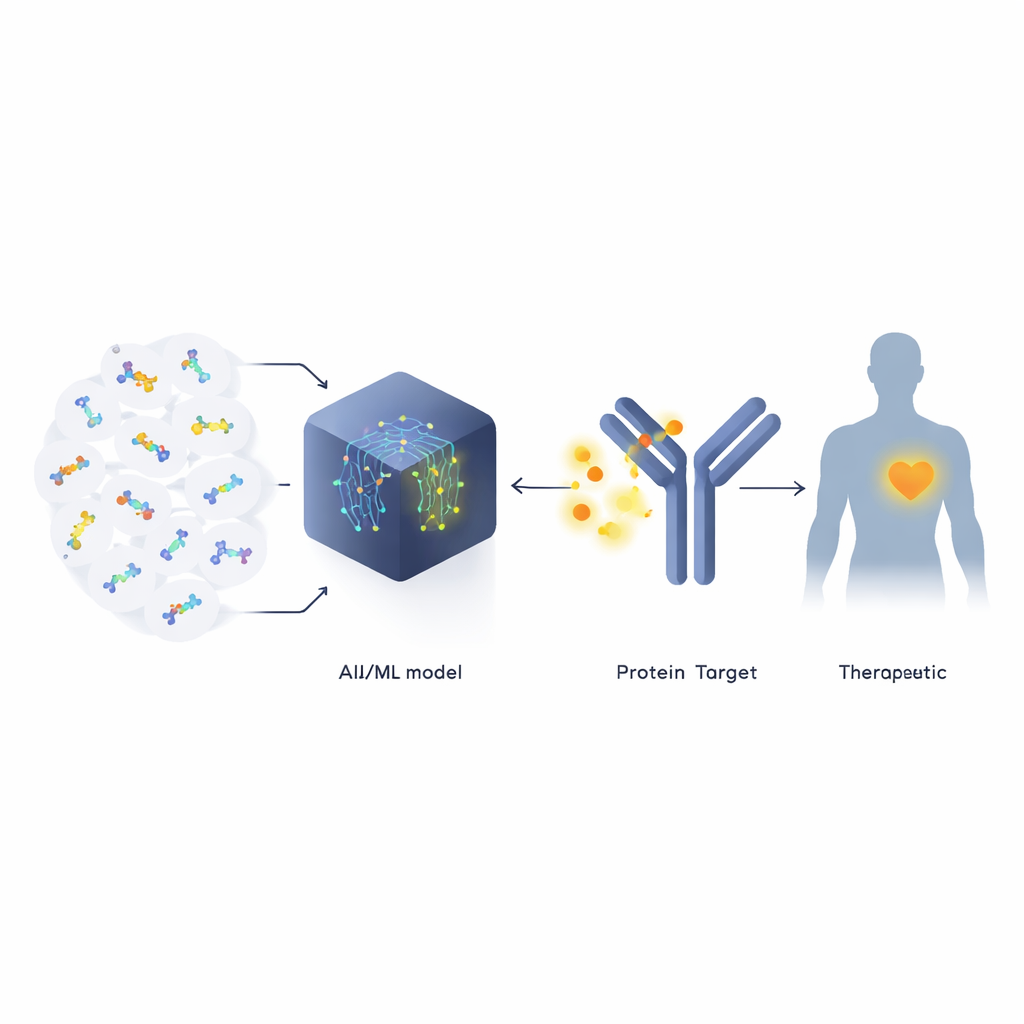
The researchers started with thousands of known chemicals that had already been tested for their ability to block JAK2. Each molecule was converted into a kind of digital barcode, called a molecular fingerprint, which encodes its building blocks and shapes. Several modern machine-learning methods were trained on these fingerprints to learn which patterns tended to mark strong JAK2 blockers and which did not. Among them, a method called CatBoost proved best, correctly sorting active from inactive molecules about 94 percent of the time and showing excellent performance across multiple quality checks.
From Digital Hits to Atomic-Level Binding
Armed with this trained model, the team turned it loose on a huge national collection of roughly three quarters of a million chemicals from the Korean Chemical Databank. The AI first narrowed this pool to only a few thousand likely JAK2 blockers. These were then examined with more detailed computer tools that simulate how molecules sit inside the three-dimensional pocket of the JAK2 protein. Docking calculations scored how snugly each candidate fit, while clustering methods ensured that the final picks were structurally diverse rather than many near-copies of the same idea.
Stress-Testing the Best Molecules
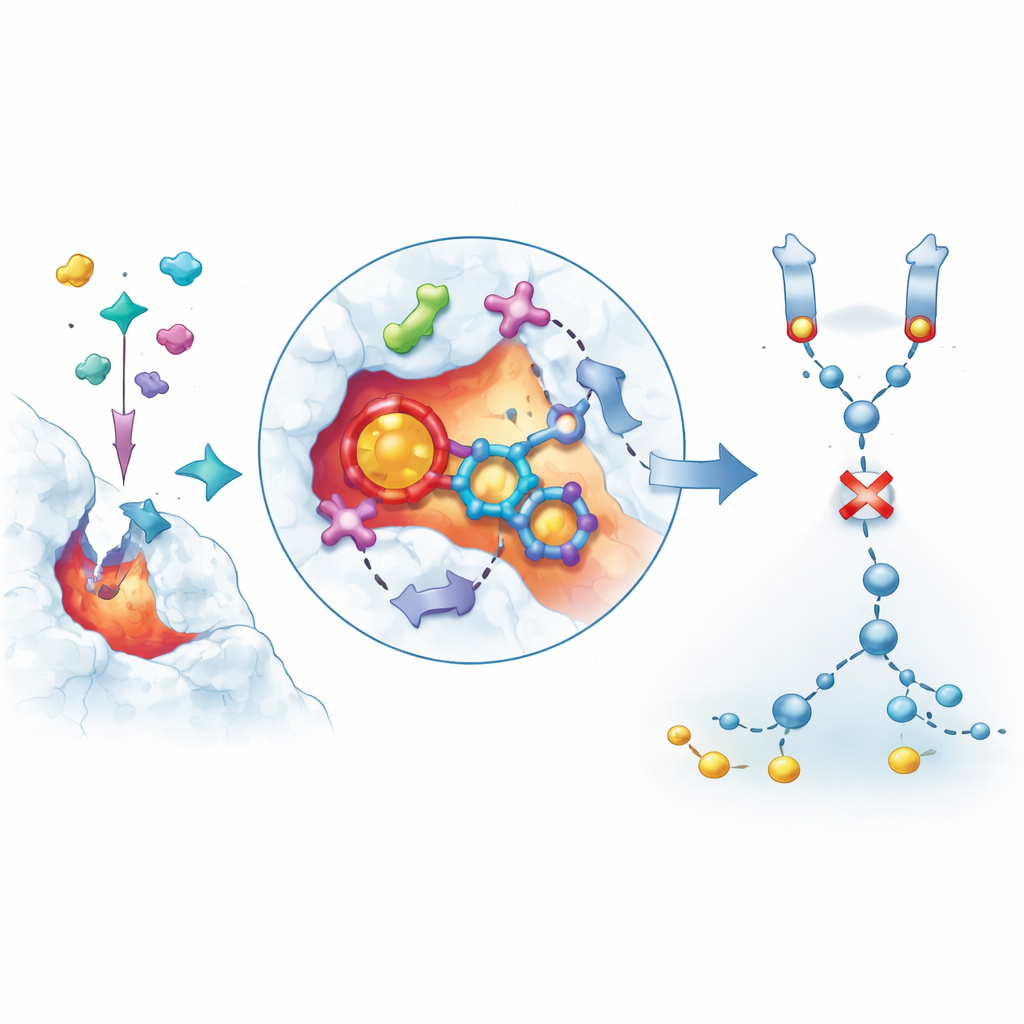
The top-scoring compounds were probed further with physics-based simulations that let the protein and drug jiggle and flex in virtual water over time, revealing which stayed firmly lodged in place. Additional quantum-level calculations examined how electrons are arranged within the molecules, which affects how reactive and stable they are when they bind JAK2. The team also predicted how each candidate would behave as a medicine: how easily it dissolves, how well it might be absorbed by the gut, and whether it is likely to cross into the brain. This winnowing process highlighted a small set of compounds that combined strong, stable binding with drug-like behavior.
Putting AI Predictions to the Test
Finally, four standout molecules were synthesized and tested directly in a biochemical assay that measures how strongly they block JAK2’s activity. All four showed impressive potency, with the concentration needed to cut activity in half below 10 micromolar, and one compound outperforming an approved reference drug in this test. These results confirmed that the AI-guided pipeline was not just good at prediction on paper, but could actually deliver real-world drug leads.
A Faster Route to Tailored Treatments
For non-specialists, the key message is that carefully designed AI systems can now sift through enormous chemical spaces, flagging a handful of promising candidates that lab scientists can then test and refine. In this study, that approach produced new, potent blockers of a medically important protein while saving time, effort, and resources. As such AI-and-experiment partnerships mature, they are likely to accelerate the creation of more precise therapies for JAK2-driven diseases and, more broadly, open the door to medicines that are better matched to patients’ needs.
Citation: Maryam, Cho, H., Pokhrel, A. et al. AI and experimental convergence: a synergistic pathway to JAK2 inhibitor discovery. Acta Pharmacol Sin 47, 1361–1373 (2026). https://doi.org/10.1038/s41401-025-01701-9
Keywords: JAK2 inhibitors, machine learning drug discovery, kinase-targeted therapy, virtual screening, personalized medicine