Clear Sky Science · en
Maternal brain alterations based on neurotransmitter and hormone receptor distributions over six months postpartum
How Motherhood Shapes the Brain
Becoming a parent feels like a life-changing event, and this study shows that it literally reshapes the brain. By following new mothers over the first six months after childbirth, researchers traced how brain structure, body chemistry and the growing bond with the baby work together. Their findings help explain why mood can feel fragile after birth and why the brain may stay tuned for caregiving long after pregnancy ends. 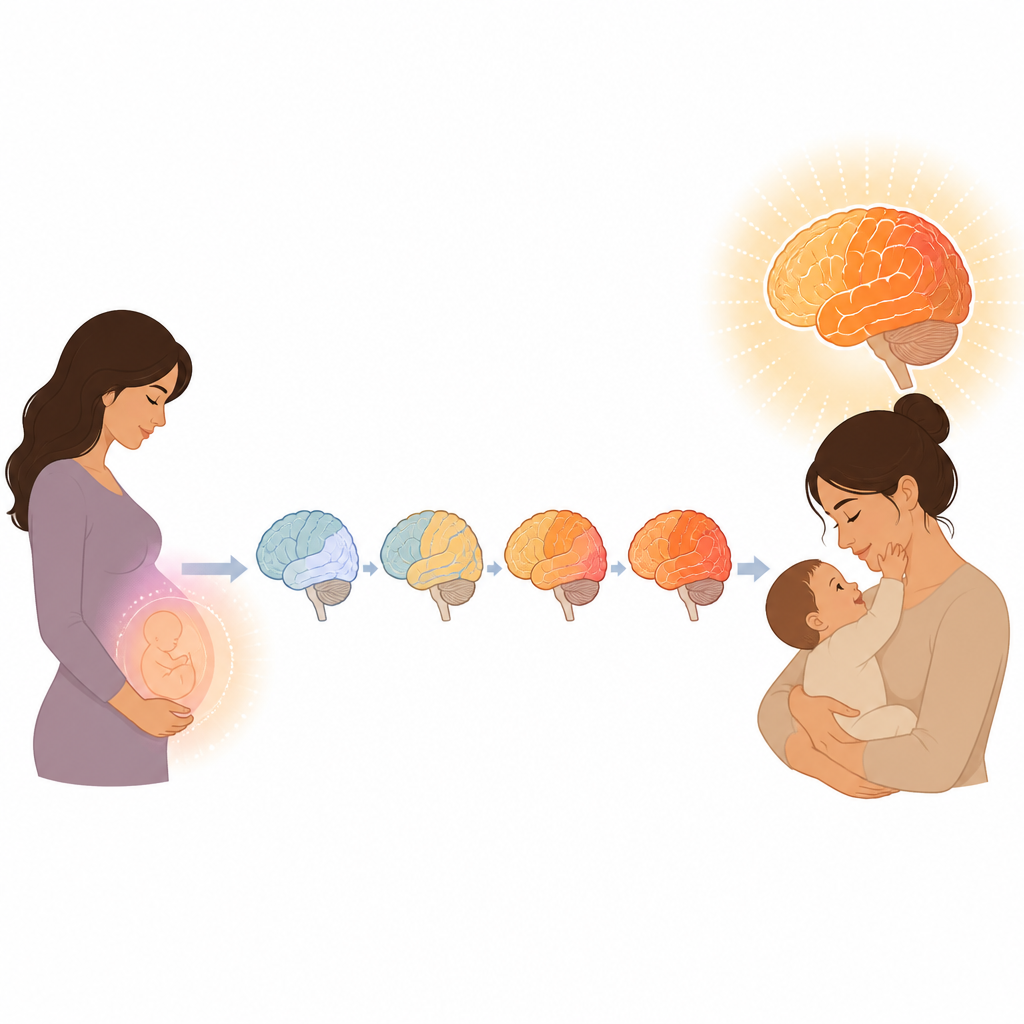
Tracking the Postpartum Brain Over Time
The researchers invited 24 healthy women to undergo brain scans six times from the first week after childbirth through 24 weeks postpartum. They compared these images to scans from 24 women who had never been pregnant. Alongside the imaging, they measured key sex hormones in the blood and assessed how attached the mothers felt to their babies using a questionnaire about warmth, pleasure in interaction and lack of hostility. This close, repeated tracking allowed the team to see both rapid early shifts and slower later changes in the maternal brain.
Brain Volume Rebounds, But Not Uniformly
During pregnancy, earlier work has shown that some brain areas shrink, likely as part of a tuning process for motherhood. In this study, gray matter volume in mothers began to rebound quickly after birth and kept increasing for at least 24 weeks. The steepest rise happened in the first three weeks, then continued more slowly. In the first months, many brain regions grew, including areas involved in thinking, emotion and movement. At the same time, small pockets within deep structures such as the basal ganglia and thalamus showed lasting volume reductions, suggesting that some pregnancy-related remodeling is not simply reversed but refined. When mothers were compared to women who had never given birth, their brains remained smaller in key regions such as the amygdala, hippocampus, putamen and a motor planning area even at six months.
Chemical Signals and the Mood Balance
To understand what might drive these structural shifts, the team examined how the changing brain maps lined up with known maps of hormone and neurotransmitter receptors. Early after birth, the strongest increases in gray matter appeared in regions rich in receptors for estrogen, progesterone, cortisol and two major signaling systems, GABA and glutamate. These chemicals help set the brain’s balance between excitation and inhibition, which is closely tied to mood and stress resilience. As weeks passed, the volume gains remained closely linked to GABA and glutamate receptor patterns, while the influence of sex hormone receptors faded. From 12 to 24 weeks, growth in frontal and cingulate regions aligned especially with areas that are dense in oxytocin receptors, hinting that ongoing caregiving and bonding experiences, which trigger oxytocin release, help shape the later postpartum brain. 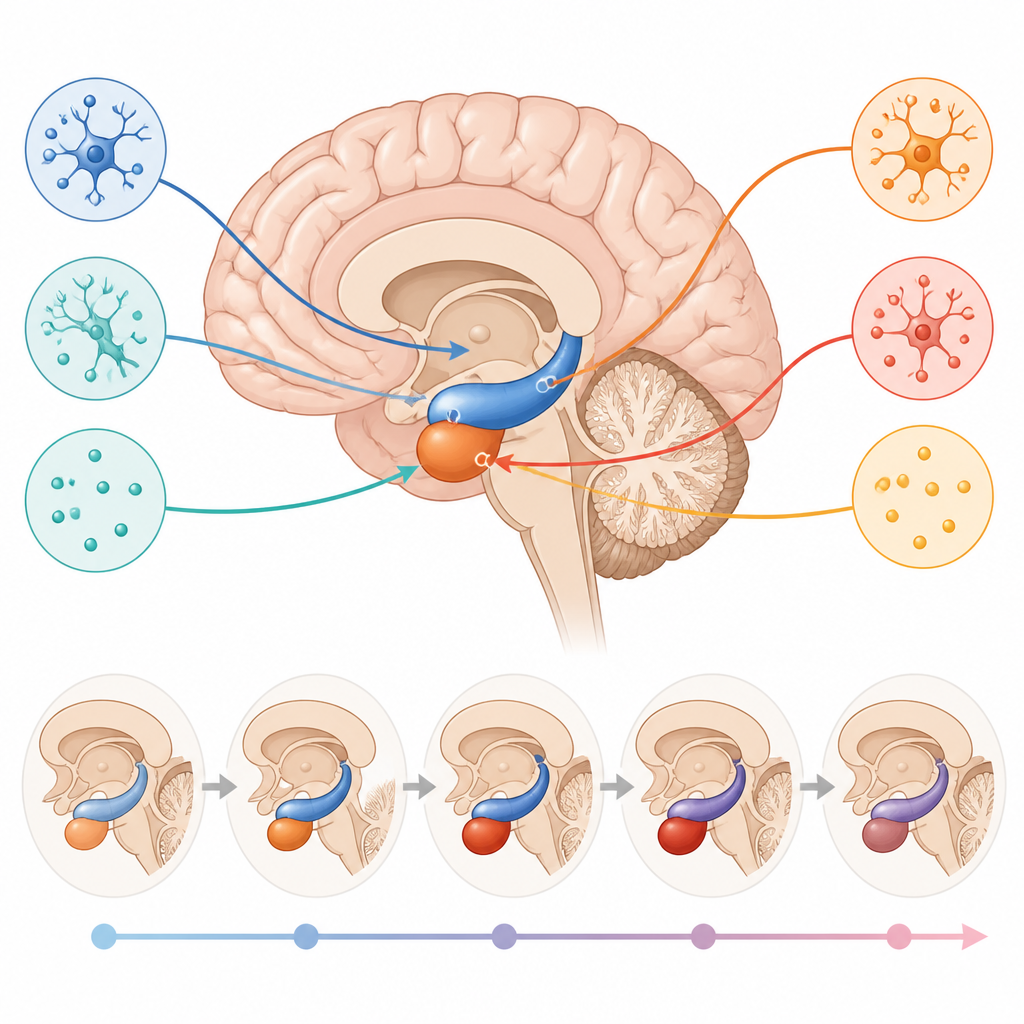
Bonding and Brain Shape Go Hand in Hand
The study also connected brain structure to how mothers felt about their babies. Around 12 weeks postpartum, mothers who reported a higher quality of attachment had larger volumes in regions that help with social understanding and reading faces, such as parts of the temporal and parietal lobes. By 24 weeks, mothers who reported less hostility toward their infant had smaller volumes in the left hippocampus, parahippocampal gyrus and amygdala, areas involved in emotion and stress. This pattern supports the idea that some volume reductions may reflect a fine-tuning process that makes these systems more efficient for caregiving rather than a loss of function.
What This Means for New Mothers
Overall, the findings portray the postpartum period as a prolonged phase of brain adaptation, not a quick snap back to a pre-pregnancy state. Hormones linked to pregnancy appear to prime and reshape the brain shortly after birth, while day-to-day mother–infant interaction and oxytocin continue to sculpt it later on. At the same time, lasting changes in regions that support caregiving suggest that once a woman becomes a mother, some aspects of her brain remain tuned to that role for an extended period. Understanding how the balance between excitatory and inhibitory brain signals is altered in this transition may shed light on why some women develop postpartum mood problems and point toward future ways to better support mental health after childbirth.
Citation: Losse, E.M., Daneshnia, N., Dukart, J. et al. Maternal brain alterations based on neurotransmitter and hormone receptor distributions over six months postpartum. Transl Psychiatry 16, 280 (2026). https://doi.org/10.1038/s41398-026-04104-4
Keywords: maternal brain, postpartum period, hormones, GABA and glutamate, mother infant bonding