Clear Sky Science · en
Sustained effectiveness and safety of esketamine for major depressive disorder: a target trial simulation of real-world data
Why this matters
Major depression is not only about feeling low. For many people it brings thoughts of self harm and a real risk of death. A newer medicine called esketamine is being used for hard to treat depression, but most of what we know about it comes from short, tightly controlled trials. This study asks a simple, very human question: when doctors use esketamine in everyday hospital practice, do patients have fewer suicidal thoughts and do they live longer, without paying a price in heart problems?
Looking at everyday care
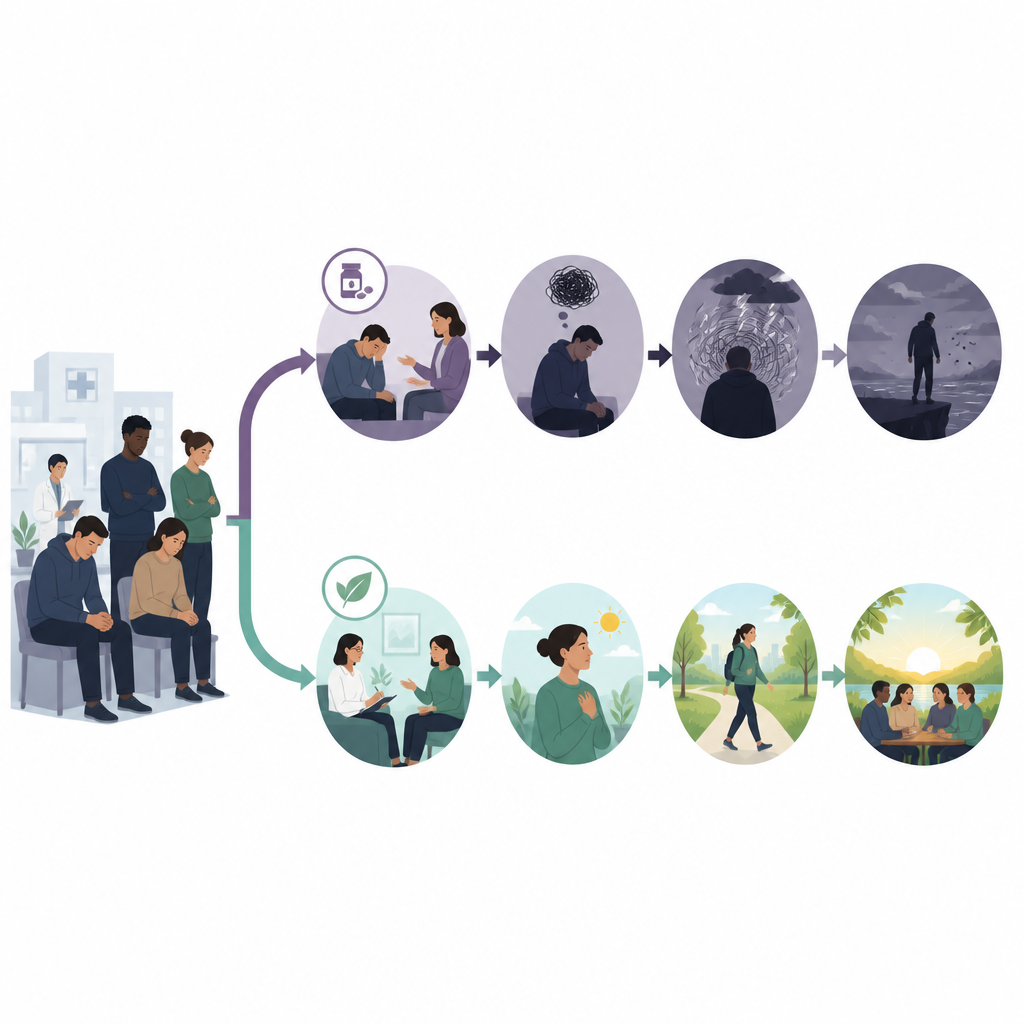
The researchers used a large international network of anonymized electronic health records from over 150 hospitals and health systems. They focused on adults hospitalized with major depressive disorder who were starting a new treatment. One group received esketamine during an inpatient stay, while a much larger pool received more conventional antidepressants but never esketamine. To make a fair comparison, the team matched each esketamine patient with a similar patient in the control group based on age, sex, medical conditions, other drugs, and recent hospital use. This approach cannot fully mimic a randomized trial, but it brings the study closer to the real world mix of older adults and people with many health problems.
What the team measured
The main yardstick was a bundle of serious warning signs related to suicide: documented suicidal thoughts, suicide attempts, or intentional self harm. They tracked when these events appeared over time, splitting follow up into the first two weeks, the rest of the first year, and a full two year window. They also looked at deaths from any cause, repeat episodes of depression, and major heart and blood vessel problems such as heart attacks and strokes. Using standard survival analyses, they estimated how the risks in the esketamine group compared with the matched controls over each time period.
Fewer suicidal thoughts and lower death rates
Across all time windows, patients given esketamine had fewer suicide related events recorded in their charts. The drop was strongest in the first two weeks after treatment began, a time when mood can be highly unstable, and the benefit was still visible out to two years. When the researchers pulled the bundle apart, most of the difference came from fewer documented suicidal thoughts, not from fewer attempts or self harm acts, which were too rare to study with confidence. Esketamine treated patients also had a lower risk of dying from any cause over the one and two year periods compared with similar patients on other antidepressants, a pattern seen in both men and women and in older adults.
Heart health and safety checks
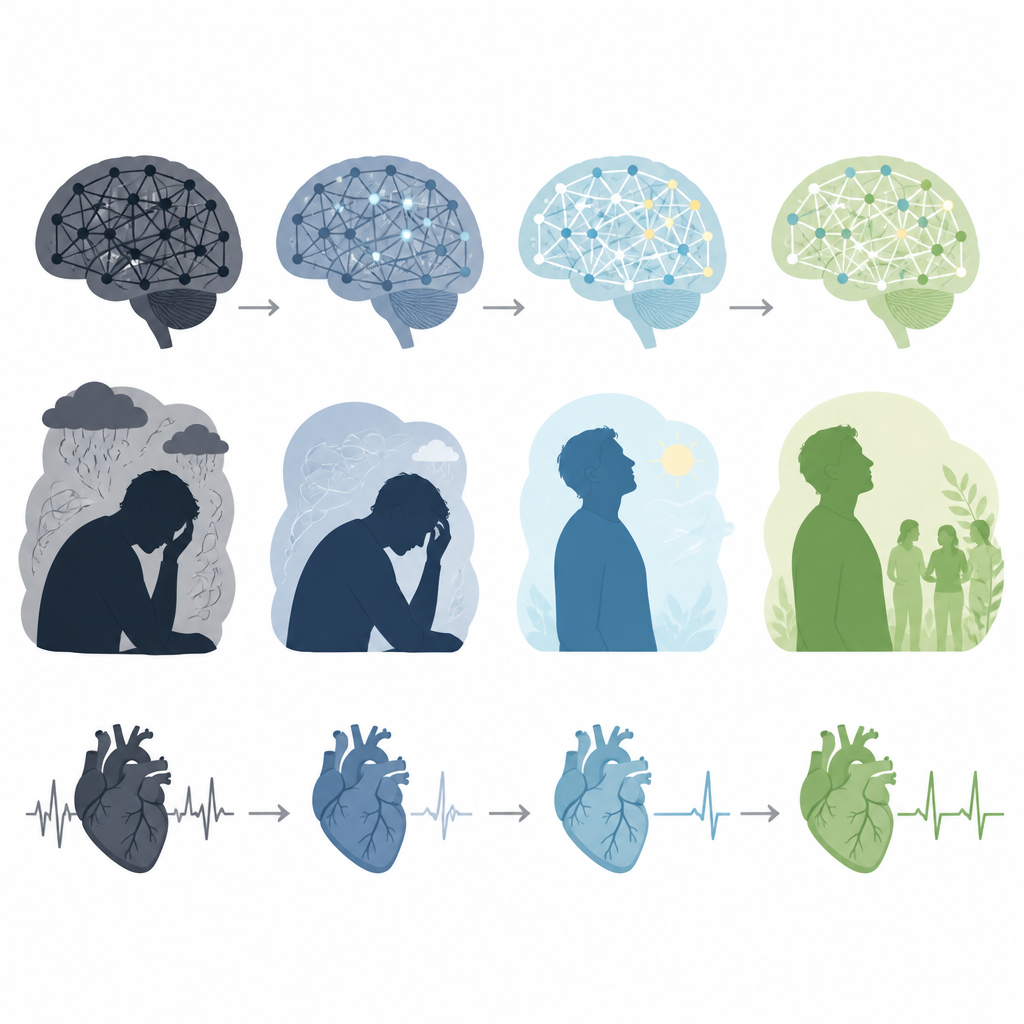
Because esketamine can briefly raise blood pressure, the team paid close attention to major heart and circulation problems. In the first two weeks, these events were actually less common in the esketamine group, possibly reflecting careful monitoring and selection of safer patients. After that early window, there was no clear difference between groups, suggesting no added long term heart risk in this real world sample. The authors repeated their analyses in several ways, such as adjusting for how often people visited clinics and including those with past suicidal behavior. The overall pattern of fewer suicidal thoughts with esketamine held up, although the long term advantage shrank in some sensitivity tests.
What it means for patients
For people living with severe depression, these findings are cautiously encouraging. In everyday hospital practice, esketamine was linked to fewer recorded suicidal thoughts and fewer deaths over two years, without an increase in serious heart problems. At the same time, the study could not tell whether it truly lowers suicide attempts or self harm, and hidden differences between patients may still explain some of the results. The work does not prove cause and effect, but it adds an important piece to the picture: when used under current safeguards, esketamine appears to offer lasting benefits for some of the sickest patients with depression, while maintaining an acceptable safety profile.
Citation: Liu, TH., Shen, HS., Wu, JY. et al. Sustained effectiveness and safety of esketamine for major depressive disorder: a target trial simulation of real-world data. Transl Psychiatry 16, 254 (2026). https://doi.org/10.1038/s41398-026-04032-3
Keywords: esketamine, major depression, suicidal ideation, real world evidence, antidepressant safety