Clear Sky Science · en
Fear learning in unmedicated patients with anxiety disorders: a comparison of delay conditioning, fear reversal, and trace conditioning
Why this research matters for everyday anxiety
Many people with anxiety feel on edge even in situations that seem safe to others. This study asks a simple but important question: when life teaches us what is safe and what is not, do people with anxiety learn those lessons differently from others? By watching how volunteers’ bodies and brains respond while they learn about harmless and mildly unpleasant events, the researchers look for clues that might explain why anxiety can be so hard to shake.
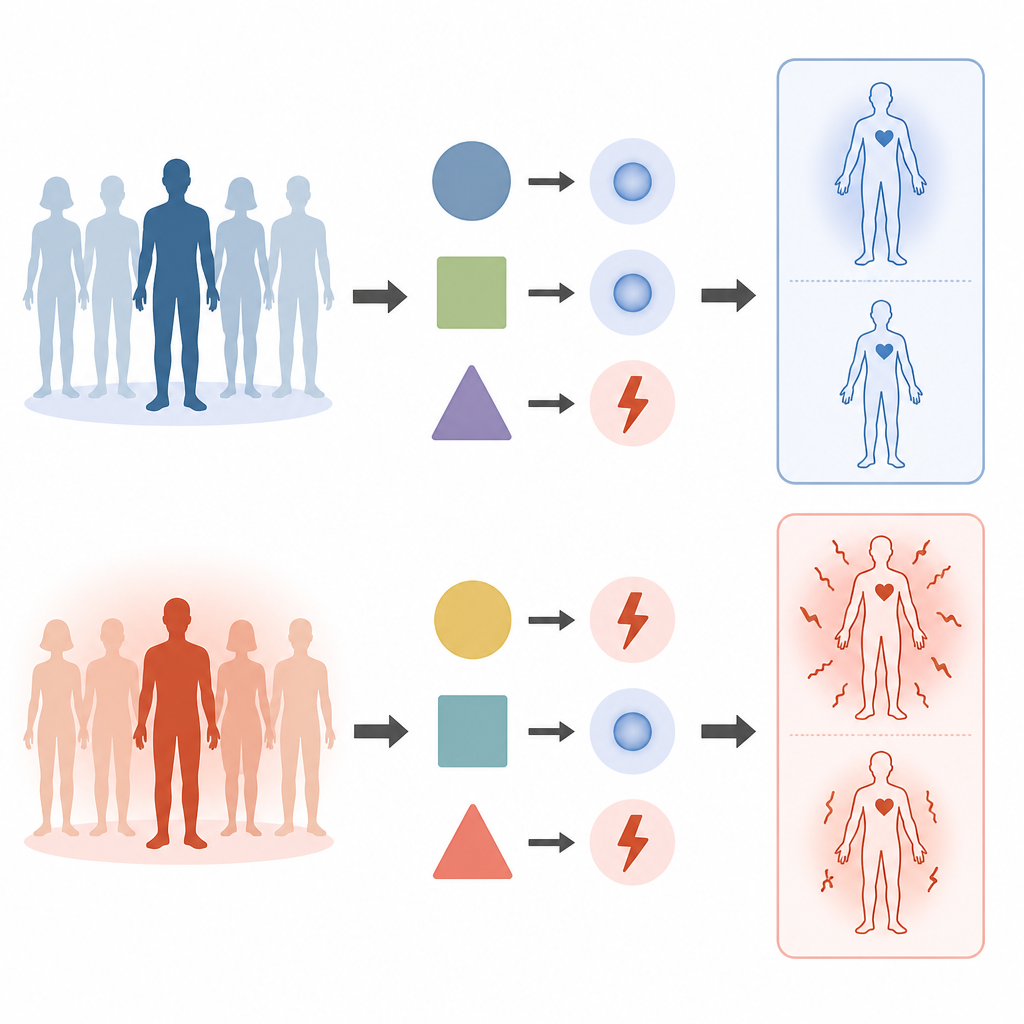
Learning to link sights with a mild shock
The team compared 34 unmedicated adults with generalized or social anxiety to 102 adults without anxiety. Inside a brain scanner, participants saw simple shapes while sometimes receiving a brief, individually adjusted electric shock to the wrist. One shape usually predicted a shock, acting like a warning signal, while another shape was never followed by a shock and therefore signaled safety. The researchers measured sweaty palms as a sign of arousal and tracked brain activity with functional MRI, and they also asked people how tense or calm they felt about each shape.
Testing flexible changes in fear
The first set of trials looked at basic learning: would people come to react more strongly to the shape linked with the shock than to the safe shape? Next, the rules suddenly flipped so that the former safe shape now predicted the shock and the former warning shape became safe. This reversal tested how flexibly people could update old habits and stop reacting to a cue that no longer signaled danger. A separate task used a short time gap between the shape and the possible shock, mimicking real life situations where warning signs and bad outcomes are not back to back, and again compared strong versus weaker links between shapes and shocks.
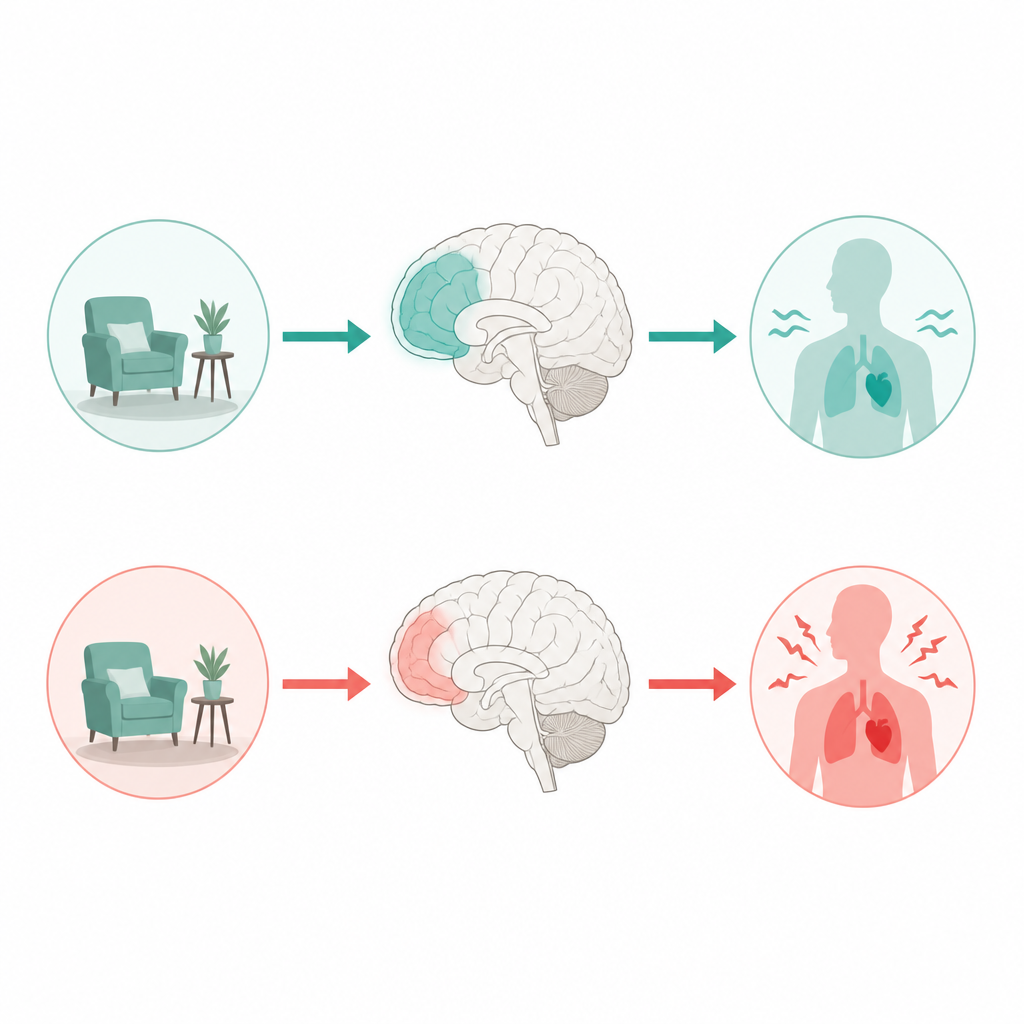
Safety signals stand out as the weak spot
Both anxious and non-anxious volunteers successfully learned which shapes were more likely to be followed by a shock, and both groups adjusted when the rules changed. Overall, their ratings of how tense or uncomfortable they felt looked similar. However, when the researchers zoomed in on the early part of learning, a key difference appeared. People with anxiety showed higher body arousal to the shape that was actually safe, especially at the start of training, and their brains showed lower activity in a region of the frontal lobe linked to controlling emotion when that safe cue appeared. In other words, anxious participants seemed slower to quiet their responses to a harmless signal, even though they could still tell the shapes apart on paper.
When anxiety does not change other kinds of fear learning
For the reversal stage, where safe and unsafe shapes swapped roles, people with and without anxiety again showed clear learning in both body and brain signals, with no strong group differences. The same was true for the delayed “trace” task with a short pause between cue and possible shock, even when one cue was paired with the shock more often than another. These results suggest that, at least for unmedicated adults with generalized or social anxiety, many forms of fear learning operate much like they do in people without anxiety, and the standout change lies in how safety information is used early on.
What this means for understanding anxiety
To a layperson, the takeaway is that anxiety in these disorders may be less about learning to fear and more about struggling to trust safety. Early in new situations, people with anxiety may react strongly even to cues that are in fact harmless, and their brain systems for dialing down fear seem less engaged. Over time, they can still learn the rules, but this shaky start could help explain why everyday life feels more threatening and why reassurance often does not fully sink in. The findings also hint that problems in fear learning may be especially important in other conditions, such as trauma-related disorders, and may relate more to how severe a person’s difficulties are than to any single diagnosis.
Citation: Vilajosana, E., Battaglia, S., Chavarría-Elizondo, P. et al. Fear learning in unmedicated patients with anxiety disorders: a comparison of delay conditioning, fear reversal, and trace conditioning. Transl Psychiatry 16, 274 (2026). https://doi.org/10.1038/s41398-026-03996-6
Keywords: anxiety disorders, fear learning, safety learning, skin conductance, functional MRI