Clear Sky Science · en
Prediction of depressive episodes based on clinical features, cognitive characteristics, inflammation-related proteins, and EEG data
Why turning brain waves and blood tests into clues for mood
Depression affects hundreds of millions of people, yet doctors still diagnose it mainly by talking with patients and using questionnaires. This study explores whether hidden patterns in sleep problems, thinking skills, brain activity, and immune molecules in the blood can be combined with modern computer techniques to provide a more objective signal of when someone is experiencing a depressive episode. If such a signal proves reliable, it could eventually help doctors detect depression earlier and tailor treatments more precisely.
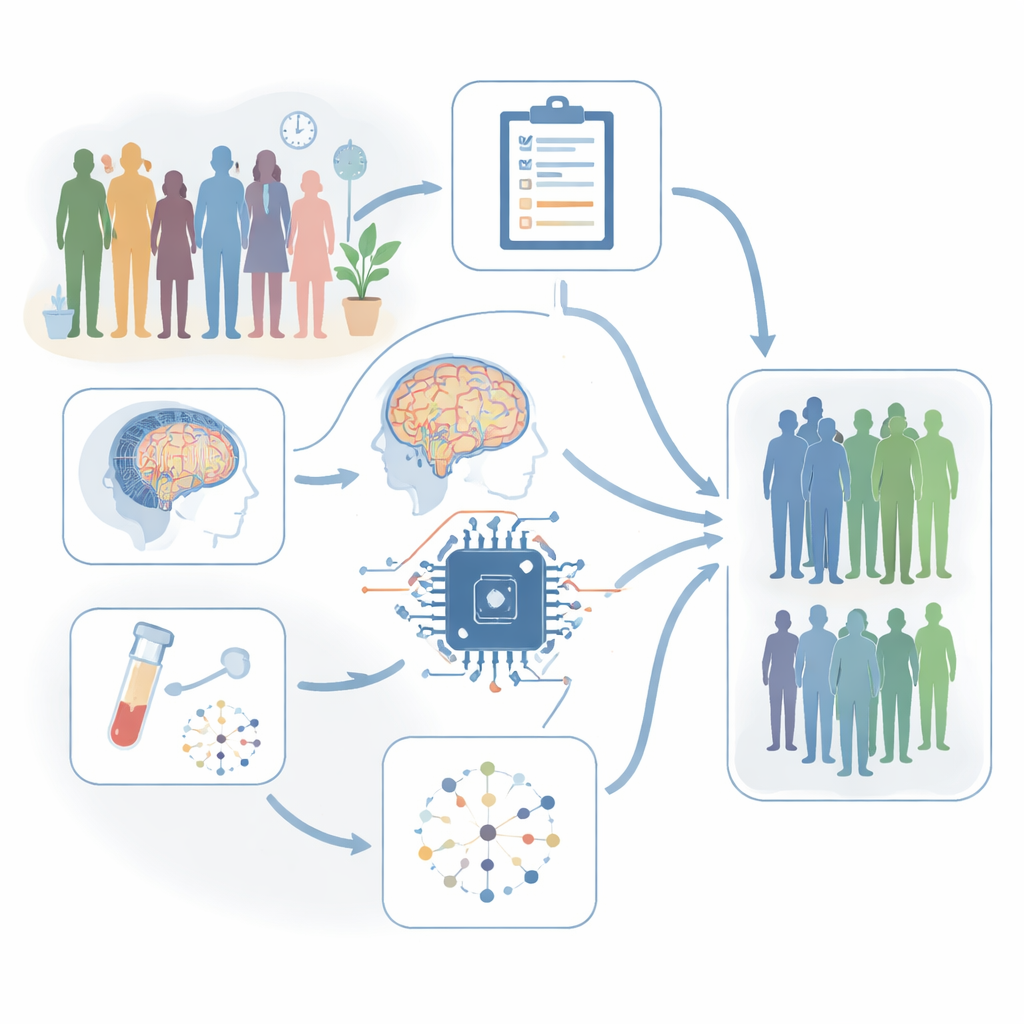
Bringing many kinds of clues together
The researchers followed 115 adults with major depression and compared them with 66 healthy volunteers. For each person, they collected a wide set of information: symptom scales for depression, anxiety, pleasure, and insomnia; detailed tests of memory, attention, and visual thinking; a special form of brain recording called EEG microstates that tracks fast shifts in brain networks; and levels of more than 30 inflammation-related proteins circulating in the blood. Fifty-six patients were reassessed after four weeks of antidepressant treatment. The first round of data from patients plus all healthy volunteers was used to train computer models, while the follow-up data plus the same healthy group was used to test how well those models could recognize depression in new measurements.
How computers searched for a depression fingerprint
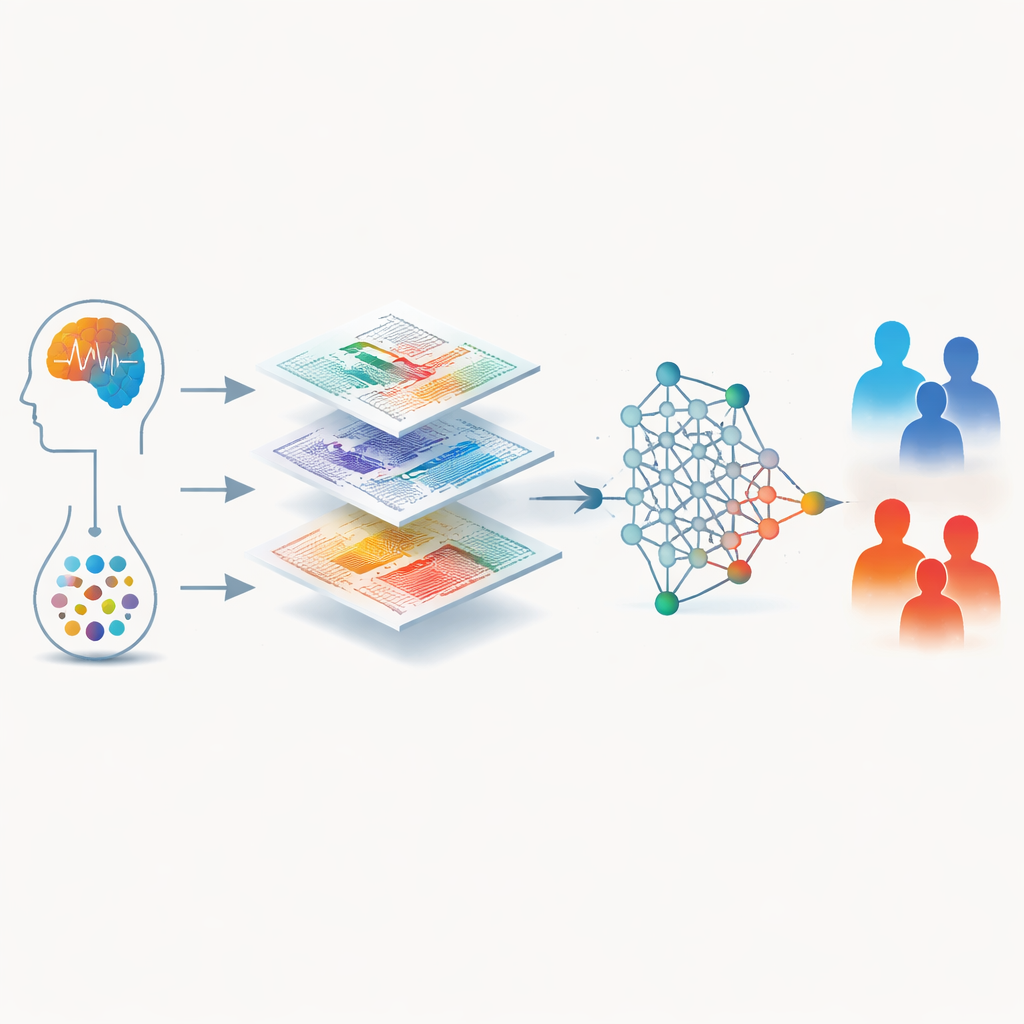
Because the dataset was rich but moderate in size, the team first cleaned it carefully, removing measurements that were often missing and filling smaller gaps with established statistical methods. They then used a technique called Lasso regression to narrow dozens of candidate measures down to a smaller set that carried the most information about who was depressed and who was not. From this, they focused on eight standout features: severity of insomnia, performance on a visuospatial task that taps how well people process and construct visual information, the average length of a specific EEG pattern called microstate D, and five inflammation-related proteins in the blood (IL-8, IL-18, MMP-8, CD40, and CASP-8). These features were then fed into six different machine-learning algorithms that learn to recognize patterns distinguishing depressed from healthy participants.
What the model learned about the body and brain in depression
All six computer models performed well, but during validation on the follow-up data, the k-nearest neighbor model stood out, correctly classifying about 95% of cases and showing an almost perfect separation between depressed and non-depressed participants. To probe which signals mattered most, the researchers used an explanation method that treats each feature like a “player” contributing to the model’s decision. Two immune proteins, IL-8 and IL-18, emerged as especially influential, followed by the insomnia score, the protein MMP-8, the immune receptor CD40, the enzyme CASP-8, visuospatial thinking ability, and the mean duration of EEG microstate D. When all inflammation proteins were removed from the model, its performance dropped sharply, showing that the immune system markers were not just redundant echoes of other clinical or brain measures but added unique information.
What this might mean for sleep, thinking, and inflammation
The pattern of results fits with a growing body of work linking chronic low-grade inflammation and disturbed brain networks to depression. People with depression in this study tended to sleep poorly, think less clearly in certain visual–spatial tasks, show altered timing of microstate D in their EEG, and display changed levels of several immune proteins in their blood. Rather than relying on any single measure, the combined pattern across these domains created a powerful signal of a depressive episode. The findings also underscore how insomnia and subtle cognitive changes are not just side effects, but central pieces of the depression puzzle.
How this work could help future care
For a layperson, the takeaway is that depression leaves a trace in the body and brain that can be picked up by carefully chosen tests and smart computer analysis. The study suggests that a relatively small panel of sleep scores, thinking measures, brain-wave features, and blood proteins can, together, separate people with depression from healthy individuals with high accuracy. Although the work was done at a single hospital and needs to be confirmed in larger, more diverse groups over longer periods, it shows a path toward more objective, biology-informed tools that could one day support, but not replace, the clinical interview in diagnosing and monitoring depression.
Citation: Sun, W., Yang, H., Sun, C. et al. Prediction of depressive episodes based on clinical features, cognitive characteristics, inflammation-related proteins, and EEG data. Transl Psychiatry 16, 202 (2026). https://doi.org/10.1038/s41398-026-03960-4
Keywords: major depressive disorder, biomarkers, inflammation, EEG microstates, machine learning