Clear Sky Science · en
A single extinction-based treatment with N-Acetylcysteine produces long-term reduction in cocaine relapse
Why this matters for addiction
Cocaine addiction is notoriously difficult to treat because many people return to drug use even after long periods of abstinence and therapy. This study explores whether a common medicine, N-acetylcysteine (often sold as NAC and already used for other health problems), could be given just once, at the right moment, to make extinction-based treatments more effective and reduce the risk of relapse over the long term.
A stubborn brain pattern behind relapse
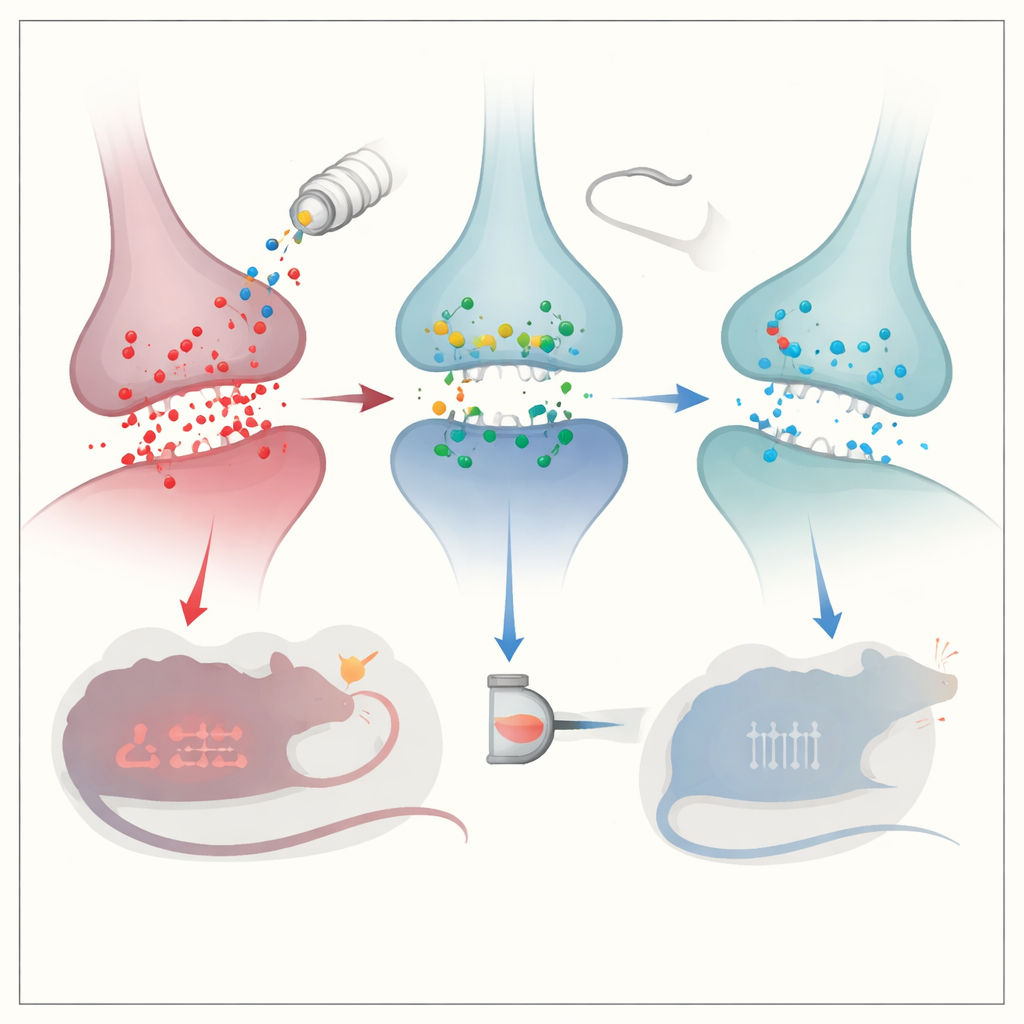
Cocaine use disorder is driven not only by willpower and habit, but by deep changes in brain chemistry. One key player is glutamate, a chemical messenger that helps nerve cells communicate in circuits that link the thinking parts of the brain to reward centers. After repeated cocaine use, baseline glutamate levels in these circuits drop, while brief surges occur when a person encounters drug-related cues or contexts. This imbalance makes drug memories and cravings unusually powerful, so that sights, sounds, or places associated with cocaine can trigger renewed drug seeking even after someone has stopped using.
A familiar drug with a new purpose
N-acetylcysteine is a long‑used medicine that can restore more normal glutamate signaling by supplying building blocks to a transport system in brain support cells. This, in turn, can activate a set of "braking" receptors (called mGlu2/3) on nerve endings, which dampen excessive glutamate release. Earlier animal and human work hinted that repeated NAC dosing might reduce craving and prevent relapse, but clinical results have been inconsistent, especially when NAC was taken by itself. The authors of this study asked a different question: could a single, carefully timed dose of NAC, paired with extinction-style learning, lock in a stronger "no-drug" memory and provide lasting protection against relapse?
What the rat experiments revealed
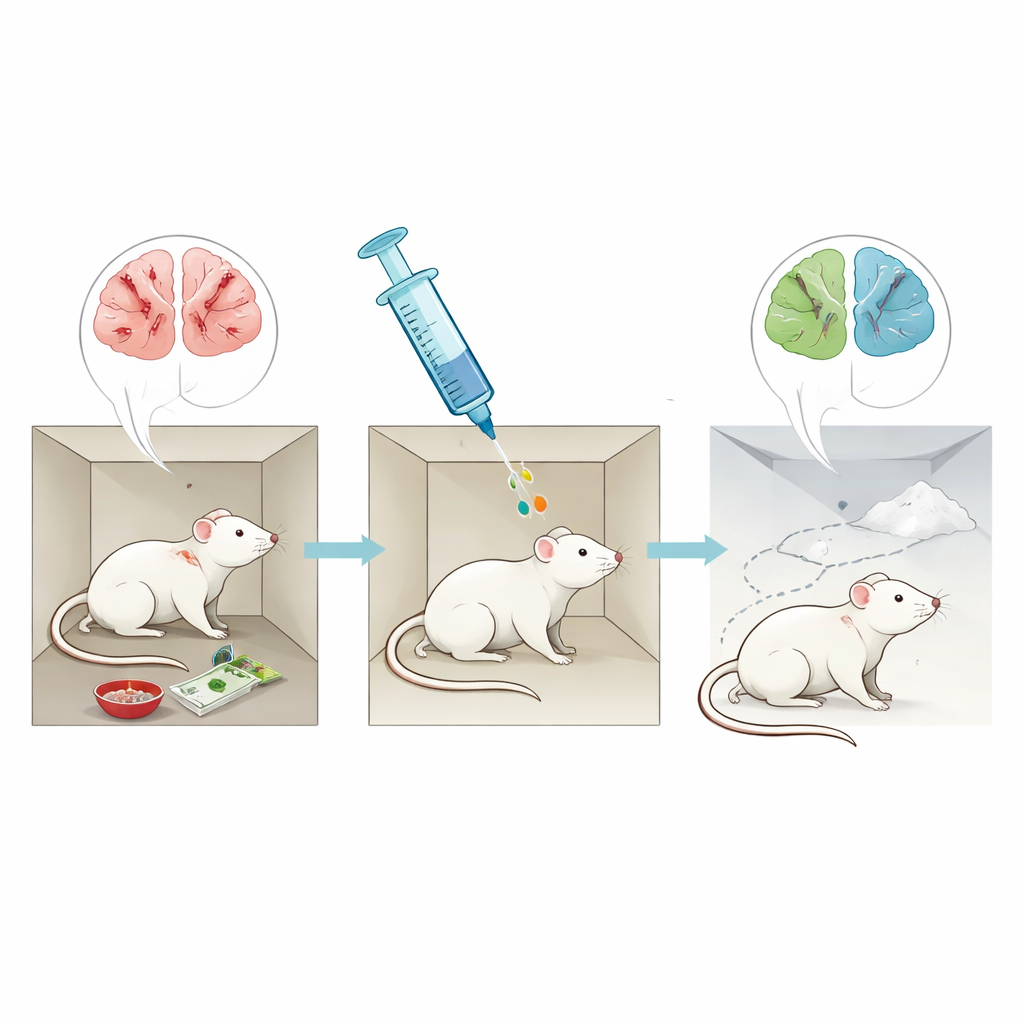
To test this idea, the researchers trained rats to self‑administer cocaine by performing an action that delivered the drug together with light and sound cues. After ten days of this training and a week of forced abstinence, some rats received a single injection of NAC 30 minutes before their first extinction session, in which their drug‑seeking action no longer produced cocaine or cues. Rats given a higher NAC dose showed less cocaine‑seeking on that first extinction day. More strikingly, weeks later they were much less likely to resume the drug‑seeking behavior when exposed to cocaine‑related cues, a cocaine "prime" injection, or simply the passage of time, compared to rats that received only a salt‑water injection.
How one dose can have lasting impact
Further experiments probed what made this long‑term effect possible. When NAC was given in the home cage instead of just before extinction training, it no longer produced lasting protection, even though it still briefly reduced cocaine‑seeking. This showed that the benefit depends on pairing NAC with active re‑exposure to drug‑linked situations, much like timing a medication to coincide with exposure therapy in people. The team also blocked the mGlu2/3 "brake" receptors during NAC treatment using another drug. This did not stop NAC from lowering drug‑seeking on the first extinction day, but it completely erased the long‑term resistance to relapse. This suggests that activating these receptors during extinction is critical for rewriting how the brain responds to drug cues over time.
From lab findings to potential treatments
The researchers also showed that NAC reduced relapse triggered not only by discrete cues but by the original drug‑taking environment itself, a powerful real‑world trigger for people with addiction. Because NAC is already widely used, generally safe, and inexpensive, these findings point toward a practical strategy: instead of giving NAC for weeks or months, a single dose could be administered right before exposure‑based therapy sessions designed to weaken drug memories. Although this work was done in male rats and the exact brain changes were inferred rather than directly measured, it supports testing NAC as a low‑burden, behaviorally timed add‑on to psychotherapy for cocaine and possibly other substance use disorders.
What this means for people
In simple terms, the study suggests that when NAC is given once, at the very start of a learning session where drug cues no longer bring reward, it can help the brain lay down a stronger new memory: "these cues no longer mean cocaine." That strengthened learning, driven through specific glutamate receptors, makes the animals less likely to relapse later when they encounter reminders of the drug or the places where they once used it. While more work is needed before this approach can be applied broadly in people, it raises the hopeful possibility that a single, well‑timed medication dose could greatly boost the staying power of existing psychological treatments for addiction.
Citation: Huang, S., Song, Z., Shi, C. et al. A single extinction-based treatment with N-Acetylcysteine produces long-term reduction in cocaine relapse. Transl Psychiatry 16, 186 (2026). https://doi.org/10.1038/s41398-026-03954-2
Keywords: cocaine addiction, N-acetylcysteine, relapse prevention, extinction therapy, glutamate signaling