Clear Sky Science · en
Locus coeruleus modulation of neurophysiological sensory selectivity differs in autism and other mental health conditions
Why everyday sounds can feel so different
Many autistic people say that ordinary noises—from humming lights to rustling paper—can feel overwhelming, painful, or impossibly distracting. Others with conditions like anxiety, depression, or ADHD also report being unusually sensitive to sound. This study asks what is happening in the brain’s arousal and attention systems that might make the same sound feel neutral to one teenager but stressful to another, and whether a simple physical task can briefly change how the brain reacts to these sounds.
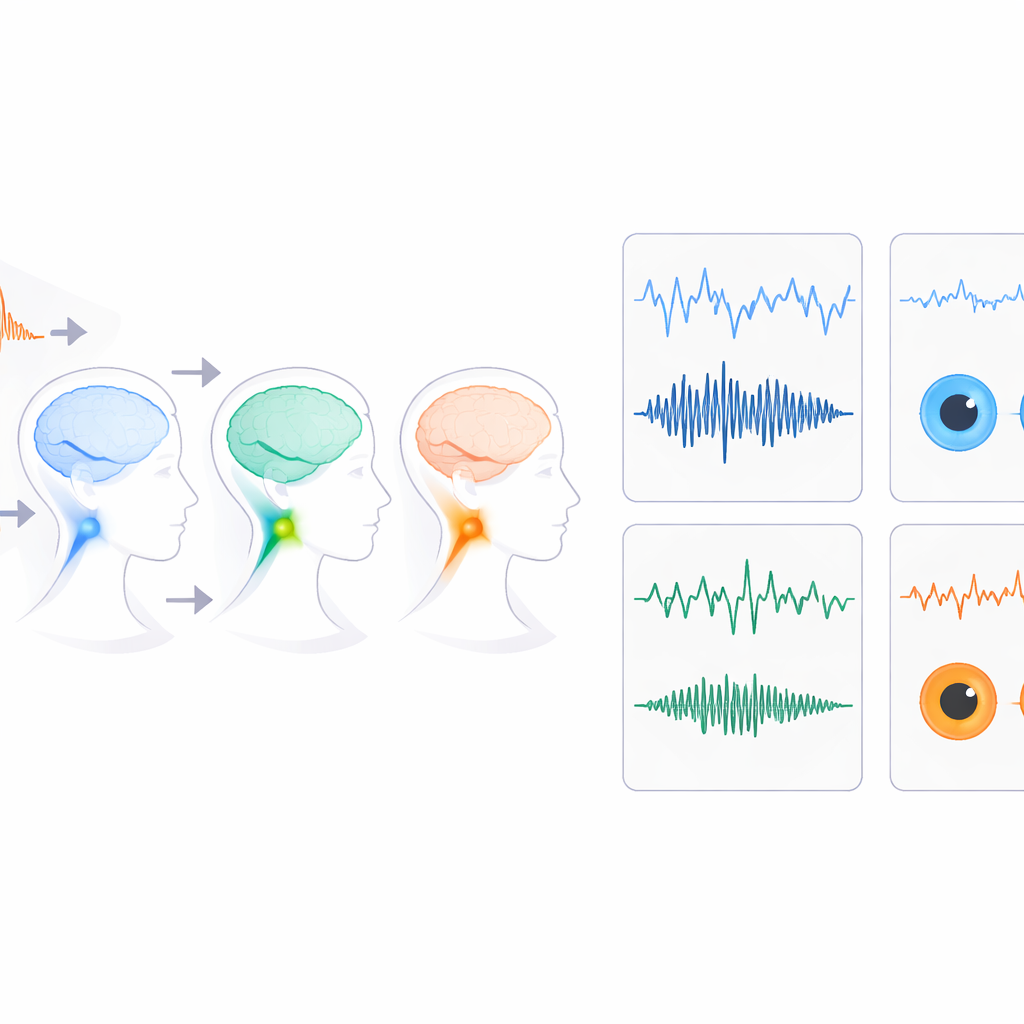
A small blue spot with a big job
Deep in the brainstem lies a tiny region called the locus coeruleus, which uses a chemical messenger to help the brain decide what deserves attention. When we are calmly alert, this system boosts the brain’s response to important events, like a sudden siren, while allowing unimportant background noise to fade. The authors focused on how this system behaves in autistic adolescents, in teens with other mental health conditions, and in teens without diagnoses. They were especially interested in whether this “arousal hub” shifts the brain into a state that filters sounds efficiently or into a state where many sounds trigger strong reactions.
Listening to patterns while measuring eyes and brain
To probe sound processing without demanding any effortful decisions, 150 adolescents simply sat and listened to a series of tones while fixating on a cross. Most tones were identical, but some were slightly different “oddball” sounds that usually stand out. While the teens listened, the researchers recorded tiny changes in pupil size—which reflect shifts in arousal—and brain activity using EEG, which can detect rapid electrical responses to sound. Specific EEG features signaled how quickly and strongly the brain detected change and shifted attention toward unusual sounds, offering a window into automatic hearing and attention.
Squeezing a handgrip to stir the arousal system
Halfway through the listening task, participants repeatedly squeezed a handgrip as hard as they could, a simple exercise known to briefly activate the brain’s arousal system. The researchers compared measurements before and after this manipulation. They expected that, across all groups, the exercise would lower the ongoing background arousal level while sharpening the brief responses to oddball tones, essentially improving the brain’s ability to pick out what matters from the sound stream.
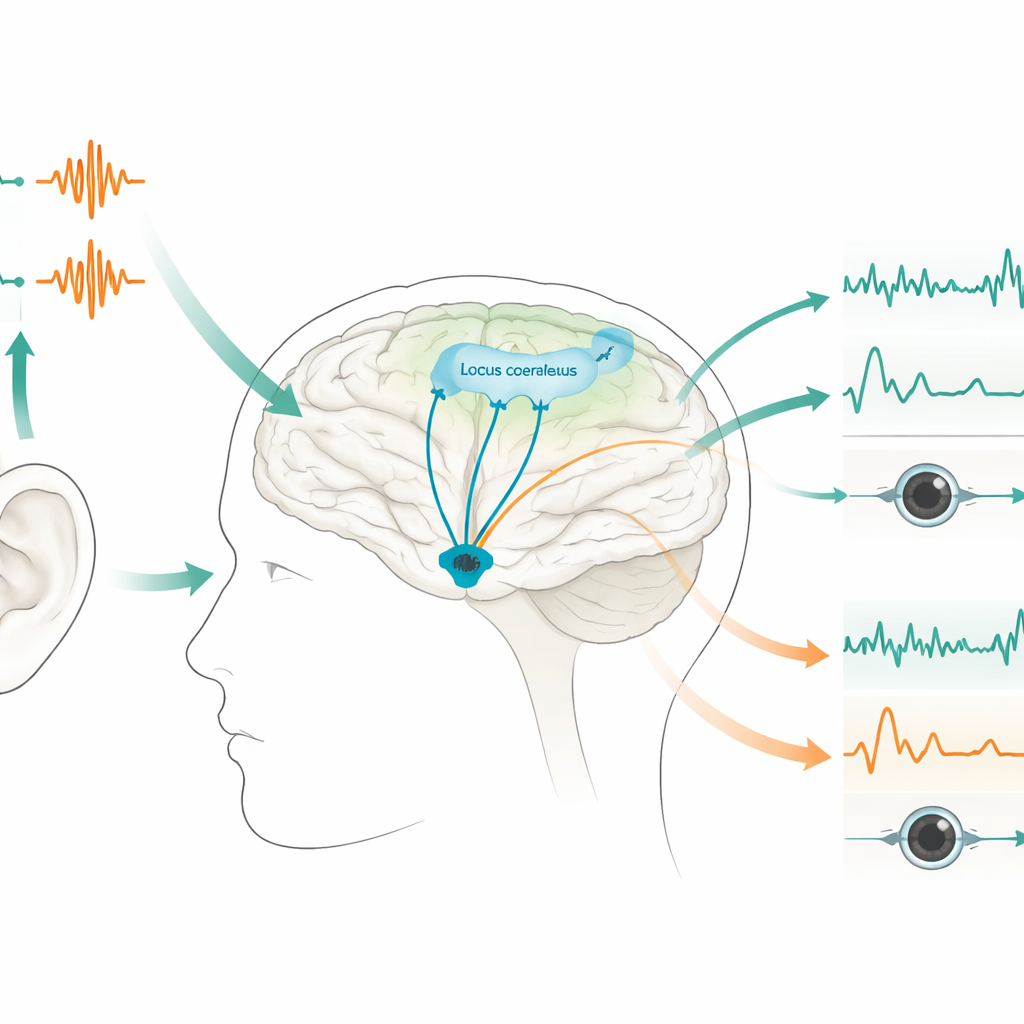
How autistic and other clinical groups responded
The results told a more complex story. Across all teens, the oddball sounds reliably produced stronger pupil responses and clearer brain signatures of change detection and attention, confirming that the task successfully triggered automatic reactions to surprising sounds. Autistic adolescents, in particular, showed a more pronounced brain response related to automatically shifting attention toward oddball sounds, suggesting a stronger pull of salience even when they were not asked to react. However, the handgrip exercise did not enhance selectivity for important sounds as predicted. Instead, it briefly amplified brain responses to both common and oddball tones, indicating a short-lived boost in general sensory reactivity rather than cleaner filtering.
When arousal rises and stress vulnerability shows
Crucially, the handgrip exercise raised baseline pupil size—a sign of higher tonic arousal—only in autistic adolescents and in those with other mental health conditions, not in the control group. This pattern points to a shared tendency in clinical groups for the arousal system to ramp up more strongly in response to a mild challenge. At the same time, the detailed trial-by-trial analyses showed that links between arousal, brain responses to sound changes, and attention differed between autistic, other clinical, and non-clinical teens. Together, these findings suggest that while the core ability to detect sound changes may be similar, the way the arousal system tunes attention toward those sounds is altered in autism and other mental health conditions. To a layperson, this means that everyday noises may feel more intrusive or stressful for some teens because their brain’s arousal hub is more easily pushed into a high-alert mode that boosts reactions to many sounds at once, rather than just to the truly important ones.
Citation: Müller, A.K., Luckhardt, C., Freitag, C.M. et al. Locus coeruleus modulation of neurophysiological sensory selectivity differs in autism and other mental health conditions. Transl Psychiatry 16, 200 (2026). https://doi.org/10.1038/s41398-026-03948-0
Keywords: autism and sensory processing, auditory hypersensitivity, locus coeruleus arousal, pupil and EEG measures, stress susceptibility in teens