Clear Sky Science · en
Amygdala and hippocampal contributions to broad autism phenotype: Project Ice Storm
How Early Stress May Shape Minds
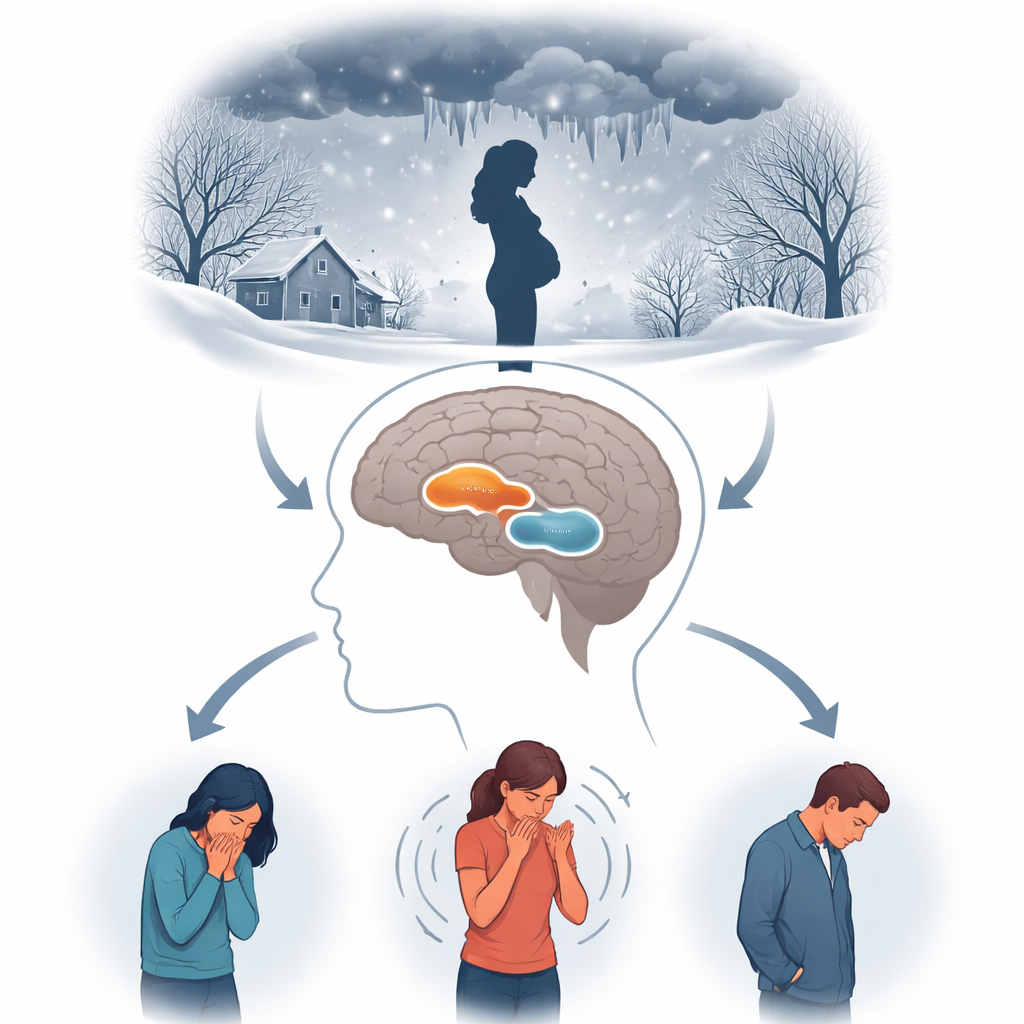
Why do some people, even without an autism diagnosis, dislike change or struggle with back‑and‑forth conversation? This study follows young adults whose mothers were pregnant during a massive 1998 ice storm in Quebec. By combining brain scans with detailed questionnaires, the researchers explored how early life stress might leave lasting fingerprints on specific brain circuits linked to “autistic‑like” traits in everyday life.
A Broader View of Autism‑Like Traits
Autism is usually defined by social difficulties, communication challenges and a preference for sameness or routines. But milder versions of these traits are surprisingly common in the general population. Scientists call this the “broad autism phenotype” – a spectrum of characteristics that includes being socially aloof, having awkward conversational style, or having a very rigid personality. In this project, 32 young adults who had all been exposed to the 1998 ice storm before birth rated themselves on these three dimensions, giving researchers a detailed picture of how strongly each person showed these tendencies.
Following a Natural Experiment from Womb to Adulthood
The ice storm offered a rare “natural experiment”: a major stressor that struck suddenly and independently of the parents’ personalities. Soon after the disaster, researchers began Project Ice Storm, tracking pregnant women’s objective hardship, emotional distress and their thoughts about the crisis. Nearly two decades later, their children underwent brain imaging. The team focused on two deep brain structures – the amygdala, involved in emotion and threat responses, and the hippocampus, central to memory and flexible thinking – and on how subregions within these structures communicate with the rest of the brain while at rest.
Language Style, Memory Circuits and Movement Hubs
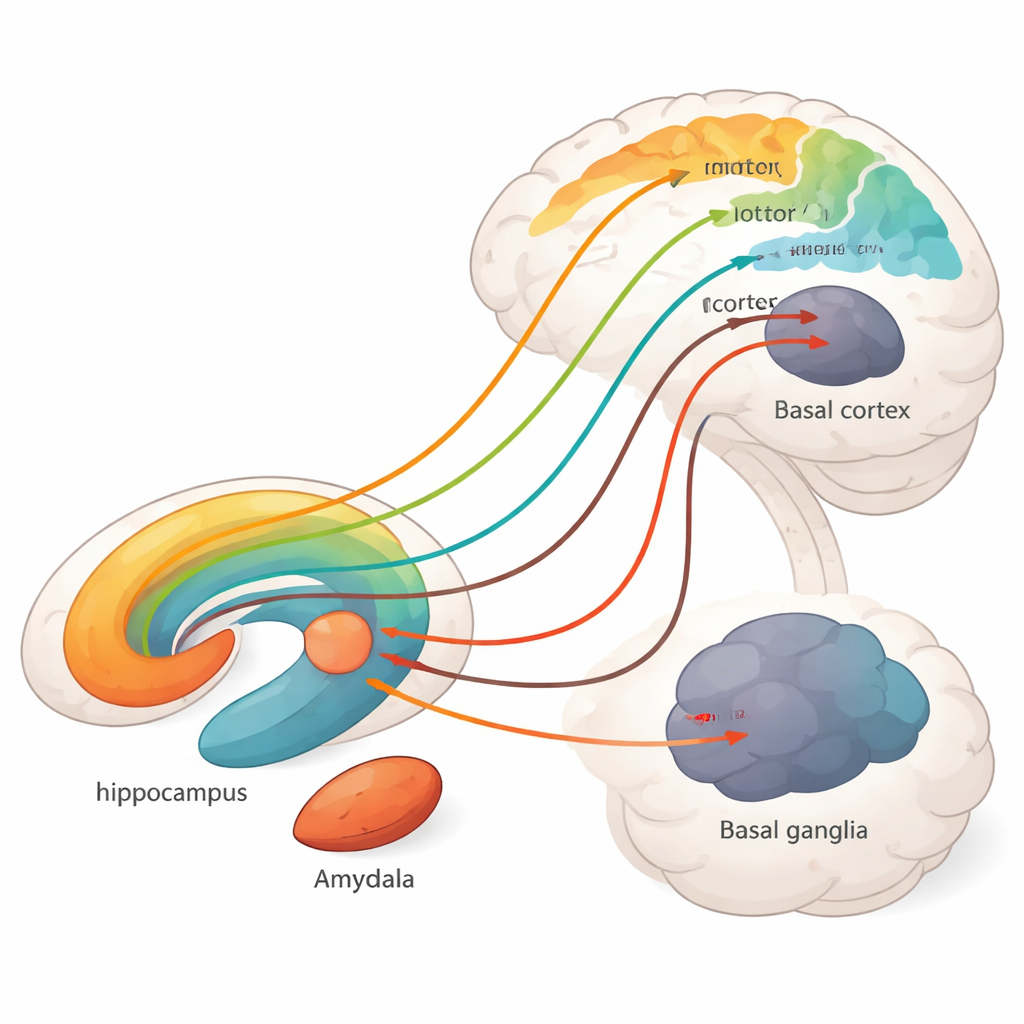
The researchers found that communication‑related traits were tied to specific memory and movement pathways rather than to overall autism‑like severity. Young adults who reported more pragmatic language problems – such as going off on tangents or having trouble keeping conversations flowing – tended to show weaker links between a key hippocampal subregion (called CA1, important for retrieving memories) and a motor planning area on the top of the brain that helps coordinate speech and internal “self‑talk.” At the same time, a different hippocampal subregion (CA4) was more strongly connected with the putamen, a deep movement hub that also participates in language processing. Together, these patterns support the idea that successful everyday conversation relies on smooth coordination between memory systems and motor‑language networks.
Rigid Habits and Sensory‑Linked Brain Networks
Rigid personality traits – such as discomfort with change and a strong desire for sameness – showed a different signature. People who scored higher on rigidity tended to have a smaller volume in the left CA1 subregion of the hippocampus, which may relate to less flexible use of past experiences when adapting to new situations. At the same time, several hippocampal subregions (CA3, CA4 and the dentate gyrus) showed stronger connections with visual and parietal areas involved in processing sensory details and spatial information. Another emotional hub, the central part of the amygdala, was more tightly linked to an area of the visual cortex. This pattern hints that inflexible behavior may arise when memory and emotion systems are unusually bound to detailed sensory processing, reinforcing familiar patterns and making change feel especially uncomfortable.
What This Means for Understanding Minds
The study did not find meaningful brain differences tied to social aloofness, and overall autism‑like scores were less informative than looking at each trait separately. Instead, specific brain circuits mapped onto specific everyday tendencies: memory‑motor links for communication style, and memory‑visual‑emotional links for rigidity. Because all participants were exposed to prenatal stress from the ice storm, the work suggests that such early stress may shape how these circuits develop, nudging some individuals toward particular autistic‑like characteristics even without meeting criteria for autism. While the sample is small and lacks an unexposed comparison group, the findings point toward targeted brain networks that future research – and eventually, tailored interventions – might focus on to support flexible thinking and more effortless communication.
Citation: Li, X., Qureshi, M.N.I., Laplante, D.P. et al. Amygdala and hippocampal contributions to broad autism phenotype: Project Ice Storm. Transl Psychiatry 16, 184 (2026). https://doi.org/10.1038/s41398-026-03918-6
Keywords: prenatal stress, autistic traits, amygdala, hippocampus, brain connectivity