Clear Sky Science · en
In-Depth characterization of the shared genetic architecture of suicide attempts with other major psychiatric disorders
Why Our Genes Matter for Understanding Suicide Risk
Suicide attempts are among the most devastating events a family or community can face, yet they rarely occur in isolation. They often arise in people who are already living with conditions like depression, bipolar disorder, schizophrenia, or attention-deficit/hyperactivity disorder (ADHD). This study asks a difficult but crucial question: how much of the risk for attempting suicide is written into the same genetic code that influences these other mental illnesses—and how much is unique? By tracing patterns across the genomes of hundreds of thousands of people, the researchers show that suicide attempts share a deep genetic footprint with other psychiatric disorders, while also uncovering biological clues that may one day help refine prevention and treatment.
Many Small Genetic Nudges, Not One Single Cause
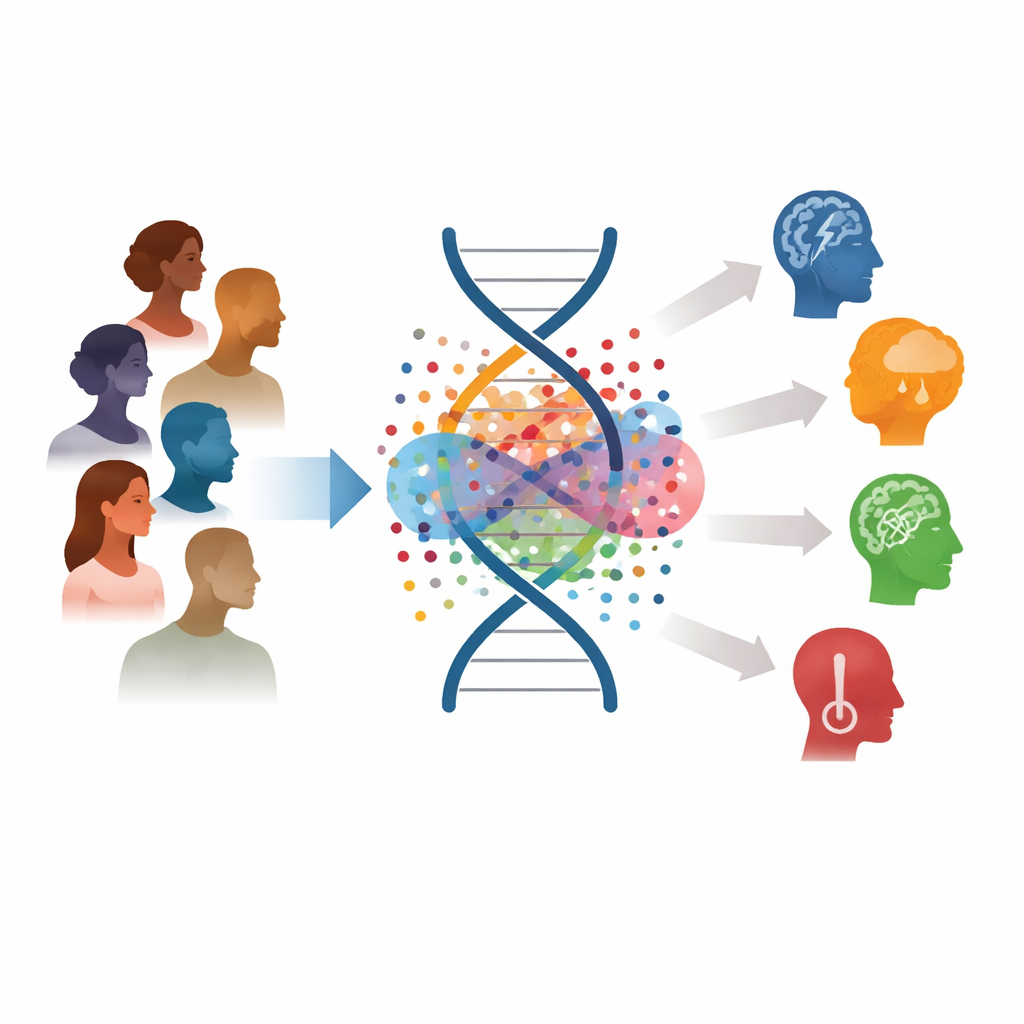
The authors show that suicide attempts are strongly shaped by thousands of tiny genetic influences rather than a few powerful “suicide genes.” Using large genetic datasets from international consortia, they estimate that nearly seven thousand common DNA variants contribute to the risk of attempting suicide. Most of these genetic influences are also involved in major depression, bipolar disorder, schizophrenia, and ADHD. Depending on the disorder, between roughly half and more than four-fifths of the variants that affect suicide attempts are shared with those that affect the psychiatric condition. This means that the same stretches of DNA that nudge a brain toward depression or attention problems also, in many cases, nudge it toward suicidal behavior.
Zooming In on Shared Hotspots in the Genome
To move beyond broad overlaps, the team pinpointed specific regions of the genome that appear to affect both suicide attempts and other psychiatric diagnoses. They combined several advanced statistical tools to scan the genome at high resolution and ask where the same underlying genetic signal seems to drive both traits. In one key region on chromosome 11, they found a shared signal tied to a gene called DRD2, which helps shape the brain’s dopamine system—a crucial player in motivation, reward, and impulse control. This same region appears to influence major depression, bipolar disorder, and schizophrenia, as well as suicide attempts, suggesting a common biological pathway that may help explain why these conditions so often cluster together in the same people.
Brain Connections and Communication as Key Themes
When the researchers looked at the functions of the genes near their newly identified genetic sites, a recurring theme emerged: many of them help build and regulate synapses, the tiny communication points where nerve cells talk to one another. Others are involved in how neurons develop, how signals are processed in the cerebral cortex and hippocampus, or how cells manage lipids and other basic building blocks. Different psychiatric pairings showed different biological flavors. Genes shared between suicide attempts and depression, for example, were enriched in pathways tied to the growth and specialization of brain cells, while those shared with schizophrenia leaned more heavily on lipid metabolism. Together, these results suggest that suicidal behavior is not tied to a single malfunction but rather arises at the intersection of multiple brain systems and cellular processes.
How Genetic Scores Translate to Personal Risk
The study also tested how well genetic “risk scores” derived from these large datasets could predict who had actually attempted suicide in an independent group of nearly 130,000 people from the UK Biobank. Each person received a score that summarized how many risk-raising variants they carried for different conditions. The score based directly on suicide-attempt genetics was the strongest single predictor of having made an attempt, even after accounting for scores related to depression, bipolar disorder, schizophrenia, and ADHD. Among the psychiatric conditions, depression and ADHD scores were the next most informative. Although these scores are not accurate enough to be used alone in clinics, they reinforce the idea that suicidal behavior has a partly distinct biological footprint, not just a side effect of other diagnoses.
What This Means for Prevention and Care
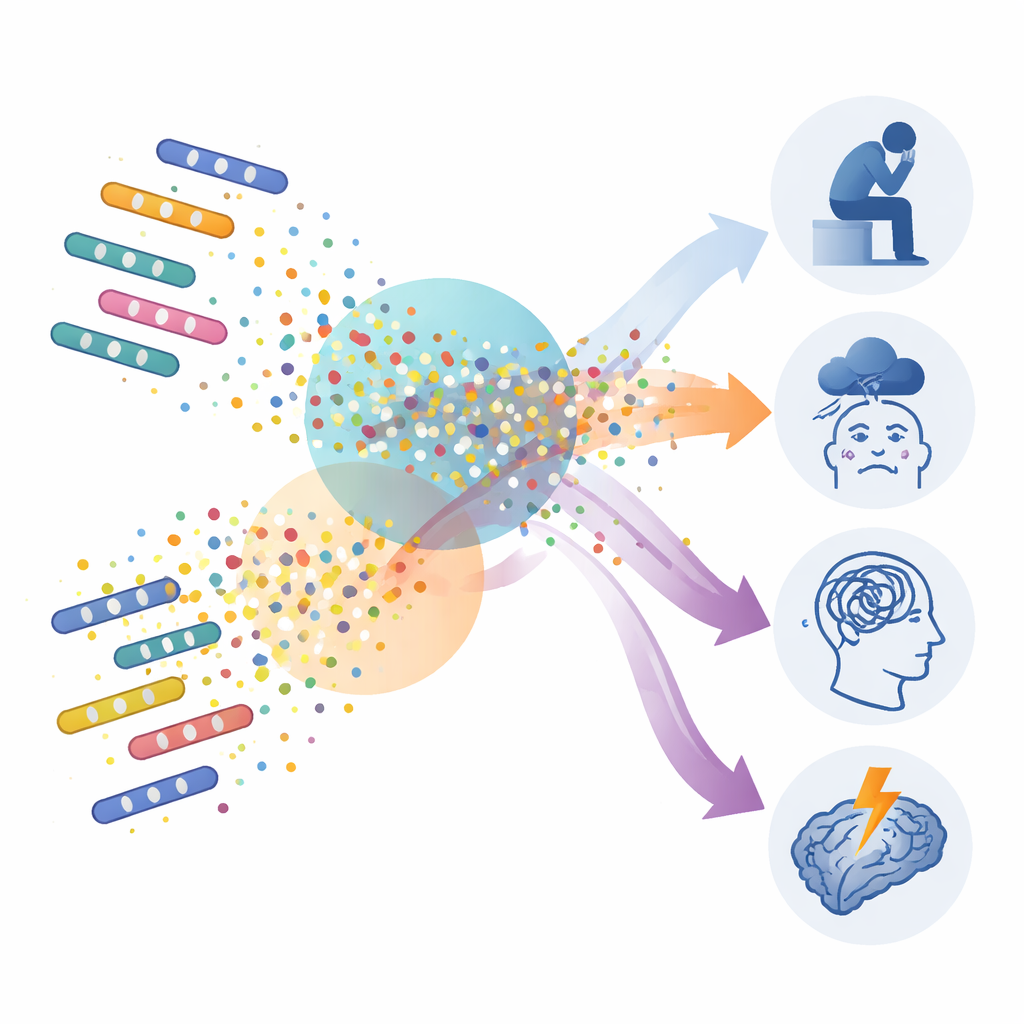
For non-specialists, one of the most important messages of this study is that suicide attempts are biologically complex, highly inherited in part, and deeply entangled with the genetics of other mental disorders. The same DNA patterns that shape mood, thinking, and attention can also increase the odds of suicidal behavior, and many of the key genes sit in pathways that govern how brain cells connect and communicate. At the same time, a focused genetic signal specific to suicide attempts remains visible, suggesting that suicidal behavior is not just a symptom but has partly its own biological roots. These insights do not allow prediction at the individual level yet, nor do they replace the roles of life experiences, trauma, and social stress. But by mapping the shared and unique genetic architecture of suicide attempts, the study lays groundwork for more precise biological research, which may eventually contribute—alongside psychological, social, and public health efforts—to better identification of people at risk and more targeted prevention.
Citation: Kim, M.J., Gunn, S., Wang, D. et al. In-Depth characterization of the shared genetic architecture of suicide attempts with other major psychiatric disorders. Transl Psychiatry 16, 130 (2026). https://doi.org/10.1038/s41398-026-03827-8
Keywords: suicide attempts, genetic risk, psychiatric disorders, depression, polygenic scores