Clear Sky Science · en
Influence of combined CYP2C19 and CYP2D6 phenotypes on adverse drug reactions in patients with major depressive disorder: a clinical cohort study
Why Some People React Differently to Antidepressants
Many people with major depression are prescribed antidepressants, yet a large number struggle with side effects like sleep problems, inner restlessness, or sweating. This study looks at one important reason why: our bodies do not all process these medicines in the same way. By examining two key drug-processing systems in the liver, the researchers ask whether certain genetic profiles make patients more likely to experience uncomfortable or severe side effects from antidepressant treatment.
The Body’s Drug-Processing Machinery
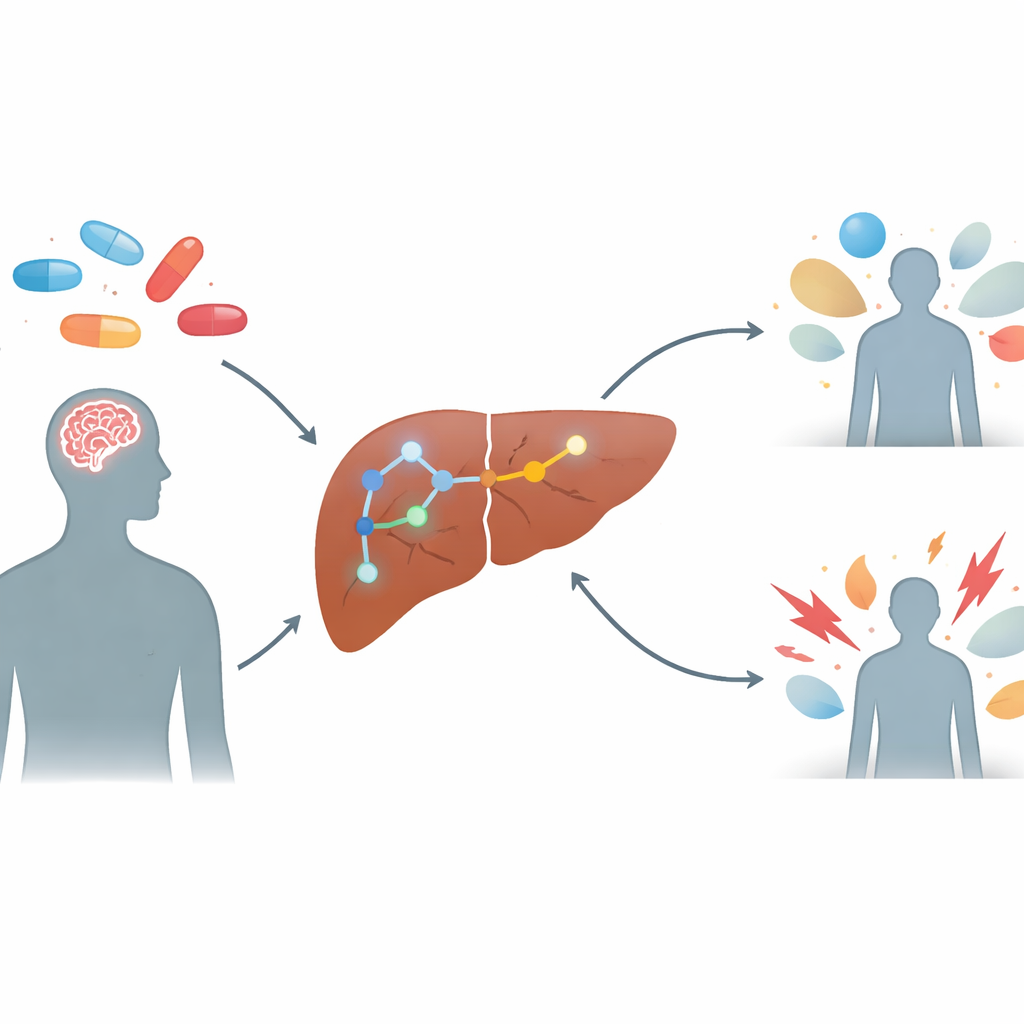
When you swallow an antidepressant pill, it does not act on the brain right away. First, it passes through the liver, where a family of enzymes—tiny molecular machines—chemically modify the drug. Two of the most important of these for antidepressants are called CYP2C19 and CYP2D6. Because of natural genetic differences, some people have “normal” activity of these enzymes, while others process drugs more slowly or more quickly. On top of that, other medicines can temporarily switch these enzymes into a slower or faster mode, a phenomenon known as phenoconversion. All of this means that the same standard dose of an antidepressant can result in very different drug levels in different people.
A Closer Look at Patients in the Hospital
The researchers followed 104 adults hospitalized for major depressive disorder in Frankfurt, Germany. They focused on 35 patients who had been taking antidepressants mainly handled by CYP2C19 and CYP2D6 for at least two weeks, a period when side effects tend to stabilize. Patients filled out a detailed questionnaire rating whether they had specific side effects—such as sleepiness, inner restlessness, or tremor—how intense they were, and how likely they thought the medication was responsible. At the same time, blood samples were used to determine each person’s genetic variants of CYP2C19 and CYP2D6, and the team carefully adjusted this information for the influence of other drugs that can block or boost these enzymes.
When Two Systems Misalign
Instead of looking at each enzyme alone, the study examined the combined “functional status” of both CYP2C19 and CYP2D6. People with typical activity in both were treated as the reference group. The striking finding was that patients whose combined enzyme status was in any way non-normal—either slower or faster than average in at least one of the two systems—reported far more side effects. On average, these patients had about six different adverse reactions, compared with fewer than three in those with normal activity of both enzymes. This pattern held whether the combined effect made drug breakdown slower or faster, suggesting that imbalance in either direction can disturb the delicate relationship between parent drug and its breakdown products.
Zooming In on a Common Antidepressant
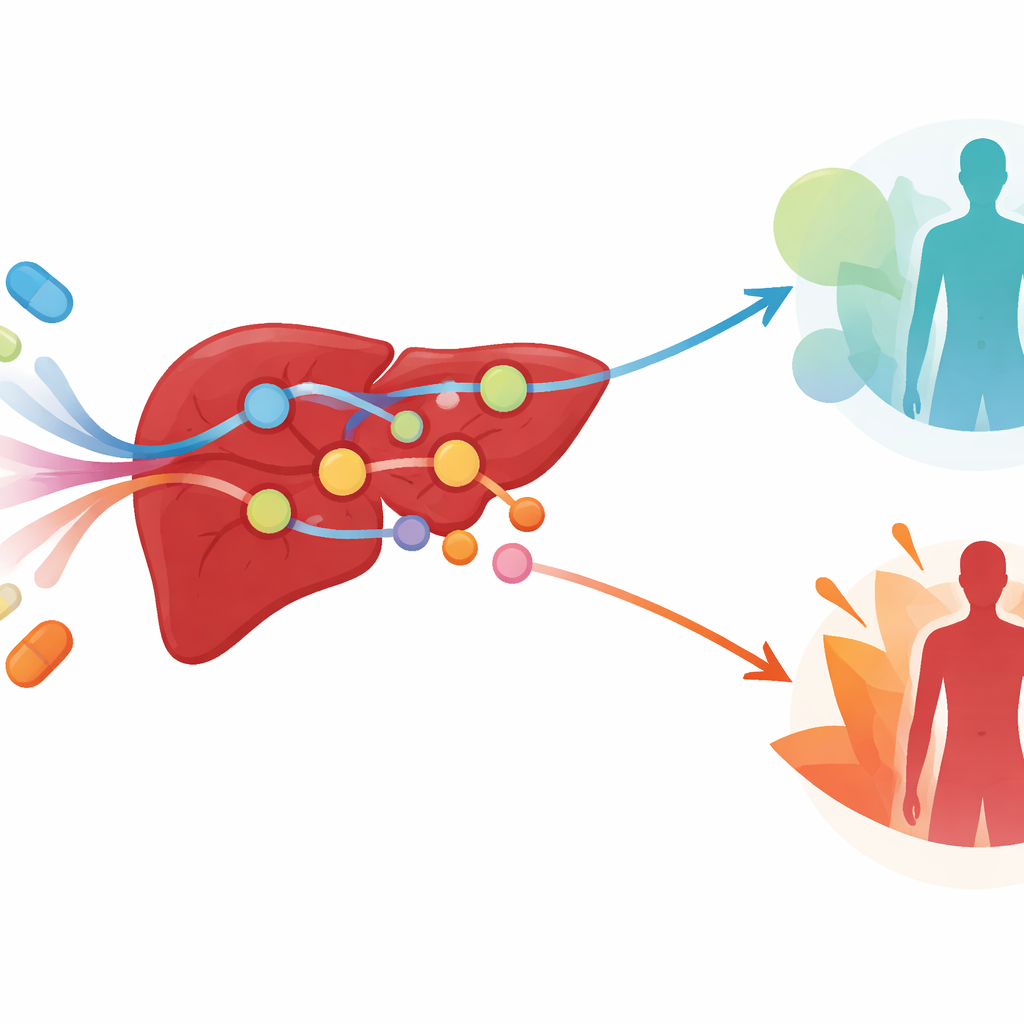
The team paid special attention to venlafaxine, a widely used antidepressant in the study. Venlafaxine is processed mainly by CYP2D6 but also by CYP2C19, which can divert the drug into alternative, non-therapeutic forms. Among the 12 venlafaxine patients, those with at least one non-normal enzyme profile tended to report more side effects, especially reduced saliva, inner restlessness, and sweating. Interestingly, variations in CYP2C19 appeared more closely linked to side effects than variations in CYP2D6, even though guidelines today focus mostly on CYP2D6 for dosing venlafaxine. This hints that current prescribing advice may be overlooking important gene–gene interactions.
What This Means for Personalized Treatment
In simple terms, the study suggests that people whose two major drug-processing systems are out of balance—whether too slow, too fast, or mismatched—face a higher risk of bothersome side effects from antidepressants. For these patients, medicines that rely less on CYP2C19 and CYP2D6, or careful adjustment of dose based on genetic testing, might reduce harm. While the study was small and cannot yet dictate strict rules, it strengthens the case for including combined genetic information on multiple enzymes when choosing and dosing antidepressants. With larger follow-up studies, such insights may help doctors tailor treatment so that more people get the benefits of antidepressants with fewer unwanted reactions.
Citation: Görnert, C., Scherf-Clavel, M., Weber, H. et al. Influence of combined CYP2C19 and CYP2D6 phenotypes on adverse drug reactions in patients with major depressive disorder: a clinical cohort study. Pharmacogenomics J 26, 13 (2026). https://doi.org/10.1038/s41397-026-00407-3
Keywords: pharmacogenomics, antidepressants, drug side effects, CYP2C19 CYP2D6, personalized medicine