Clear Sky Science · en
The profile of persons with traumatic spinal cord injury and the associated factors of length of stay in a rehabilitation centre, in South Africa
Why this story matters
Spinal cord injuries can change a person’s life in a split second, often leaving survivors with paralysis and long, difficult recoveries. In South Africa, where health services are stretched and violence is common, understanding who is most at risk and how long rehabilitation takes is crucial for planning care. This study looks at hundreds of people with traumatic spinal cord injury treated at a major rehabilitation centre in Cape Town, revealing a stark picture of young men injured mostly through assault and showing which injuries are linked to the longest stays in rehab.
Who is getting hurt
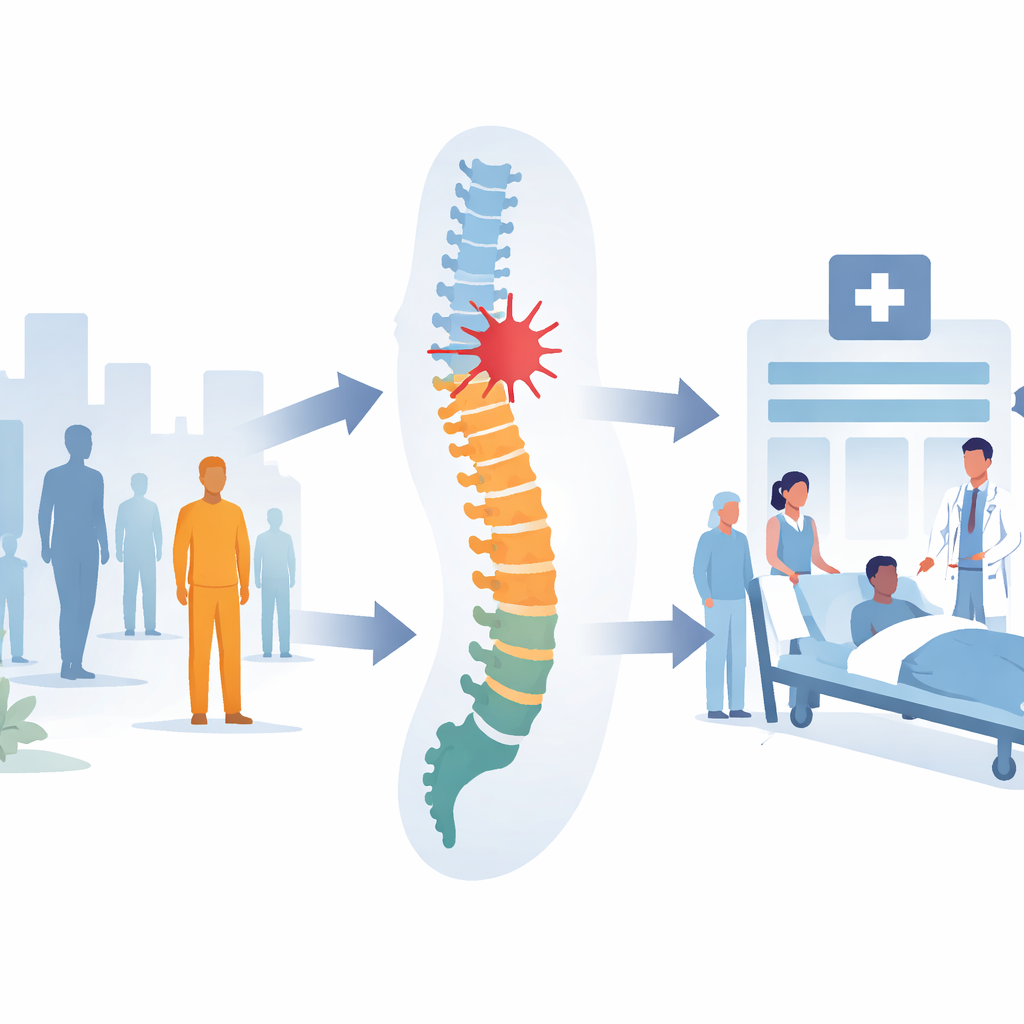
Over a four-year period, researchers reviewed the medical records of 625 adults with traumatic spinal cord injury admitted to the Western Cape Rehabilitation Centre, a government facility serving people with disabilities. Almost nine out of ten patients were men, and most were in their thirties. Assault, mainly gunshot and stabbing, was the leading cause of injury, accounting for just over 70% of cases—far more than road crashes or falls. The middle region of the spine, the thoracic area, was most often damaged, and many patients had severe, “complete” injuries, meaning there was no movement or feeling below the injured level.
How the study was done
The team used an internationally standardised data set for spinal cord injury to pull out key details from each patient’s file. They recorded age, sex, cause of injury, which part of the spine was affected, whether the bones of the spine were broken, whether surgery was done, and a neurological grading that describes how much movement and sensation is preserved. They then measured how many days each person spent in the rehabilitation centre and used statistical tests and a multiple regression model to see which factors were linked to longer or shorter stays, while accounting for overlaps between them.
What shapes time spent in rehab
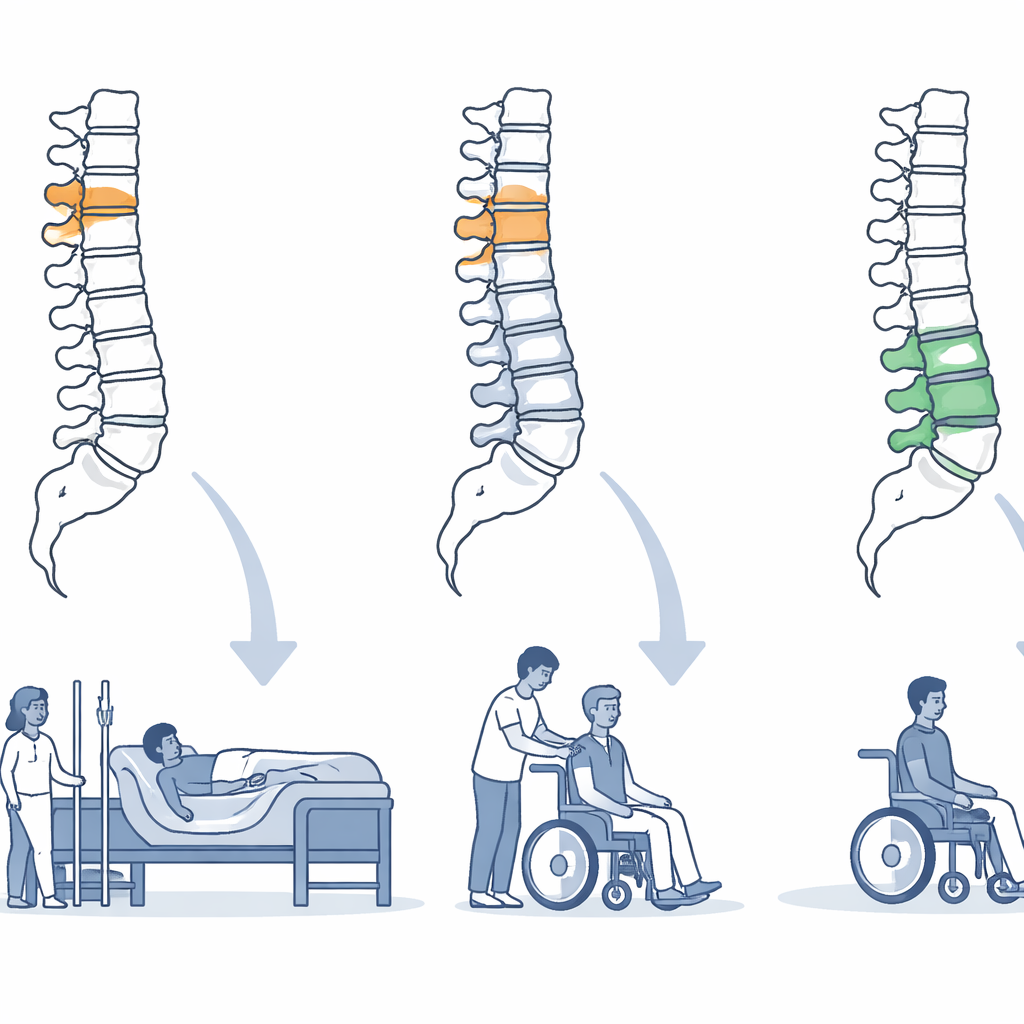
On average, people stayed in rehabilitation for about 99 days, but the range was huge—from just one day to nearly three years. Most stayed between two and three months. Surprisingly, age, sex, whether the spinal bones were fractured, whether surgery was done, and even the broad severity grade of the injury were not statistically strong predictors of how long someone stayed. Instead, the standout factor was where along the spine the injury occurred. People with injuries in the neck (cervical spine) remained in rehabilitation significantly longer than those with injuries in the middle (thoracic) or lower (lumbar) spine. Thoracic injuries also led to longer stays than lumbar injuries. This pattern held even after adjusting for other variables in the regression analysis.
What this means for health services
The finding that neck injuries drive much longer rehabilitation stays has direct implications for how scarce resources are allocated. Patients with cervical injuries often need more intensive nursing, respiratory support, and help with basic activities, demanding a larger, more specialised team. Knowing this, planners can better estimate bed needs, staff numbers, and the mix of skills required. The study also uncovered a practical gap: in nearly a third of files, the detailed neurological grading was missing. Because this grading is key to setting realistic rehab goals and predicting care needs, poor documentation can lead to inefficient planning and uneven quality of care.
Looking ahead
For a layperson, the study’s bottom line is clear: in Cape Town’s public system, traumatic spinal cord injury mainly affects young men hurt by violent assault, and those with neck injuries require the longest, most resource-intensive rehabilitation. This knowledge can guide crime-prevention efforts aimed at young men, support arguments for strengthening rehabilitation services, and improve how hospitals plan beds and staff. The authors call for better recording of injury details, broader studies that also include children and private facilities, and deeper exploration of other influences—such as complications and mental health—that might explain why some people need far longer rehabilitation than others.
Citation: Williams, TL., Wikmar, L.N. & Joseph, C. The profile of persons with traumatic spinal cord injury and the associated factors of length of stay in a rehabilitation centre, in South Africa. Spinal Cord 64, 331–336 (2026). https://doi.org/10.1038/s41393-026-01189-y
Keywords: traumatic spinal cord injury, rehabilitation length of stay, South Africa, assault-related injuries, cervical spine injury