Clear Sky Science · en
“It has to work for us”: A qualitative study exploring how lived experience engagement reframed development of a mental health module within a Spinal Cord Injury Self-Maintenance Tool
Why this matters for everyday life
Adjusting to life after a spinal cord injury is not just about learning new ways to move and take care of the body. It also brings a heavy emotional load, from grief and frustration to worries about the future. This study shows how people with spinal cord injury helped redesign a mental health and wellbeing module so that it truly "works for us"—practical, hopeful, and grounded in real life. Their input turned a professional, research-based resource into something more human, relatable, and usable in daily life.
Putting mental health at the heart of care
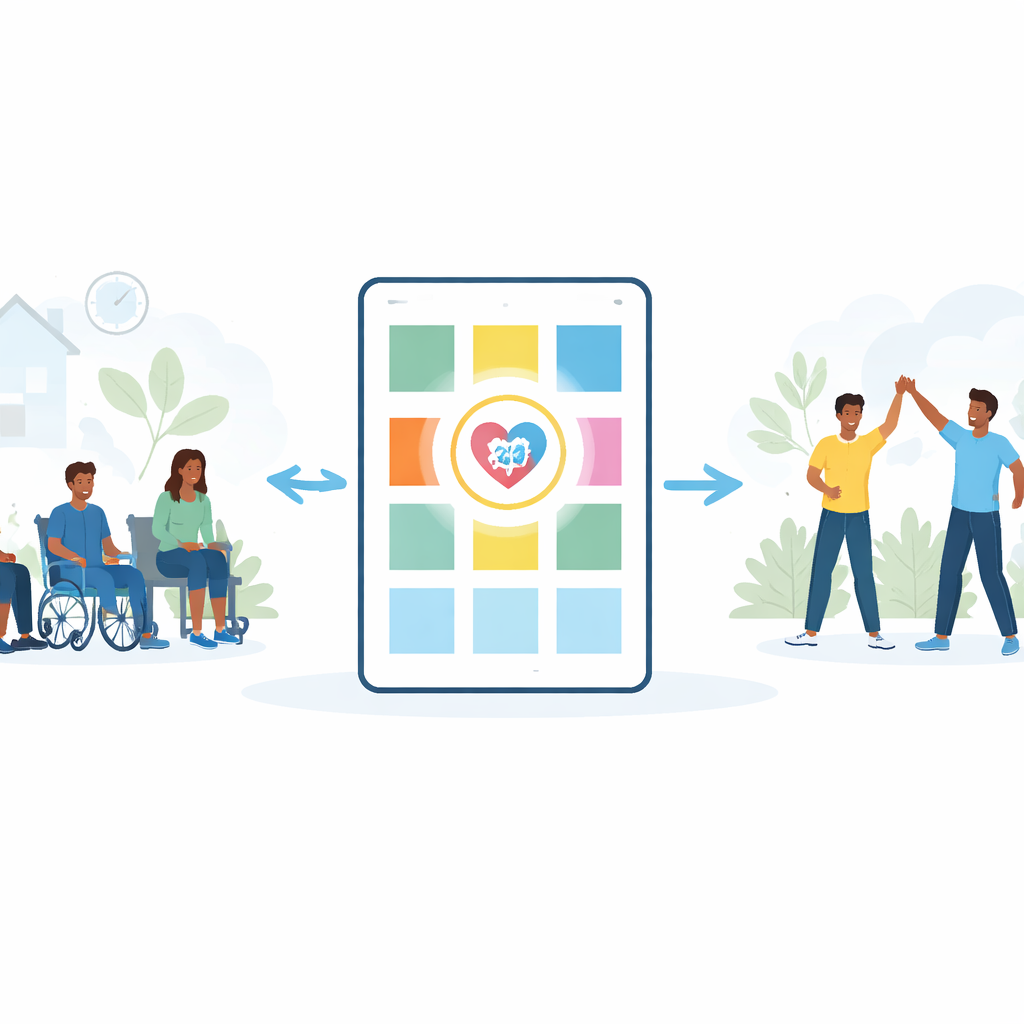
The research team had already developed a health maintenance tool to help people with spinal cord injury manage common physical issues like bladder, bowel, skin, pain, and dangerous blood pressure changes. Early feedback from people living with spinal cord injury, however, made one point very clear: mental health could not be an afterthought. Many people do not meet the criteria for a mental illness but still face powerful stress, sadness, fear, and changes in identity after injury. Participants insisted that any serious self-care guide must place mental health front and centre, both to normalise these struggles and to help people feel less alone in them.
Listening to lived experience
To reshape the mental health and wellbeing module, the researchers held two online focus groups with nine people who had spinal cord injuries, then combined their insights with expert clinical review. Participants were asked to comment on the content, tone, style, and structure of the module, which included a “Toolbox” of evidence-based strategies drawn from psychological therapies. Rather than treating them as test subjects, the team invited them in as partners: people whose day-to-day experience could reveal what professionals might miss. The analysis of the group discussions followed a structured, qualitative approach to identify patterns and themes in what participants said.
Finding the right tone
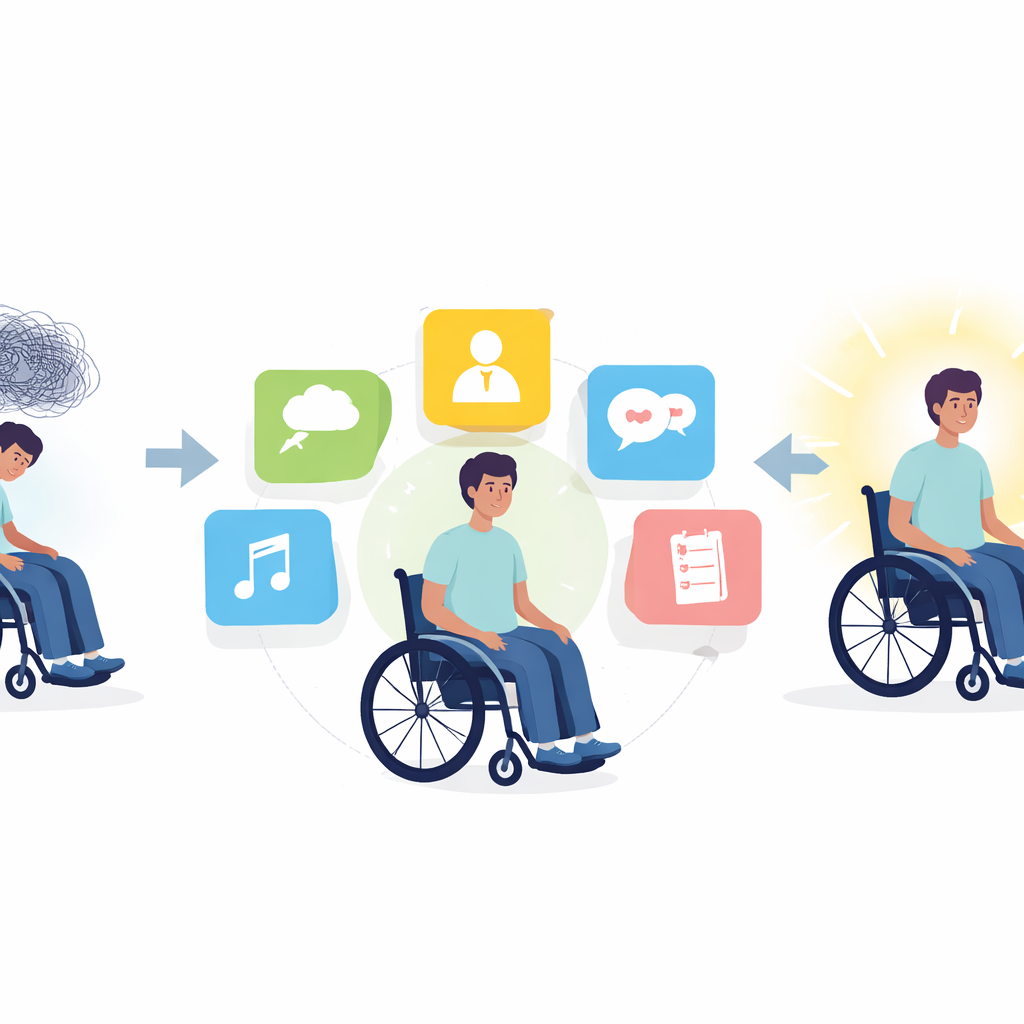
Participants agreed on the importance of being honest about how severe mental health problems can be after a spinal cord injury, including thoughts of not wanting to go on. At the same time, they warned that a heavy focus on worst-case scenarios, complex language, and clinical labels could leave already-vulnerable readers feeling overwhelmed or even more distressed. They urged the authors to strike a careful balance: be clear that serious problems can and do happen, stress that professional help is essential when things get very hard, but avoid painting a picture where struggle is inevitable and recovery is out of reach. In short, the module should support people, not scare them.
Focusing on strengths and individual paths
A key message from participants was to “see the glass as half full.” They wanted the module to highlight that, while grief and difficulty are common, many people gradually rebuild a meaningful life, new routines, and a sense of control. This meant simplifying academic models of adjustment, cutting back on negative adjectives, and emphasising that people can influence their own thinking and behaviour over time. The Toolbox was refined to help readers pick and choose strategies that fit their own situation—such as managing unhelpful thoughts, planning pleasant activities, or learning relaxation skills—rather than suggesting a single fixed path. Small but important wording changes, like replacing “will” with “may,” helped avoid generalisations that might not apply to everyone.
Making space for many different stories
Participants were keenly aware that there is no single “typical” life with spinal cord injury. They pushed for language that respected this variety, and for the inclusion of quotes and examples showing different experiences and positive outcomes. The final module aims to guide readers to notice their own reactions, try out tools at their own pace, and recognise when professional support is needed. Instead of assuming that everyone will face the same emotional journey, the resource invites people to build a personal plan that reflects their unique mix of challenges, supports, and goals.
What the study means in plain terms
This study shows that when people living with spinal cord injury help design mental health resources, the result is a tool that feels more real, more hopeful, and more usable. The redesigned module keeps the seriousness of mental health front and centre but avoids overwhelming readers with fear or technical language. It offers a flexible toolbox of practical strategies that can be adapted to different lives, while clearly pointing to professional help when needed. For readers and families, the takeaway is simple: mental health after spinal cord injury is central, common, and worth talking about—and with the right mix of support, skills, and shared experience, it is possible to move toward a life that feels more manageable and more your own.
Citation: Bourke, J., Craig, A., Sandalic, D. et al. “It has to work for us”: A qualitative study exploring how lived experience engagement reframed development of a mental health module within a Spinal Cord Injury Self-Maintenance Tool. Spinal Cord 64, 346–351 (2026). https://doi.org/10.1038/s41393-026-01171-8
Keywords: spinal cord injury, mental health, self-management, co-design, resilience