Clear Sky Science · en
Targeting ZMIZ1 induces differentiation in acute myeloid leukemia via chromatin remodeling
Turning Stuck Blood Cells Back On Track
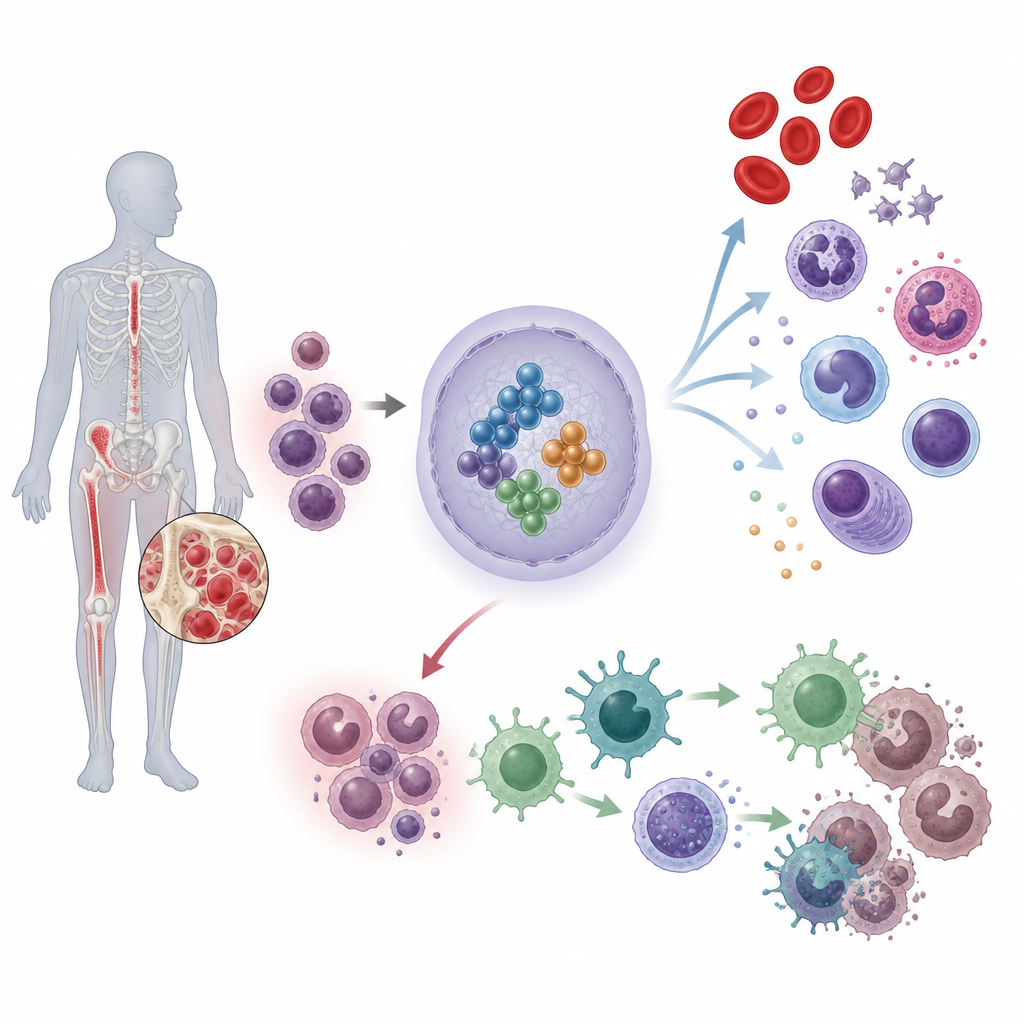
Acute myeloid leukemia is a fast-growing blood cancer in which immature white blood cells get stuck in an early stage and crowd out healthy blood. This study explores a new way to coax those blocked cells to mature instead of endlessly multiplying, by switching off a little-known protein called ZMIZ1 that helps keep them frozen in a cancerous state.
A Hidden Switch in Leukemia Cells
The researchers began by asking which genes actively prevent leukemia cells from maturing. Using CRISPR gene editing in human leukemia cell lines, they systematically turned off hundreds of suspected regulators and then sorted out cells that started to show signs of normal myeloid maturation on their surface. Among the expected hits, they found a surprise: a protein called ZMIZ1, previously linked mostly to T cell cancers, emerged as a key “brake” that helps keep acute myeloid leukemia cells immature.
Forcing Cancer Cells to Grow Up
When ZMIZ1 was silenced in human leukemia cells, many of them changed shape under the microscope, taking on features of mature white blood cells instead of blast-like forms. Surface markers of differentiation rose, growth slowed, and more cells underwent programmed cell death, all classic hallmarks of forcing leukemia cells to grow up and lose their stem-like, self-renewing abilities. In mice engineered to develop a form of acute myeloid leukemia, deleting the Zmiz1 gene lowered white blood cell counts, reduced leukemia in organs such as the spleen and liver, shrank the pool of leukemia stem and progenitor cells, and extended survival, although it did not completely eliminate disease.
How ZMIZ1 Rewires the Cell’s Control Room
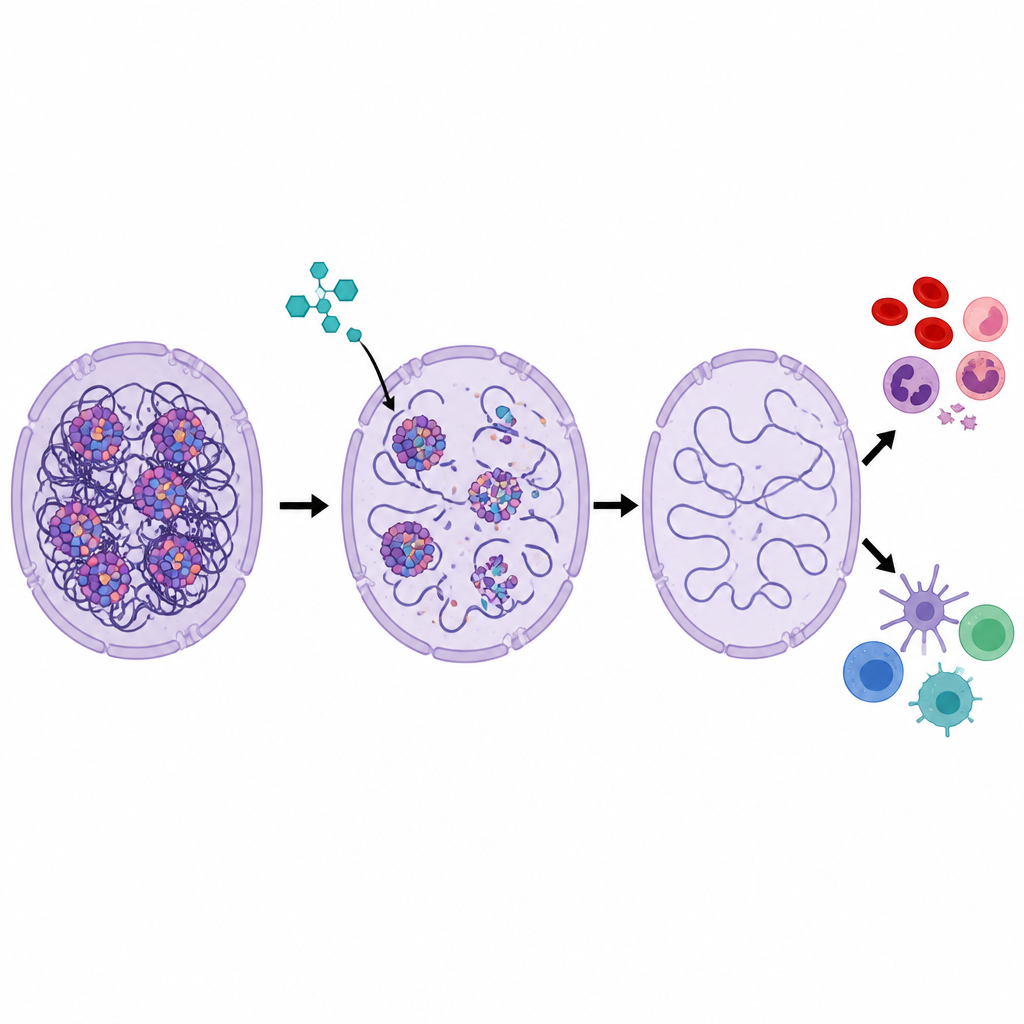
To understand how ZMIZ1 exerts such control, the team looked inside the cell nucleus. There, ZMIZ1 gathers into tiny droplets, or condensates, that behave like liquid clusters. These droplets sit on key stretches of DNA known as super-enhancers, dense control regions that strongly drive genes defining blood cell identity and immune evasion. ZMIZ1 helps maintain the active chemical marks on these regions and supports DNA loops that bring enhancers and gene switches together. A partner protein called MEF2D binds to many of the same sites; ZMIZ1 stabilizes MEF2D on chromatin and together they keep leukemia programs running while blocking full maturation.
Small Molecules That Disarm the Block
The investigators then searched for drug-like compounds that could attach to ZMIZ1 and disrupt its function. Using structural models and screening tens of thousands of molecules, they identified two candidates, SIH-001 and SIH-002, that bind ZMIZ1 with high affinity and destabilize it inside cells without noticeably affecting related proteins. Treating leukemia cells and patient-derived organoids with these compounds reduced ZMIZ1’s grip on DNA, triggered differentiation, promoted cell death, and shifted gene activity away from stemness and toward blood development and antigen presentation. In mouse leukemia models, SIH-001 alone moderately prolonged survival and, when combined with existing drugs like the BCL2 inhibitor venetoclax, further reduced leukemia burden and pushed blasts toward more mature states.
What This Could Mean for Patients
These findings position ZMIZ1 as a central organizer of nuclear “hot spots” that help leukemia cells stay young and invisible to the immune system. By disrupting ZMIZ1, either genetically or with early-stage small molecules, leukemia cells are nudged to differentiate and to display more immune flags on their surface, potentially making them easier to clear. While the candidate drugs still need extensive refinement and testing, the work highlights ZMIZ1 as a promising target for future differentiation-based therapies in acute myeloid leukemia that might one day work alongside current chemotherapies and targeted agents.
Citation: Li, H., Liu, Y., Cui, J. et al. Targeting ZMIZ1 induces differentiation in acute myeloid leukemia via chromatin remodeling. Sig Transduct Target Ther 11, 189 (2026). https://doi.org/10.1038/s41392-026-02766-6
Keywords: acute myeloid leukemia, ZMIZ1, cell differentiation, chromatin remodeling, super-enhancer