Clear Sky Science · en
Fructose 1-phosphate inhibits mannose phosphate isomerase to suppress hepatocellular carcinogenesis
Sweet Surprise in Liver Cancer
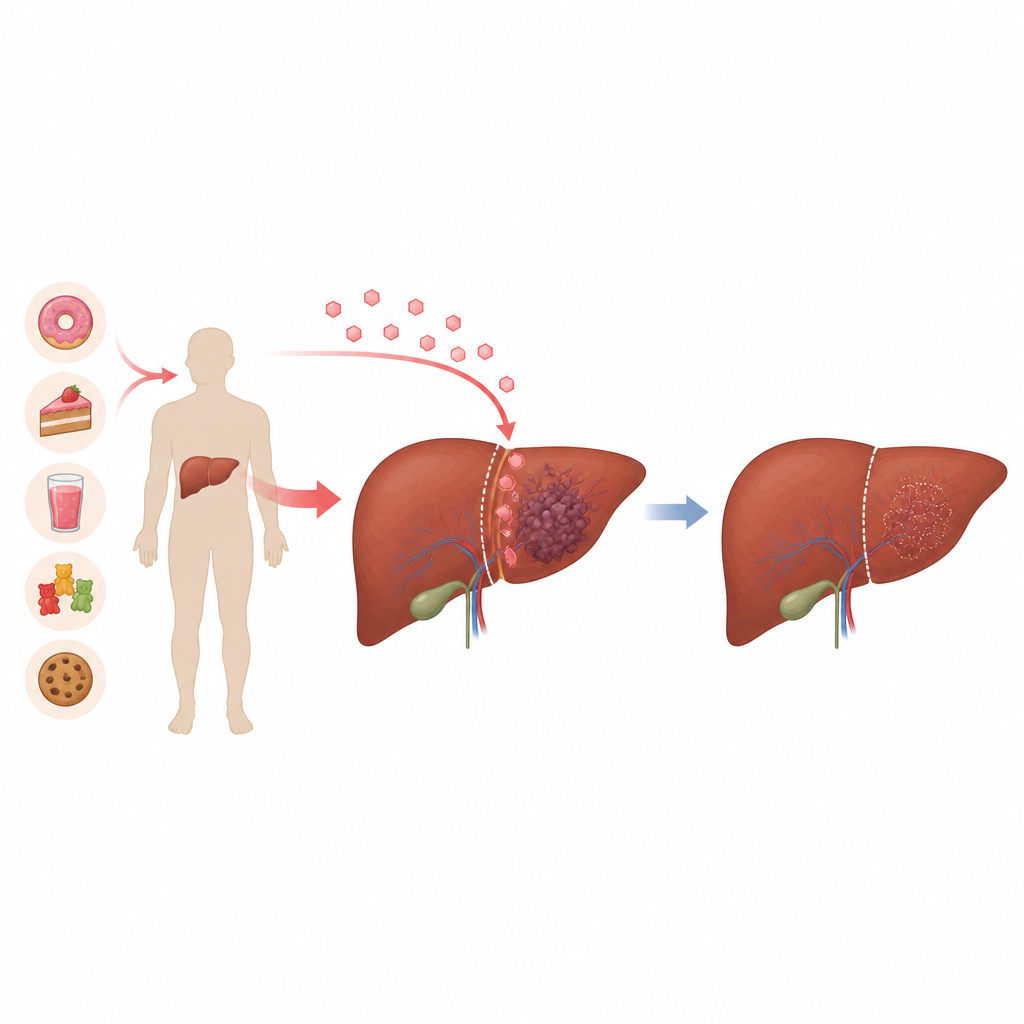
Many people worry that sugar, especially fructose found in soft drinks and processed foods, simply feeds cancer. This study offers a surprising twist: in certain liver cancers, fructose can actually help kill tumor cells instead of nourish them. By following how fructose is handled inside liver cells, the researchers uncovered a hidden weak spot in hepatocellular carcinoma, the most common form of liver cancer, and pointed to a drug that may exploit this weakness.
When Sugar Meets a Changed Liver
Normal liver cells are well equipped to break down fructose using a set of enzymes that chop and shuffle sugar molecules for energy and building blocks. In liver cancer, however, these fructose-handling tools are dialed down, especially one enzyme called ALDOB. The team analyzed patient tumors, large cancer databases, and cell lines, and found that many cancer cells still pull in fructose and start to process it, but they stall halfway. This means the pathway does not shut off completely; instead, it becomes unbalanced, with certain intermediates starting to build up.
A Toxic Traffic Jam Inside Tumor Cells
In mice engineered to lack ALDOB in their liver cells, low-dose fructose in drinking water did not worsen cancer, as many might expect. Instead, it dramatically reduced the number and size of liver tumors. Detailed chemical tests revealed that a fructose-derived molecule called fructose 1-phosphate piled up in these ALDOB-deficient tumors. Similar buildup was seen in specially designed cancer cell lines and in tumor grafts in mice. The higher the levels of this molecule, the fewer tumors developed, suggesting that this sugar intermediate acts like a toxic traffic jam for cancer cells.
Overloading the Cell’s Protein Factory
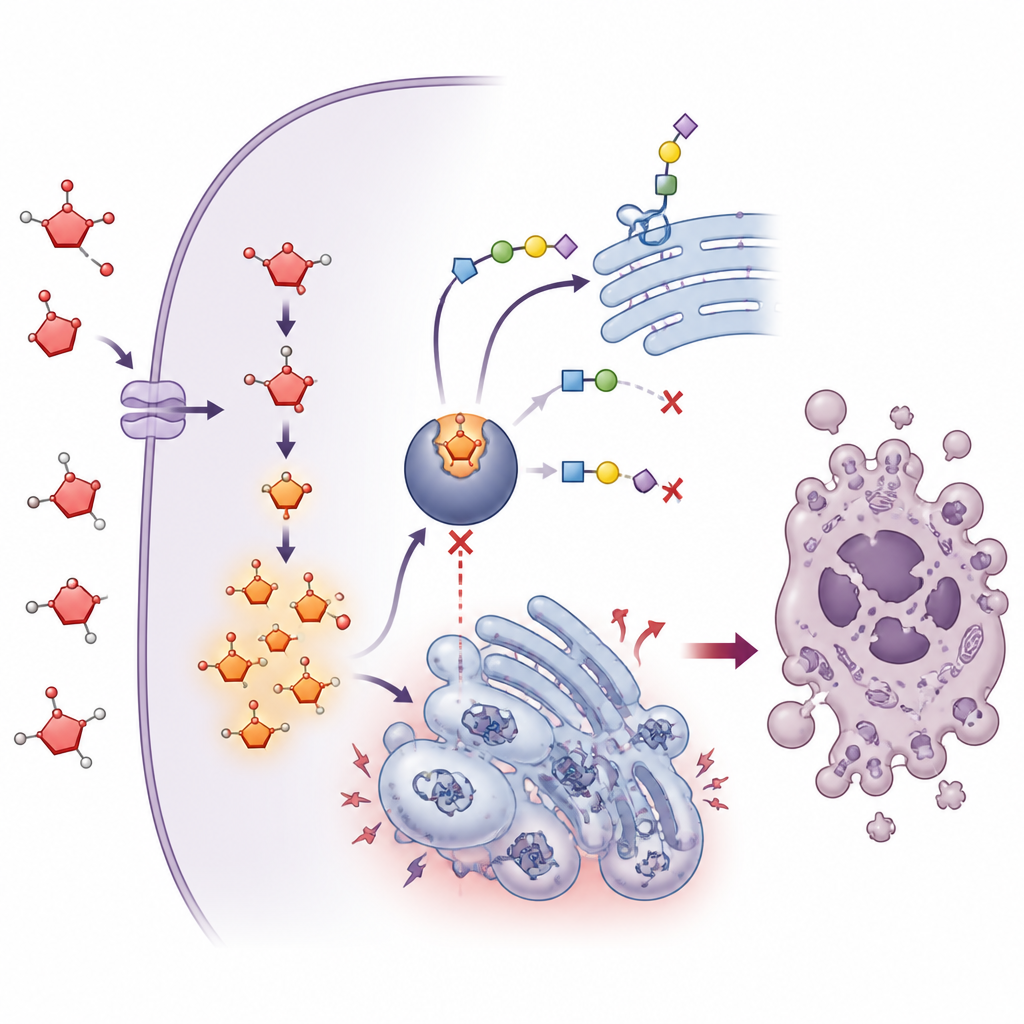
To understand why this traffic jam is harmful, the researchers looked at how genes and proteins changed when fructose 1-phosphate accumulated. They saw strong signs of stress in the endoplasmic reticulum, the cell’s protein factory, and a drop in the sugar decorations that normally coat many proteins. These sugar chains are essential for proper folding and function. When they were disrupted, the protein factory swelled and faltered, and cells turned on death programs. Feeding the cells or mice with the simple sugar mannose, which can bypass the blocked step, restored these sugar chains, eased the stress, and allowed tumors to grow again, confirming that disturbed protein decoration was central to the effect.
Hitting a Key Enzyme to Tip Cells Over the Edge
The team then asked exactly how fructose 1-phosphate causes this disruption. Using protein screening and computer modeling, they found that it binds tightly to an enzyme called mannose phosphate isomerase, a key switch that channels sugar from energy use into building those protein decorations. Fructose 1-phosphate competes with the enzyme’s normal partner and slows it down, cutting off the supply of building blocks for sugar chains. When this switch was turned off genetically or with chemical inhibitors, liver cancer cells stalled and died, both in dishes and in several mouse tumor models. Adding mannose again rescued the cells by restoring the missing building blocks.
Old Drug, New Angle on Liver Cancer
Searching through a library of approved and experimental drugs, the researchers identified ebselen, a small molecule already tested in humans for other conditions, as a strong blocker of mannose phosphate isomerase. Ebselen mimicked the effects of fructose 1-phosphate: it reduced flow through the sugar-decoration pathway, triggered stress in the endoplasmic reticulum, and shrank liver tumors in mice. Mannose again reversed these effects, and combining ebselen with the existing liver cancer drug sorafenib produced stronger tumor control. These results suggest that targeting sugar-handling enzymes in cancer cells may give doctors a new way to harness a tumor’s altered metabolism.
What This Means for Patients and Sugar Intake
This work does not say that people should consume more sugary drinks to treat cancer. Instead, it reveals that some liver cancers, which have already rewired how they handle fructose, become vulnerable when a particular sugar by-product builds up and blocks a critical enzyme. By copying this natural weakness with a drug such as ebselen, doctors may one day push tumor cells into fatal stress while sparing healthy tissue. The study helps explain why human data on fructose and liver cancer risk are mixed, and it highlights how the same nutrient can harm or help tumors depending on how their inner machinery is wired.
Citation: Wang, Y., Zhang, X., Wang, N. et al. Fructose 1-phosphate inhibits mannose phosphate isomerase to suppress hepatocellular carcinogenesis. Sig Transduct Target Ther 11, 195 (2026). https://doi.org/10.1038/s41392-026-02695-4
Keywords: fructose metabolism, liver cancer, hepatocellular carcinoma, protein glycosylation, cancer metabolism